



Valet Table
A valet table brings refined organisation to a dressing room, offering dedicated surfaces and mirrors for daily grooming routines.
Valet Table
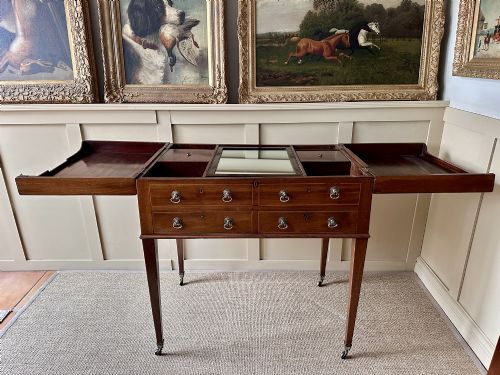
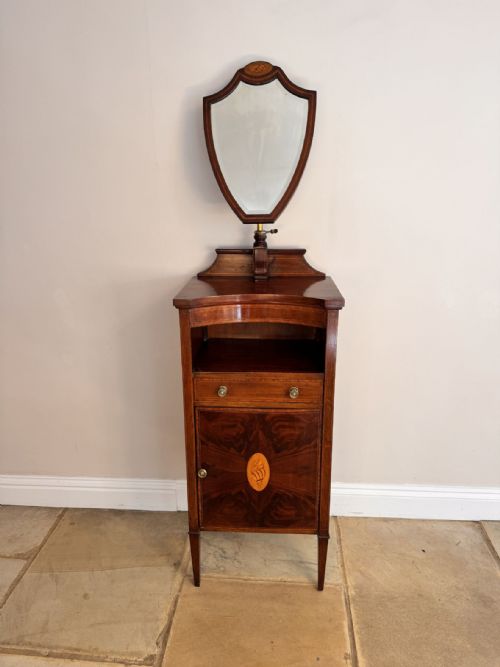
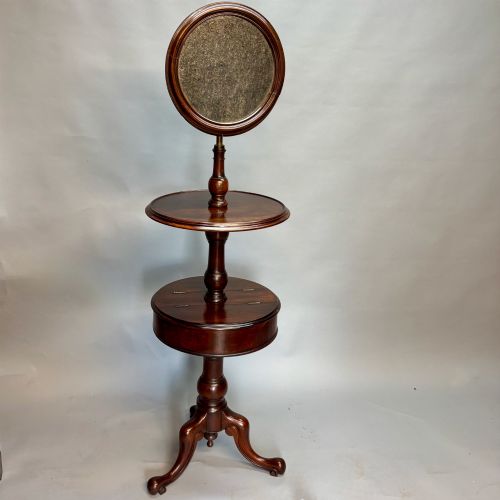
A valet table encompasses dressing tables, shaving stands, and vanity furniture designed for personal grooming and wardrobe management. These pieces frequently incorporate adjustable mirrors, auxiliary trays, and compact compartments tailored for gentlemen and ladies alike.
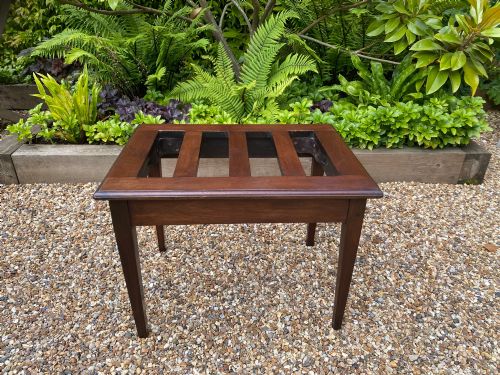
The selections span from late Georgian and Victorian eras through to Edwardian and George V periods, reflecting evolving domestic habits. Forms range from freestanding shaving stands to butler trays on stands and occasional luggage tables.
Mahogany predominates amongst the surviving examples, often enriched with satinwood inlay or brass hardware. Walnut, ebonised wood, and painted metal also appear across the nineteenth and early twentieth century pieces.
How they were made
Cabinetmakers utilised dense timbers such as mahogany and walnut, employing solid construction alongside figured veneer panels. Satinwood inlay added contrasting linear detail to tabletops and drawer fronts.
Functional metal elements including brass and silver were integrated for adjustable mirror brackets, handles, and fittings. Ebonised wood finishes provided a dark, uniform surface achieved through staining and polishing.
Valet Table Retail Price Guide 2026
Typical asking prices for valet table among the pieces listed under this phrase on Sellingantiques today, from the lower quarter to the upper quarter. They describe what is for sale here now, not the wider market.
Some Victorian shaving stands feature hidden compartments cleverly sized just right for a gentleman's pocket watch.
What varies in quality
The refinement of the timber and the precision of the inlay establish the visual hierarchy between standard and superior pieces. Fine grain selection in the mahogany and crisp execution of satinwood banding mark out the better workshops.
Mechanical complexity also distinguishes the range, particularly in adjustable shaving mirrors and folding tray mechanisms. Smooth articulation in brass pivots and well-fitted internal compartments demonstrate superior craftsmanship.
Flashman & Co
The Valet Table Glossary
- Shaving Stand
- A tall, compact piece of furniture featuring an adjustable mirror and small surfaces for shaving requisites. These items date predominantly from the Victorian and Edwardian periods.
- Butler Tray
- A rectangular wooden tray with hinged or shaped sides, designed to lift off a folding support stand. They served originally for serving beverages or managing small accessories.
- Satinwood Inlay
- A decorative technique where lighter contrasting wood is set into recesses in a darker primary timber. It creates geometric or floral borders on tabletops and stands.
- Ebonised Wood
- Timber treated with a dark stain or finish to simulate expensive ebony. This treatment was popular during the Victorian and later periods for a sleek finish.
Valet Table: Frequently Asked Questions
What is a valet table used for?
These pieces provide a dedicated surface for daily grooming, holding shaving equipment, jewellery, and accessories. They help keep personal items organised in a bedroom or dressing room.
Historically, specific versions accommodated gentlemen preparing for the day or ladies attending to their morning toilette. The inclusion of mirrors and trays made them central to period domestic routines.
How do I date a valet table?
Dating relies on observing the primary timber, construction methods, and stylistic characteristics of the period. Georgian and Regency pieces show heavier proportions, whilst Edwardian examples often feature delicate satinwood inlay.
Hardware such as brass hinges and mirror brackets also provides clues to the era of manufacture. Makers' stamps, where present, offer definitive attribution to specific firms.
Where should I place a valet table at home?
These versatile items fit well in a bedroom, dressing room, or guest suite as functional accent furniture. Their compact footprint allows them to sit comfortably beside a wardrobe or dressing area.
Pieces with adjustable mirrors work particularly well where natural light aids grooming. Butler trays on stands can also double as occasional surfaces in a study or living space.
How do I care for antique mahogany furniture?
Maintain the timber by dusting regularly with a soft, dry cloth to prevent grit accumulation. Avoid placing the piece in direct sunlight or near heat sources to protect the polished finish.
Applying a quality furniture wax periodically helps nourish the wood and preserve its lustre. Care should be taken with brass fittings to avoid harsh chemical cleaners.