

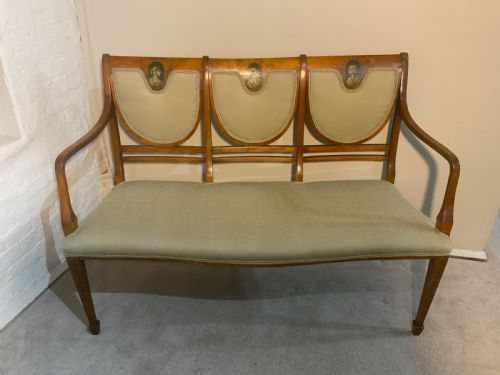
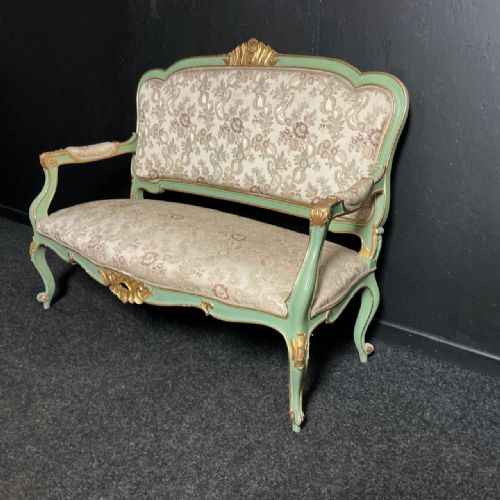
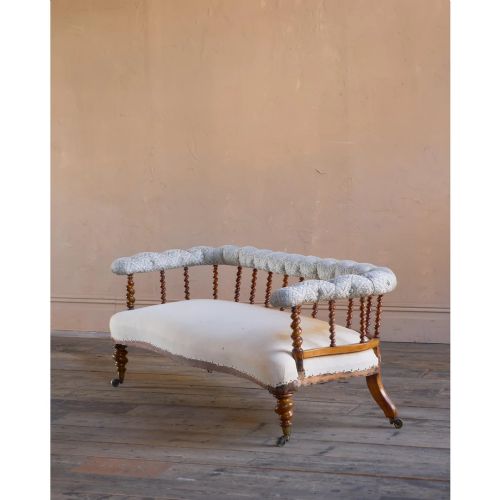
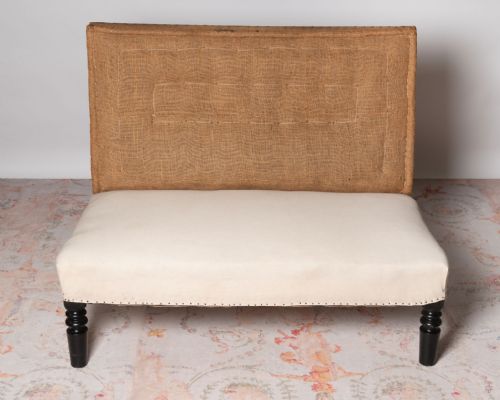
Upholstered Wood Sofa
These upholstered wood sofa designs span centuries of craftsmanship, offering solid timber frames paired with tactile fabric covers for enduring comfort.
Upholstered Wood Sofa
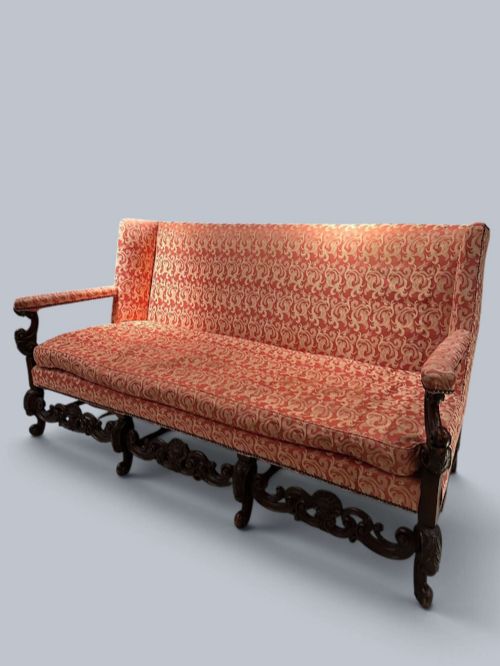
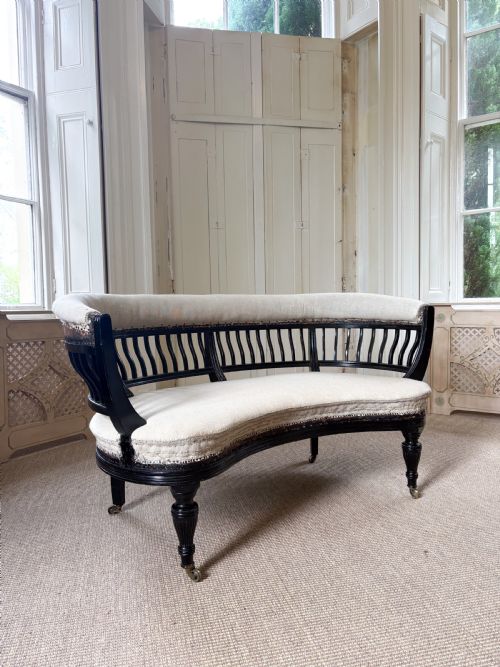
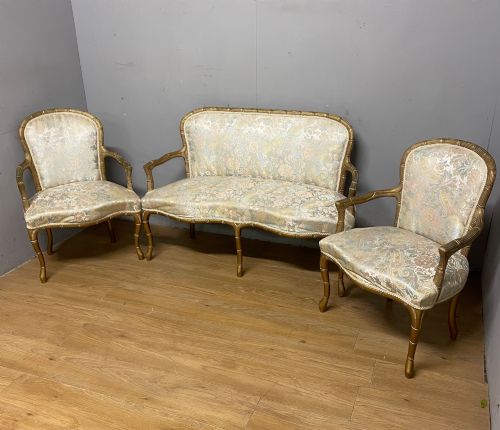
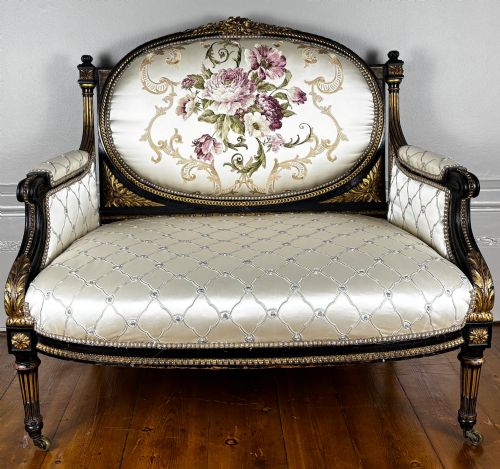
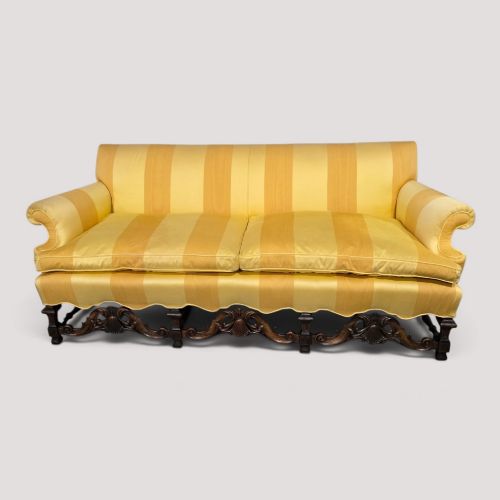
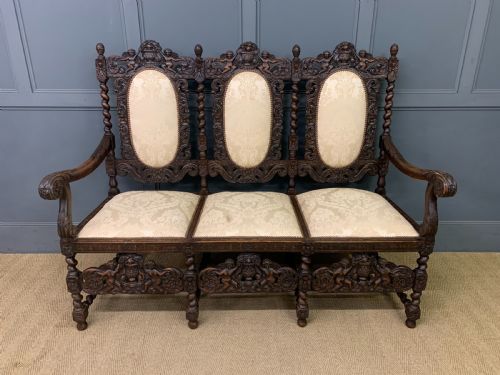
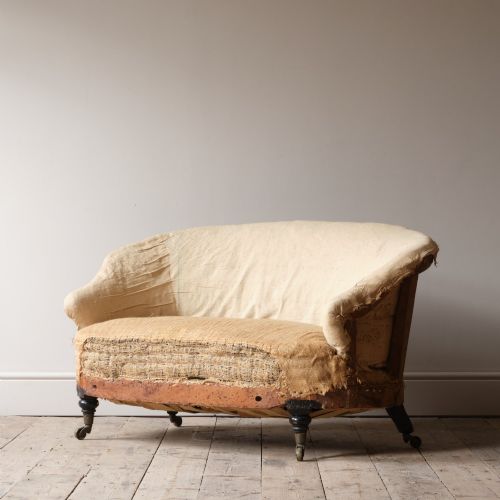
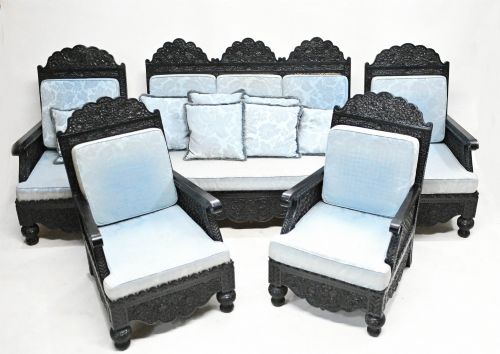
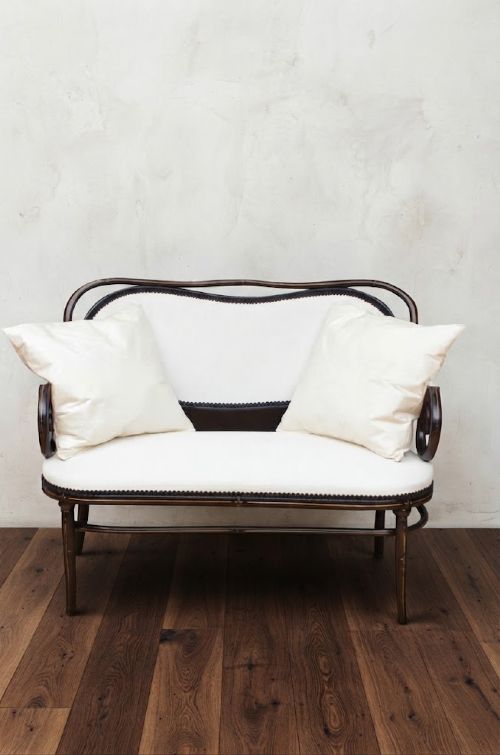
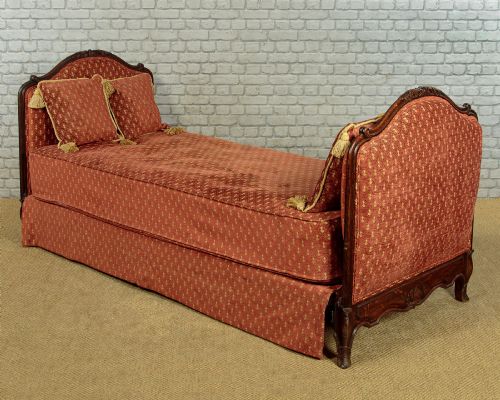
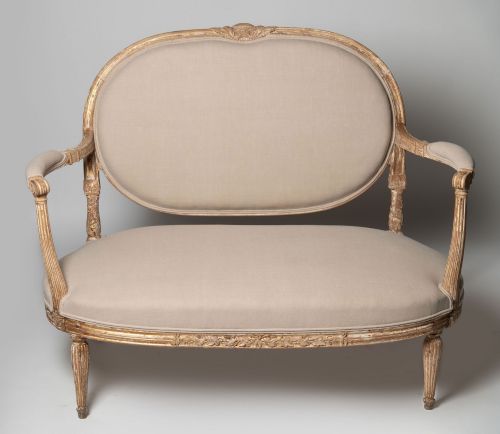
An upholstered wood sofa combines a visible timber framework with padded textile seating, functioning as a principal domestic seat since past centuries. When exploring an upholstered wood sofa, buyers encounter diverse forms ranging from compact two-seater settees and daybeds to expansive chaise longues and multi-piece suites.
The selections recorded here reflect multiple historical epochs, notably the Victorian and Edwardian eras alongside 18th-century pieces, French provincial designs, and 19th-century creations. Common stylistic influences include Regency, Louis XV revival, and the Aesthetic Movement.
Makers and retailers represented across these listings include Howard & Sons, Miles & Edwards, C. Hindley & Sons, Hampton & Sons, and Liberty, establishing a lineage of notable production.
How they were made
Frames rely upon traditional cabinet timbers such as mahogany, walnut, rosewood, satinwood, oak, padauk, and ebonised or giltwood finishes. Structural integrity depends on sturdy joinery formed within these dense hardwoods.
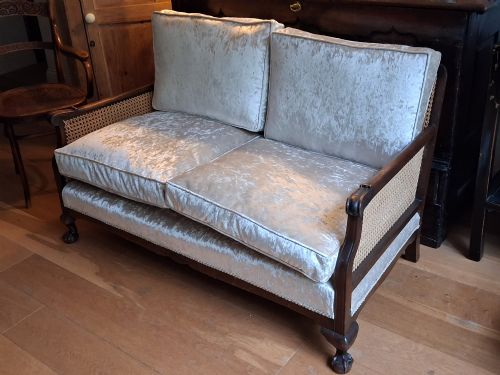
Upholstery techniques incorporate sprung settee bases, hessian webbing, feather cushions, and deep pile brocade, velvet, or leather coverings. Brass details and cane work frequently complement the textile and timber elements.
Upholstered Wood Sofa Retail Price Guide 2026
Typical asking prices for upholstered wood sofa among the pieces listed under this phrase on Sellingantiques today, from the lower quarter to the upper quarter. They describe what is for sale here now, not the wider market.
Listings feature woods including mahogany, walnut, rosewood, satinwood, padauk, and giltwood across the 18th, 19th, and 20th centuries.
What varies in quality
The refinement of the timber carving and the sophistication of the wood finish establish early distinctions between pieces. Hand-carved walnut, giltwood, and inlaid satinwood demonstrate a higher grade of artisan labour than simpler oak or painted pine frames.
The integrity of the structural frame and the execution of the upholstery work dictate the overall standard of a settee. Original cane work, high-grade velvet or brocade textiles, and established workshop attribution elevate the standing of an individual seating piece.
Howard & Sons·Miles & Edwards·C. Hindley & Sons·Hampton & Sons·Thonet
The Upholstered Wood Sofa Glossary
- Canapé
- An antique French upholstered sofa or settee, typically featuring an exposed wooden frame carved in styles such as Louis XV.
- Bergère
- An enclosed upholstered armchair or sofa with wooden framing and cane work panels to the sides or back.
- Chaise Longue
- An elongated upholstered chair designed for reclining, combining the functions of a seat and a daybed.
- Ebonised
- Wood treated with a dark finish to imitate ebony, commonly utilised in 19th-century furniture and the Aesthetic Movement.
- Giltwood
- Timber coated with a thin layer of gold leaf or gesso, prevalent in formal French and English decorative seating.
Upholstered Wood Sofa: Frequently Asked Questions
How do I identify a Victorian sofa?
Victorian settees typically utilise dark hardwoods such as mahogany or walnut, often featuring carved scrollwork and button-tufted upholstery.
These pieces reflect the industrial and stylistic shifts of the 19th century, moving from heavy classical revivals to more ornate drawing-room seating.
Where were antique settee frames built?
Workshop origins span English cabinet-makers in London and regional workshops, alongside French provincial furniture makers and continental ateliers.
Craftsmen utilised local hardwoods native to their region, such as padauk in Indian commissions or walnut and mahogany in European salons.
What is a French bergere sofa?
A bergere sofa incorporates enclosed upholstered sides alongside exposed wooden frames, frequently accented by intricate cane work.
Originating in France, these seating pieces prioritise comfortable domestic lounging while maintaining formal decorative appeal.
How do I care for antique wood and fabric?
Maintain timber frames by avoiding direct sunlight and applying appropriate beeswax to nourish polished mahogany, walnut, or rosewood surfaces.
Protect delicate textiles like velvet, brocade, and leather through gentle vacuuming and professional cleaning when required.