

Upholstered Wood Couch
When you search for an upholstered wood couch, you are looking at substantial seating frames built in mahogany, walnut, oak, and rosewood, paired with period textiles.
Upholstered Wood Couch
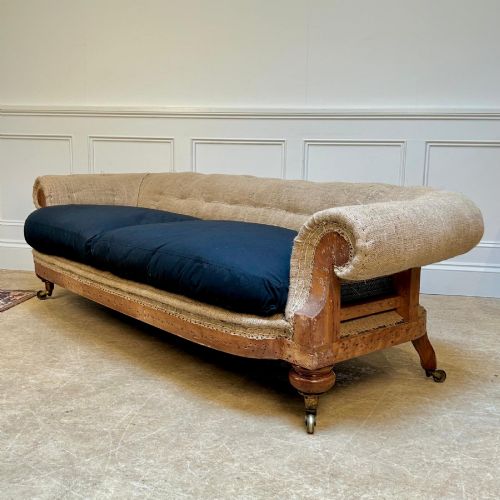
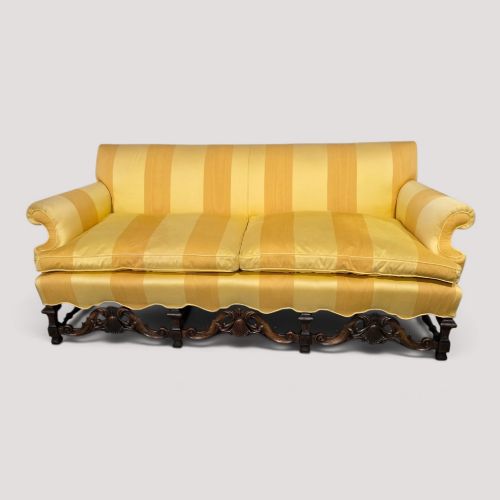
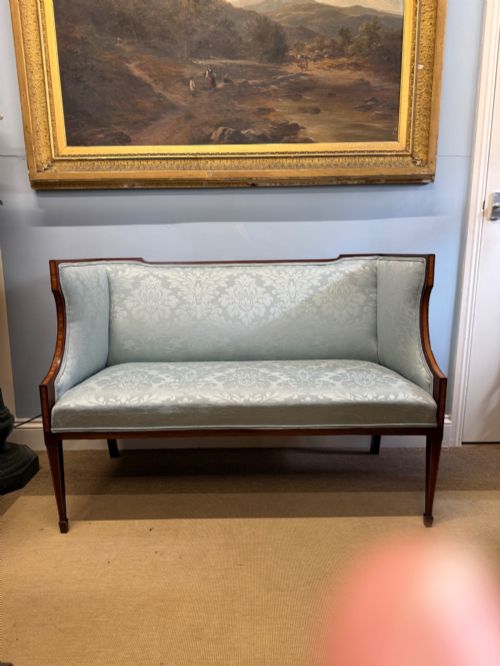
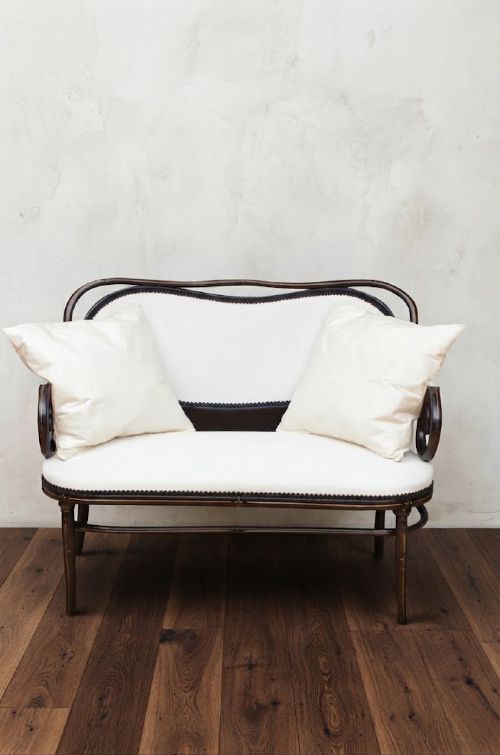
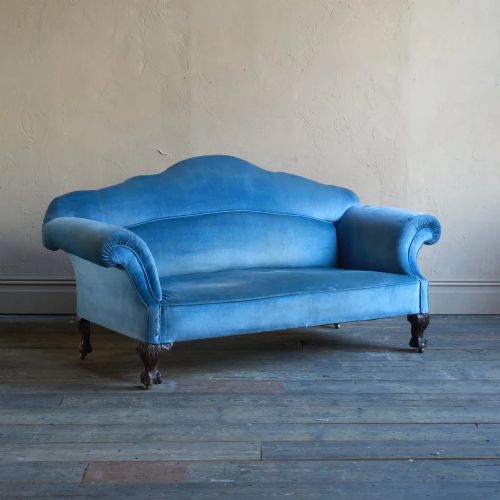
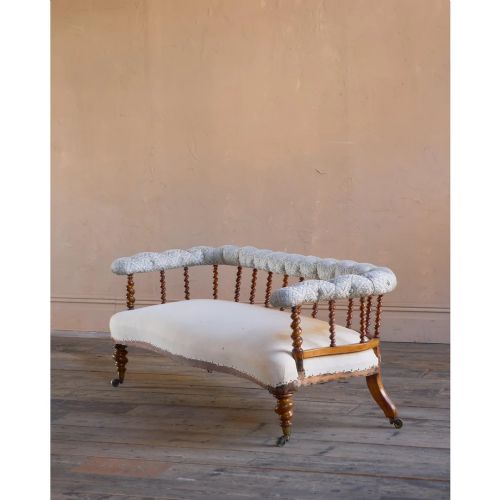
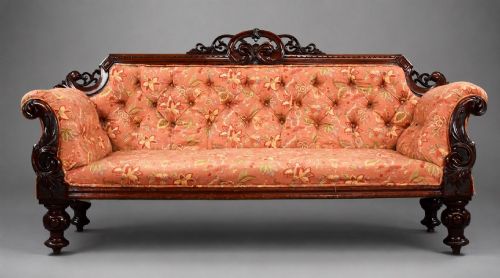
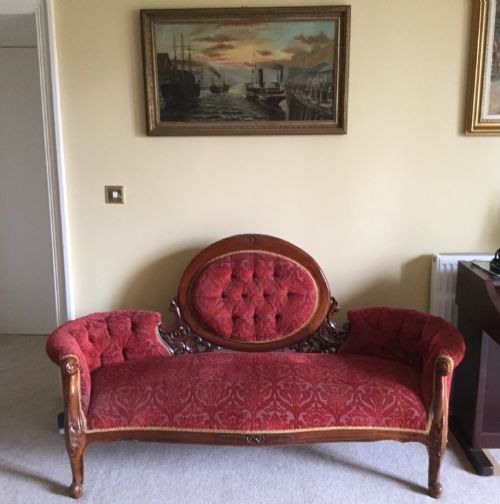
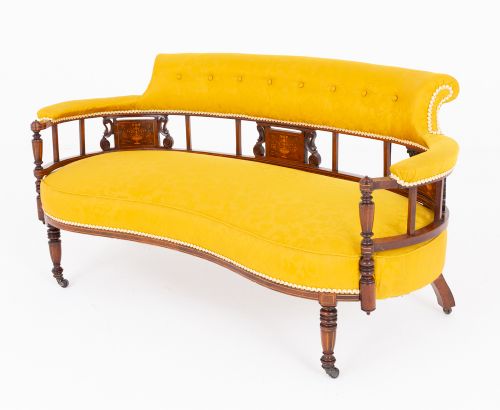
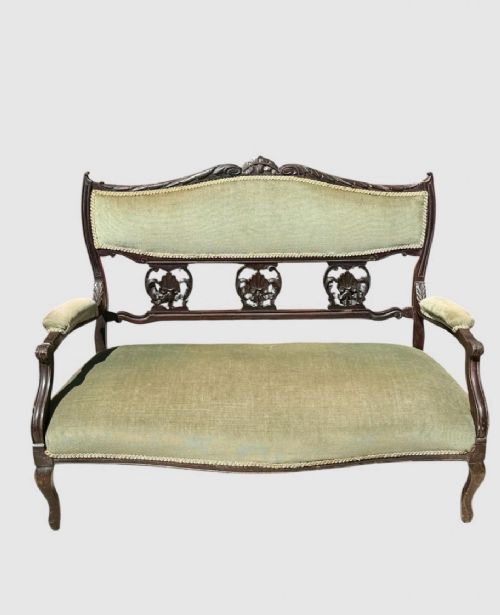
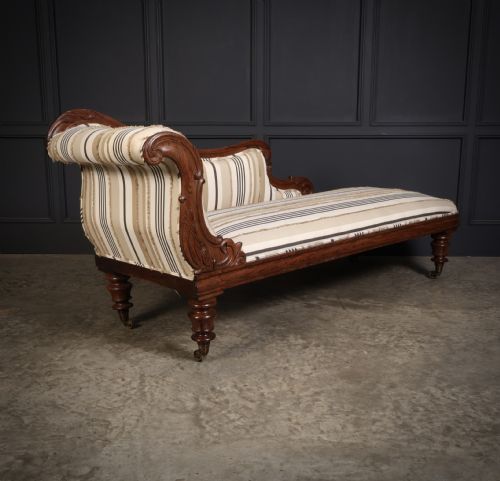
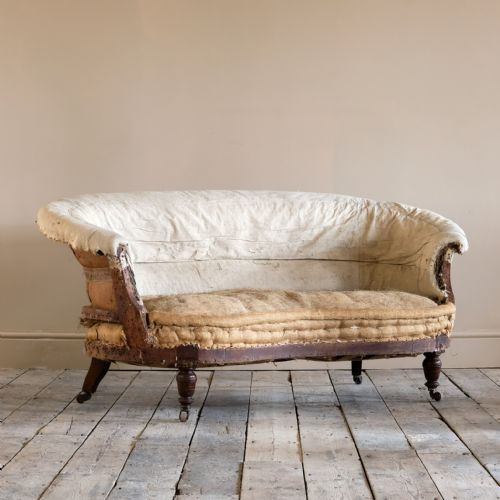
An upholstered wood couch spans forms ranging from Victorian mahogany settees and Edwardian two-seaters to 18th-century camelback sofas and chaise longues. Buyers most frequently encounter 19th-century and Edwardian examples featuring exposed wooden frames alongside fabric, velvet, or brocade coverings.
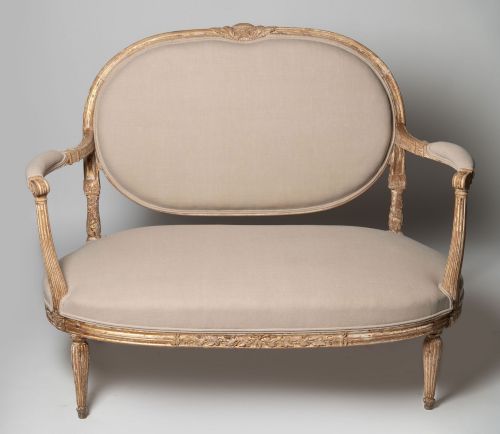
The category encompasses diverse styles including Regency, Louis XVI, Aesthetic Movement, and French Provincial. Frames take the shape of double-ended sofas, day beds, and scroll-shaped settees built from walnut, mahogany, or oak.
Makers and retail houses such as C. Hindley & Sons, Hampton & Sons, Giles Grendey, and Liberty provided seating that combines visible timber joinery with sprung or feather-cushioned upholstery bases.
Materials and construction
Frames are constructed from dense timbers including mahogany, walnut, rosewood, oak, and giltwood, sometimes enhanced with satinwood inlay or ebonising. These woods provide the structural skeleton for complex carving, ball and claw feet, or spindle backs.
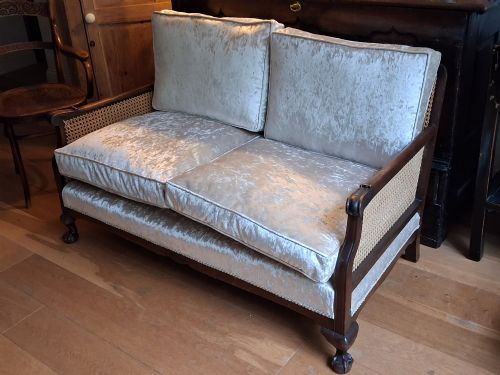
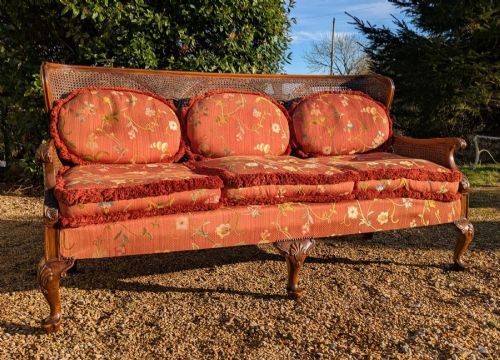
Upholstery techniques utilise deep pile brocade, velvet, fabric, and leather supported by sprung settee bases or feather cushions. Cane work also appears on French Bergère frames alongside brass details.
Listings feature woods spanning mahogany, walnut, rosewood, oak, and palisander, paired with periods from the 18th century through the 1930s.
Evaluating craftsmanship and execution
Quality rests in the crispness of the timber carving and the integrity of the underlying frame architecture. Finer examples display meticulous joinery, balanced proportions, and high-grade primary woods like figured rosewood or mahogany rather than secondary veneers.
The refinement of secondary elements, such as detailed cane work, lion mask hairy paw feet, or delicate inlaid satinwood stringing, separates standard production from exceptional pieces. The harmony between the exposed wooden structure and the chosen upholstery scale dictates the overall success of the piece.
C. Hindley & Sons·Giles Grendey·Hampton & Sons
The Upholstered Wood Couch Glossary
- Bergère
- An enclosed armchair or sofa featuring wooden frames and exposed cane work on the back and sides. These pieces often incorporate loose feather cushions.
- Chaise Longue
- An elongated seating form designed for reclining, combining a chair with an extended footrest. Examples appear frequently in Victorian walnut and Regency rosewood.
- Camelback
- A sofa style distinguished by a distinctive undulating serpentine top rail that curves upward in the centre like a camel's hump. This form is common in 18th-century designs.
- Ebonised
- Wood treated with a finish to imitate ebony. This technique defines many Aesthetic Movement settees from the 19th century.
- Palisander
- A dense tropical hardwood akin to rosewood, utilised in furniture making for its rich grain patterns and dark coloration.
Upholstered Wood Couch: Frequently Asked Questions
How do I clean an antique wood frame?
Dust the timber regularly with a dry, soft cloth to prevent particulate accumulation. Avoid modern liquid polishes that leave chemical residues on historic finishes.
Apply a microcrystalline wax sparingly if the wood appears dry, buffing gently with a clean cloth. Keep the frame away from direct sunlight and radiators to prevent timber shrinkage.
Can I reupholster an antique couch?
Reupholstery is common for pieces missing their original fabric or requiring structural updates to the interior webbing and springs. Traditional materials should be retained where possible to preserve the historical integrity of the build.
Consult a restorer who understands period upholstery methods, such as sprung bases and hand-stitched horsehair stuffing. This ensures the proportions remain faithful to the original design.
Where did these couches sit historically?
These seating pieces occupied formal drawing rooms, libraries, and large reception spaces in country houses and town residences. Salon sofas were designed specifically for entertaining and formal social gatherings.
Smaller two-seater settees and chaise longues were positioned in private boudoirs or informal parlours. Their placement depended entirely on the architectural scale of the room.
How do I date a wooden frame?
Examine the timber species, joinery methods, and tool marks visible on the unexposed underside of the frame. Manual saw marks and hand-cut joints point to earlier manufacturing periods before industrial machinery became widespread.
Compare the silhouette and decorative motifs, such as ball and claw feet or giltwood carving, against established period styles like Regency or Victorian. Stylistic markers offer reliable clues to the decade of origin.