
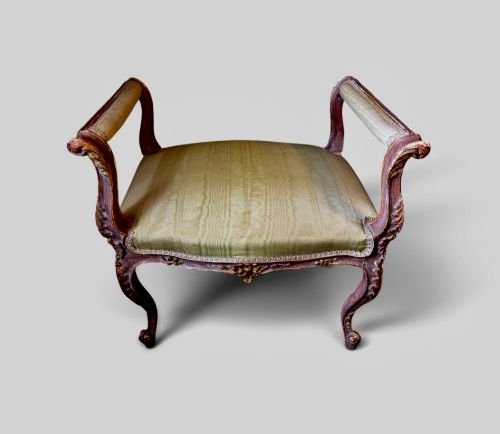
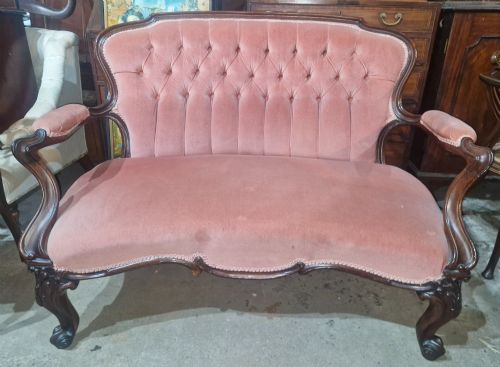
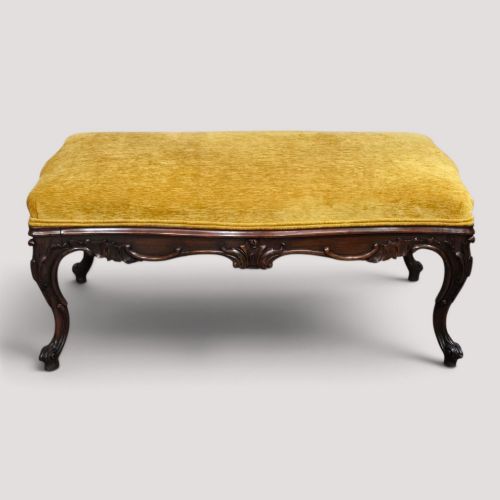
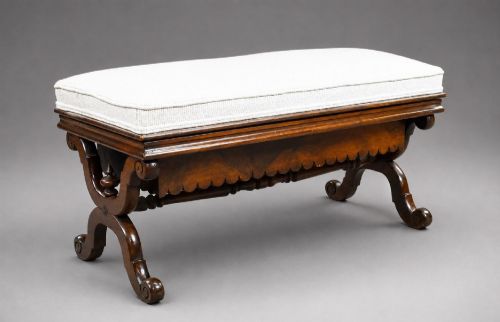
Upholstered Window Bench Seat
An upholstered window bench seat offers a practical perch beside a casement, drawing on nineteenth-century and earlier forms in mahogany, walnut, and giltwood.
Upholstered Window Bench Seat
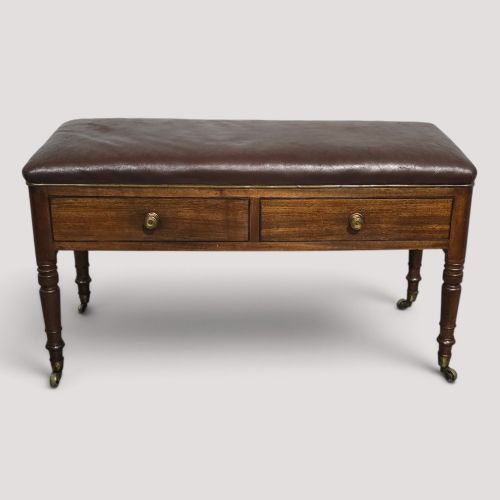
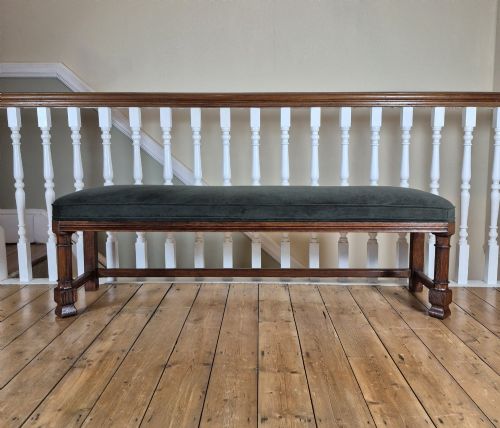
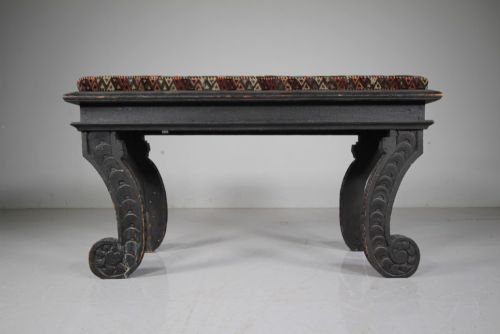
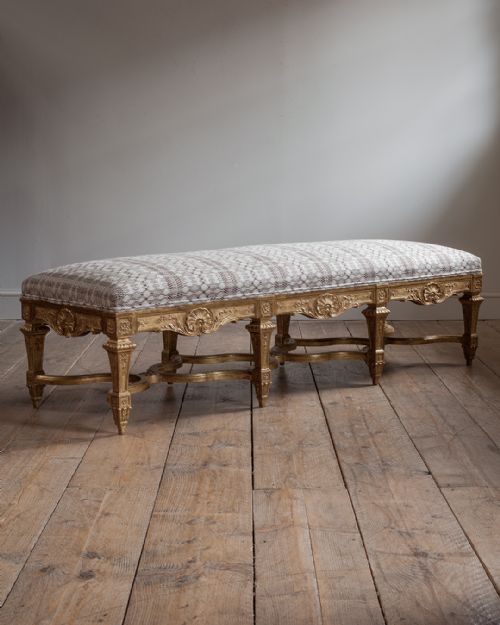
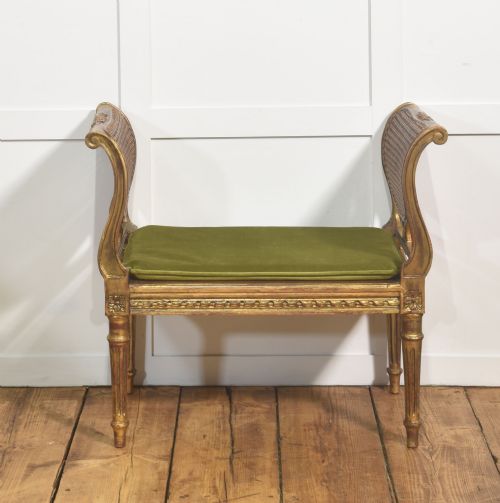
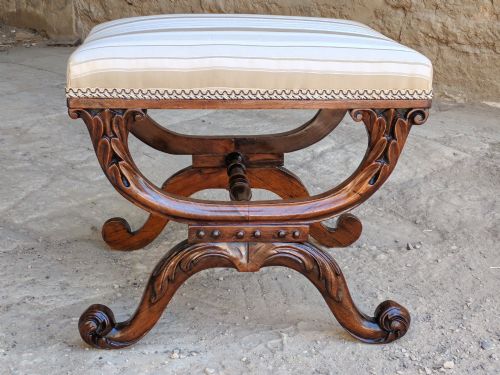
An upholstered window bench seat combines low seating with a slim profile designed to fit beneath a casement window without blocking the light. The pieces on this page span the eighteenth century, the Regency era, the Victorian period, and the Edwardian years.
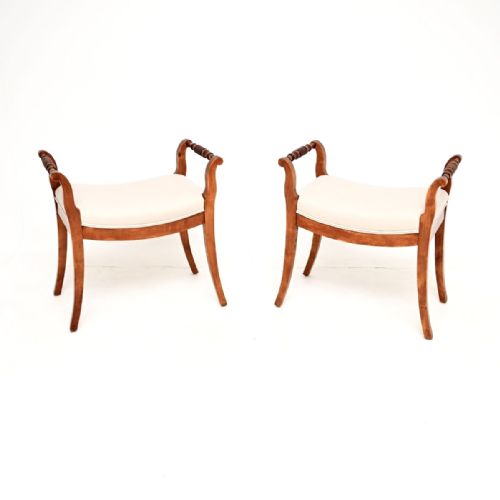
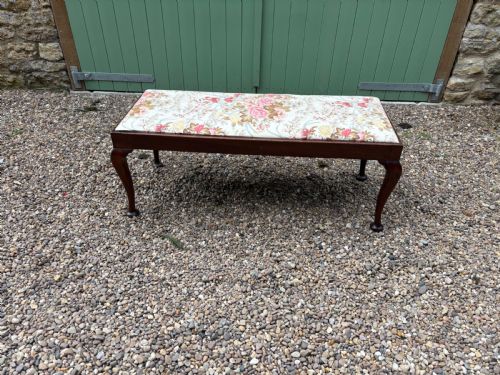
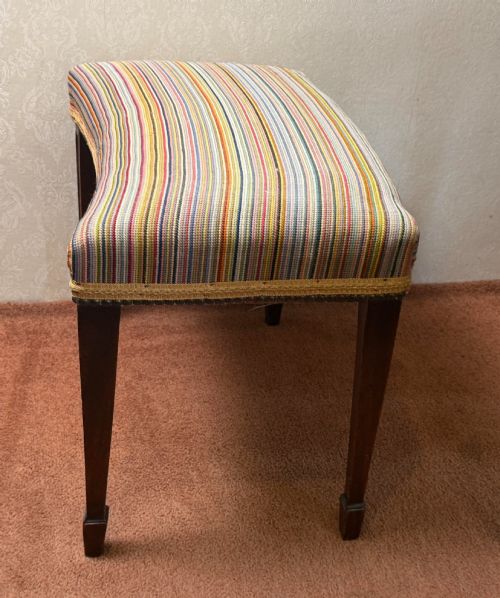
The most common forms include long stools, duet stools, and dedicated window seats framed in mahogany, walnut, oak, and painted pine. Examples range from George III mahogany frames with square tapering legs to heavily carved mid-Victorian rosewood and walnut designs.
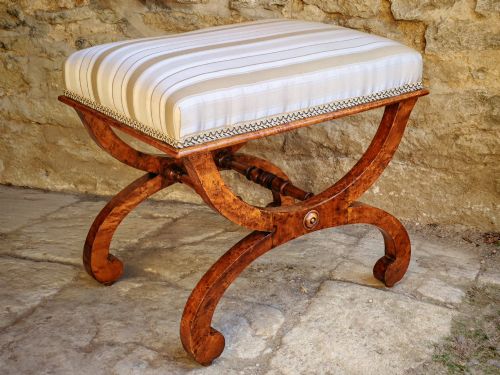
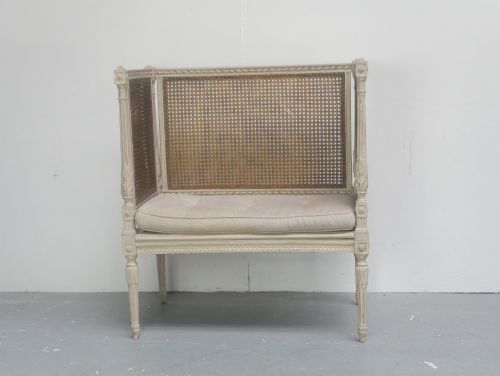
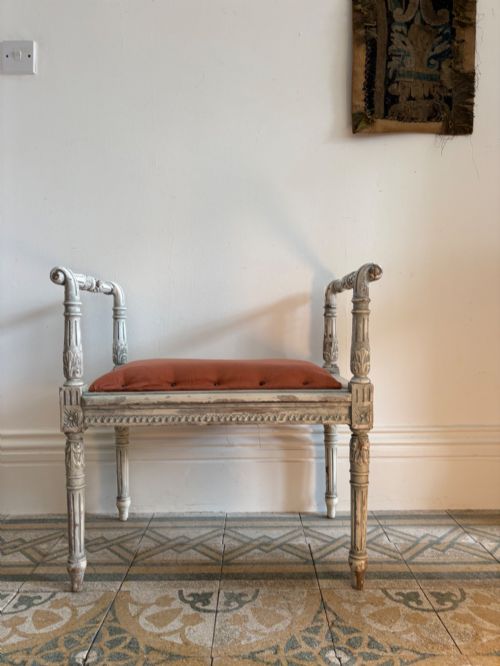
Origins are diverse, taking in English country house styles, French giltwood pieces, Swedish satin birch Biedermeier stools, and Italian painted benches. Makers such as Charles Nosotti and Hallett & Sons occasionally appear alongside unmarked regional work.
Materials and Technique
The structural frames rely on dense hardwoods like mahogany, walnut, oak, and satin birch, frequently joined with traditional cabinetry methods. Giltwood, painted pine, ebonised finishes, and burr maple provide surface decoration depending on the prevailing style.
Upholstery techniques vary from traditional webbing and stuffing beneath silk, linen, leather, and modern textiles like Robert Kime fabrics to cane panels. Decorative elements include brass mounts, pearl inlay, buttoning, and hand-carved cabriole or turned legs.
Listings feature periods from the 18th Century through the Edwardian era, employing materials such as mahogany, walnut, giltwood, brass, and linen.
Craftsmanship and Proportion
The distinction between ordinary and superior pieces rests upon the crispness of the timber carving and the integrity of the frame construction. Heavy Victorian walnut and restrained Georgian mahogany demonstrate different levels of joinery skill, from plain turned supports to elaborate pierced splats and cabriole legs.
Surface treatment dictates much of the visual weight, with original giltwood leaf, undisturbed painted finishes, and rich patination on exposed rosewood or mahogany setting superior examples apart. The quality of the secondary timbers and the precision of decorative inlays further define the standing of each piece.
Charles Nosotti·Hallett & Sons
The Upholstered Window Bench Seat Glossary
- Giltwood
- Timber treated with a thin layer of gold leaf over a prepared gesso base. This finish is characteristic of ornate French and English decorative styles from the eighteenth century onwards.
- Duet Stool
- An extended seating form built to accommodate two people side by side. These pieces often feature longer rectangular proportions suited to larger reception rooms or wide window recesses.
- Biedermeier
- A Central European style spanning the early to mid-nineteenth century, known for clean lines and blond woods such as satin birch. It prioritises domestic utility and minimalist comfort over heavy ornamentation.
- Cabriole Leg
- A furniture leg that curves outward in a convex arc before tapering inward in a concave sweep, finishing at a pad or scroll foot. The profile imitates the natural bend of an animal's leg.
- Ebonised
- Timber stained or painted to resemble ebony, creating a dense black finish. This technique gained popularity during the Victorian period for accentuating classical forms.
Upholstered Window Bench Seat: Frequently Asked Questions
Where should an upholstered window bench seat go?
These pieces fit naturally beneath low casement windows, at the foot of a bed, or along a narrow hallway. Their shallow depth allows them to provide extra seating without obstructing pathways.
In living rooms, they serve as movable seats that can be repositioned near a fireplace or used as low tables with a tray placed on top.
How do I care for antique upholstery?
Vacuum textile and silk surfaces gently with a soft brush attachment to remove dust before it settles into the fibres. Keep frames out of direct sunlight to prevent the wood and fabric from fading.
Treat exposed timber frames with appropriate beeswax rather than modern silicon sprays to maintain the natural patina. Professional cleaning is recommended for antique horsehair or traditional stuffed interiors.
Can I use these benches in a modern interior?
The clean lines of Regency and Edwardian frames integrate smoothly into contemporary rooms, especially when paired with neutral or patterned linen. Victorian walnut and carved giltwood pieces act as focal points against plain plastered walls.
Many examples feature contemporary re-upholstery, making them ready for daily domestic use while retaining their historic wooden frames.
How do I distinguish George III from Victorian pieces?
George III pieces generally display restrained proportions, straight or tapering legs, and understated mahogany or satinwood surfaces. They prioritise architectural harmony and classical balance.
Victorian frames tend to be heavier, utilising walnut or rosewood with deep buttoning, scrolling carved cabriole legs, and more exuberant upholstery profiles.