



Upholstered Walnut Window Seat
An upholstered walnut window seat offers a quiet place to sit by the glass, combining rich timber frames with soft textile tops.
Upholstered Walnut Window Seat
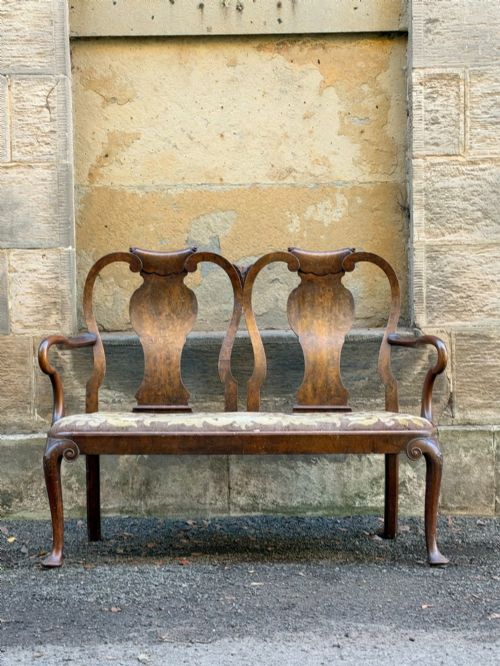
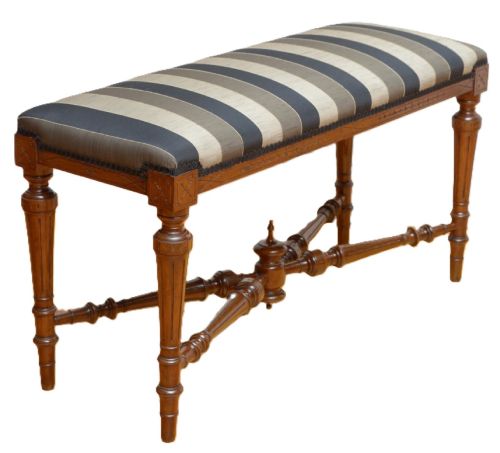
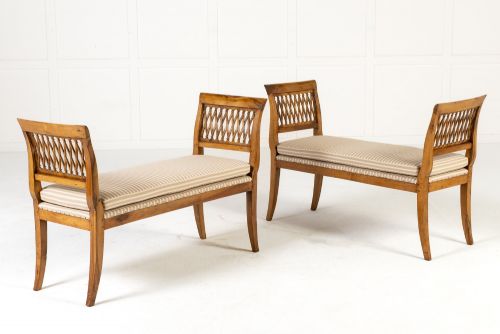
An upholstered walnut window seat brings seating directly beneath a sill, taking forms that range from compact duet stools to long settee-style benches. You find pieces spanning the nineteenth century up to the nineteen-thirties, with Victorian examples appearing frequently alongside Edwardian and French nineteenth-century variations. These items serve spaces that demand low-profile seating, fitting neatly in alcoves and hallways as well as beneath bay windows.
Makers drew on historical vocabularies, producing George II style interpretations, Queen Anne revivals, and Aesthetic Movement designs alongside functional English country house furniture. Some editions arrive as pairs of French walnut window seats, while others take specific forms like the X-frame carved walnut window stool with hunting dog heads. Textile tops vary from simple beige linen and modern upholstery fabric to patterned velvet and tapestry.
Materials and construction
Makers built the structural frames from walnut and burr walnut, selecting the timber for its warm grain and structural stability. Carved details emerge across many pieces, executed by hand directly into the dense walnut frames.
Upholstery completed the work, utilising textiles ranging from traditional tapestry and velvet to contemporary linen and specialist upholstery fabrics. Brass hardware occasionally appears on footings or structural joints, complementing the dark tones of the wood.
Upholstered Walnut Window Seat Retail Price Guide 2026
Typical asking prices for upholstered walnut window seat among the pieces listed under this phrase on Sellingantiques today, from the lower quarter to the upper quarter. They describe what is for sale here now, not the wider market.
Listings feature walnut frames paired with textiles including velvet, tapestry, and plain linen.
Judging quality
The distinction between ordinary and exceptional work rests on the crispness of the timber carving and the depth of the walnut grain. Finer frames exhibit precise joinery and well-defined decorative elements, such as the sculptural carving found on Victorian examples.
The choice of covering also signals intent, where historic tapestries or rich velvet elevate a piece above standard utility items. Proportion and balance dictate the success of revival styles, distinguishing careful cabinet work from simpler production.
Morris & Co.
The Upholstered Walnut Window Seat Glossary
- Walnut
- A hard, dark timber prized for its rich grain and capacity for sharp carving. Cabinet makers utilised it extensively across nineteenth-century seating.
- Burr walnut
- A figured veneer taken from the growth excrescences of the tree. It creates a swirling, highly decorative pattern on the timber surface.
- Aesthetic Movement
- A late nineteenth-century style focusing on artistic visual qualities rather than narrative content. Pieces from this period often display cleaner lines and refined proportions.
- X-frame
- A structural furniture base formed by intersecting diagonal stretchers. This configuration provides sturdy support for low stools and benches.
- Duet stool
- An elongated seat designed for two people to sit side by side. They appear frequently in nineteenth-century domestic interiors.
Upholstered Walnut Window Seat: Frequently Asked Questions
Where should I put a window seat?
These pieces suit natural light, making them ideal beneath bay windows or beside large glass panes. They also fit well along long hallways or at the foot of a bed.
The low profile ensures they do not block external views while offering a practical spot for reading or putting on shoes.
How do I care for the walnut frame?
Protect the timber by keeping it away from direct heat sources and strong sunlight, which can dry out the grain. Regular dusting with a soft, dry cloth preserves the finish.
Apply a traditional wax polish occasionally to nourish the wood and maintain its natural lustre without building up heavy residues.
Are these seats comfortable for daily use?
Most examples provide firm, supportive seating thanks to traditional upholstery foundations. The depth and length vary depending on whether the piece is a compact duet stool or an extended bench.
Many historic pieces have been recovered in modern linen or velvet, combining period frames with comfortable contemporary padding.
How can I tell the period of a walnut seat?
Examine the timber finish, the style of any carved ornament, and the construction methods visible underneath. Victorian pieces often feature heavier carved decoration, while Edwardian versions lean towards lighter revival forms.
Stylistic cues such as Aesthetic Movement lines or French Empire influences help narrow down the decade of production.