
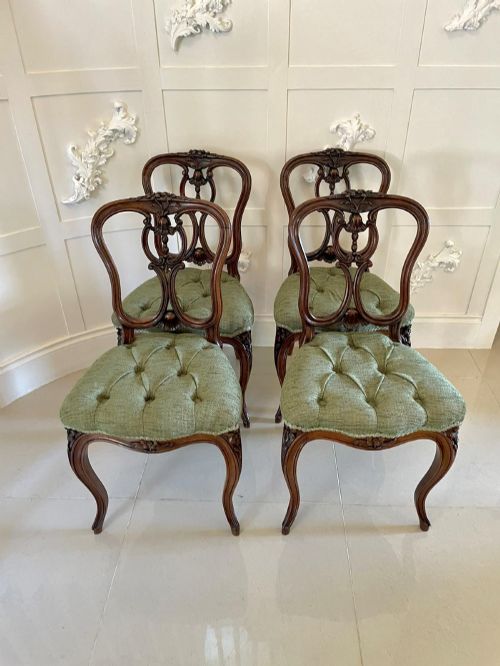


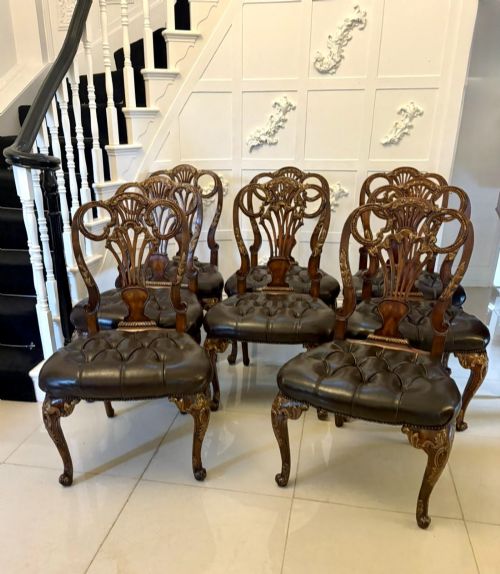
Upholstered Walnut Side Chairs
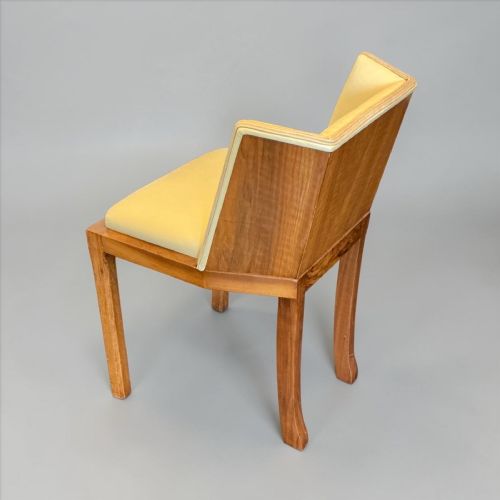
These upholstered walnut side chairs combine rich timber frames with tactile textile coverings across periods from the eighteenth century to Art Deco.
Upholstered Walnut Side Chairs
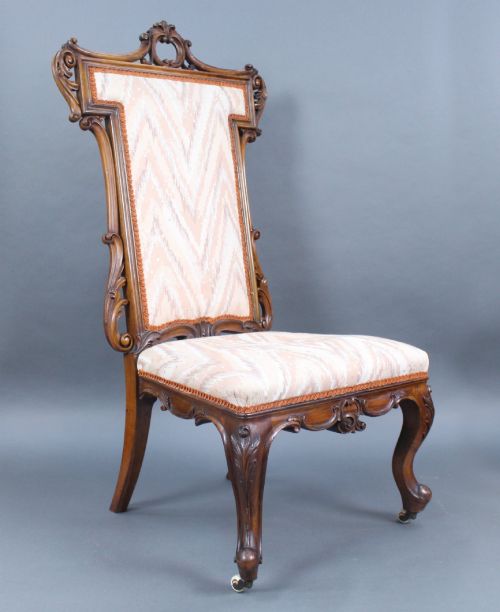
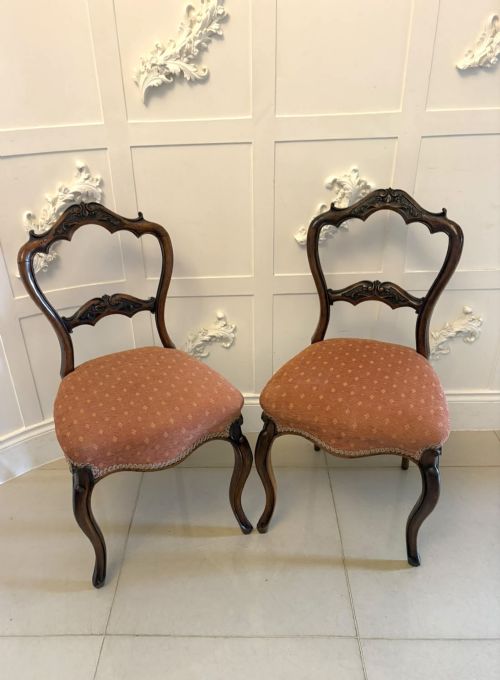
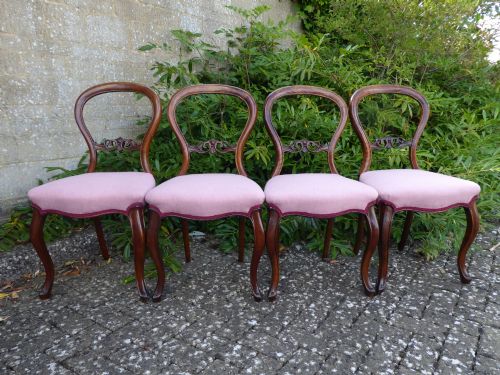
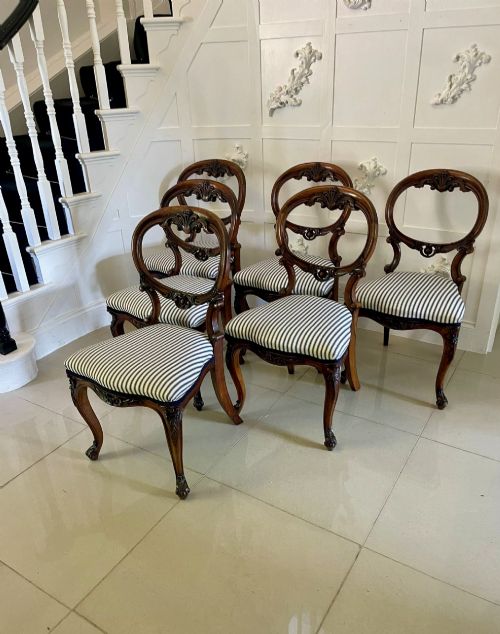
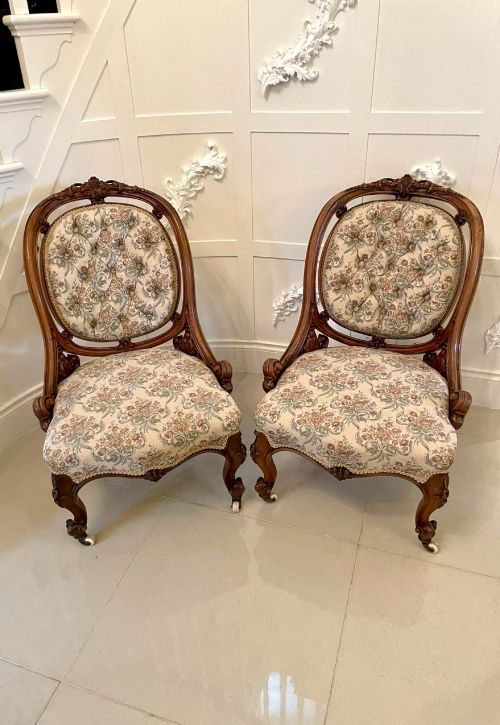
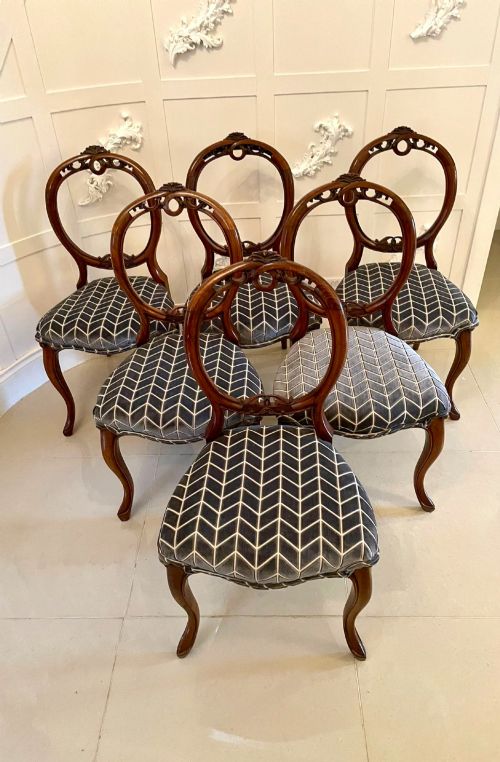
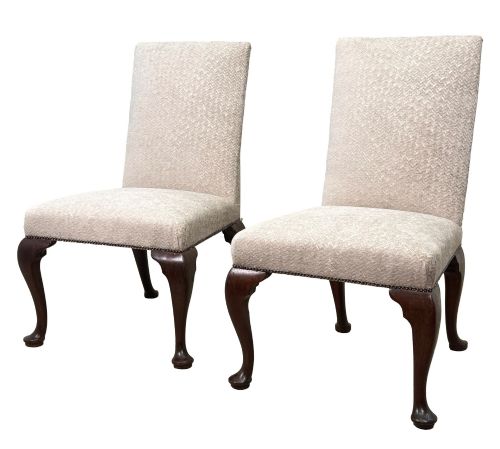
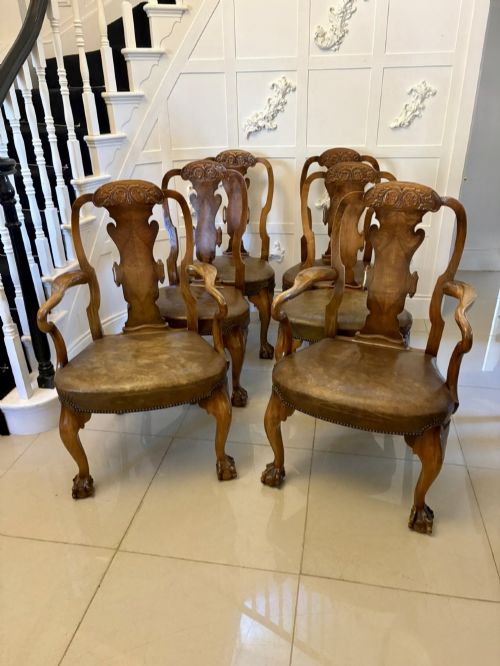
Upholstered walnut side chairs encompass formal dining seats, occasional parlour chairs and low nursing chairs spanning the eighteenth and nineteenth centuries into the twentieth century. The most common examples met in these listings are Victorian balloon back and carved dining chairs, alongside earlier Georgian and Queen Anne styles.
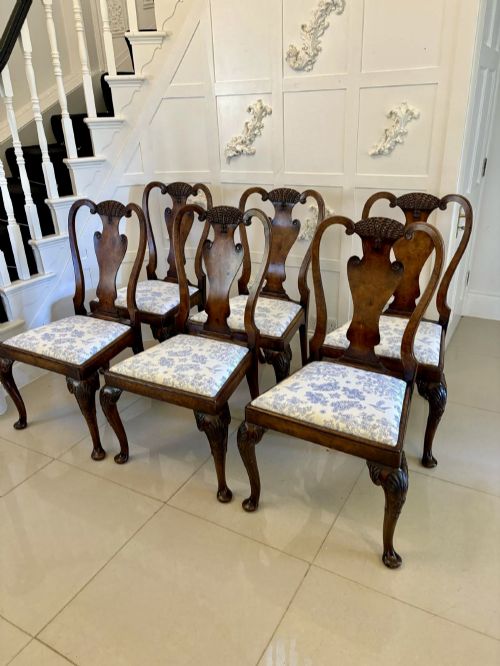
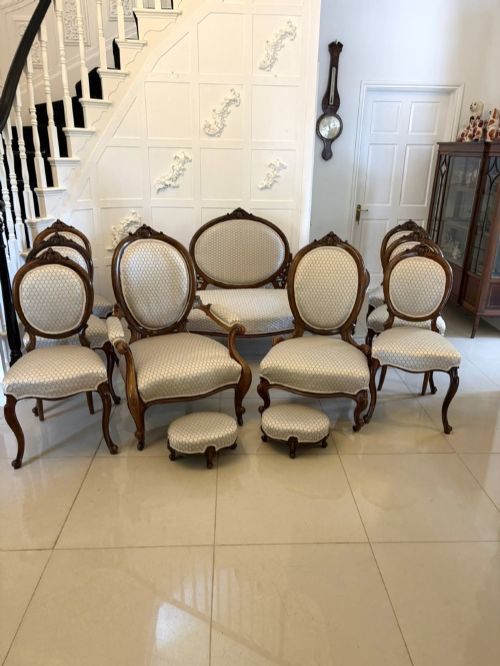
Makers utilised walnut, burr walnut and mahogany to form frames ranging from simple cabriole legs to elaborate carved high-backs. Pieces appear individually, in pairs, or in larger dining sets numbering up to eight or eleven pieces.
The selection extends to French and Italian regional variations, alongside later revivals of Louis styles and Art Deco occasional chairs. Each form serves a distinct domestic function, from the parlour to the dining room.
Materials and construction
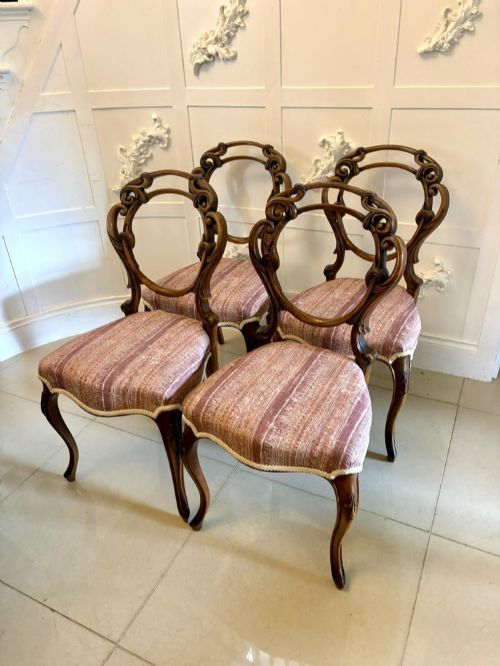
Frames rely upon solid walnut and burr walnut timber, shaped into cabriole legs, balloon backs and carved splats using traditional joinery. Artisans applied detailed hand-carving to the crest rails and knees, occasionally incorporating gilding or brass elements.
Upholstery techniques involve textile coverings such as velvet, silk damask, tapestry and standard upholstery fabric secured over padding. Caning also appears on high-back models, providing rigid yet breathable seating panels.
Assessing the standard
The depth and crispness of the hand-carving on the walnut frame separate standard production from superior pieces. Timber selection also dictates grade, with figured burr walnut commanding greater visual presence than plain grain.
The integrity of the structural joints and the quality of the textile upholstery define the finished standard. Period accuracy in any restoration work maintains the character of the piece.
Charles Tozer·Howard and Sons
The Upholstered Walnut Side Chairs Glossary
- Cabriole leg
- A furniture leg that curves outward at the knee and tapers inward at the ankle, finishing in a pad or claw foot. This form derives from animal limbs and typifies eighteenth-century seating.
- Balloon back
- An oval-shaped chair back resembling a balloon, popular during the Victorian era. It provides ergonomic support through a continuous curved wooden frame.
- Burr walnut
- Timber taken from a walnut tree growth showing intricate swirling grain patterns. It provides a highly decorative veneer for cabinet work and chair frames.
- Splat
- The vertical wooden strip down the middle of a chair back. It receives decorative carving or shaping to define the period style.
Upholstered Walnut Side Chairs: Frequently Asked Questions
How do I date a walnut chair?
Examine the leg form, stretcher arrangement and back construction to establish the period. Eighteenth-century examples often display cabriole legs, while Victorian pieces favour balloon backs or carved walnut frames.
Secondary timbers inside the frame and the style of the joinery offer further clues to the exact decade of manufacture.
Are these chairs suitable for daily dining?
Many of these pieces served as dining chairs originally and retain the structural strength for regular use. Ensuring the joints remain tight is essential before placing them around a table.
Pairs and larger sets provide a matched aesthetic, while single side chairs work well as accent pieces in various rooms.
What textiles were used originally?
Upholstery materials ranged from velvet and silk damask to tapestry and durable woven textiles. Many antique pieces have undergone re-upholstery to preserve their utility.
Selecting period-appropriate fabrics helps maintain the historical context of nineteenth-century and earlier frames.
How do I care for walnut wood?
Keep walnut furniture away from direct sunlight and heat sources to prevent the timber from drying out or splitting. Gentle dusting with a dry cloth preserves the polished surface.
Avoid chemical polishes that build up a residue and dull the natural grain of the burr or solid walnut.