



Upholstered Serpentine Sofa
An upholstered serpentine sofa brings fluid, curving lines and classic silhouettes into a room.
Upholstered Serpentine Sofa
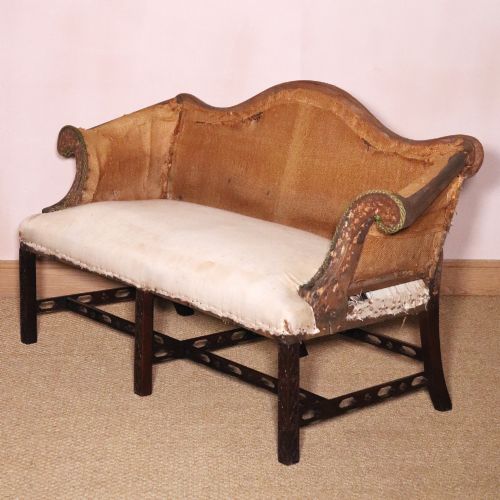
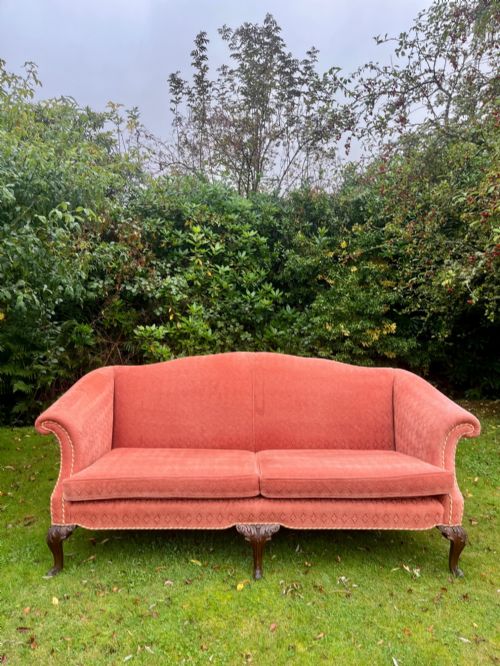
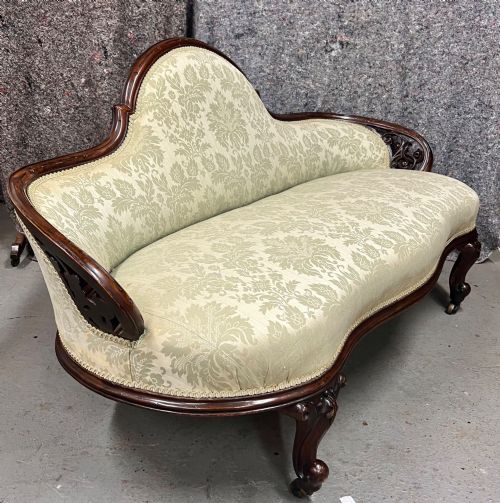
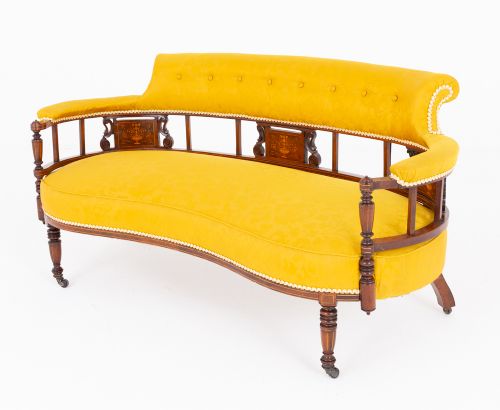
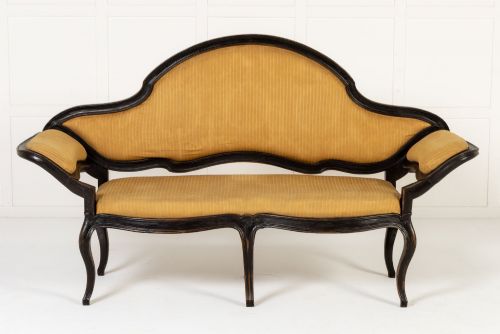
An upholstered serpentine sofa is a seat defined by its undulating front rail, curving gently outward in the centre and inward toward the arms. These pieces range from eighteenth-century George III iterations and nineteenth-century Victorian examples to later Edwardian and twentieth-century revivals.
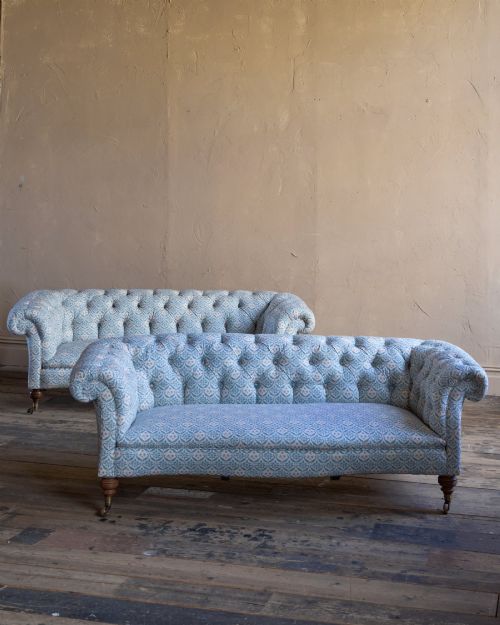
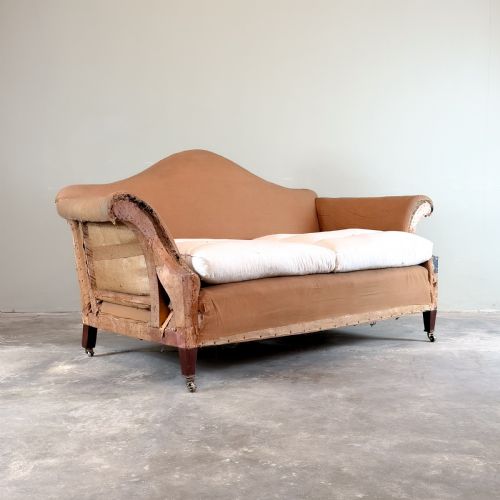
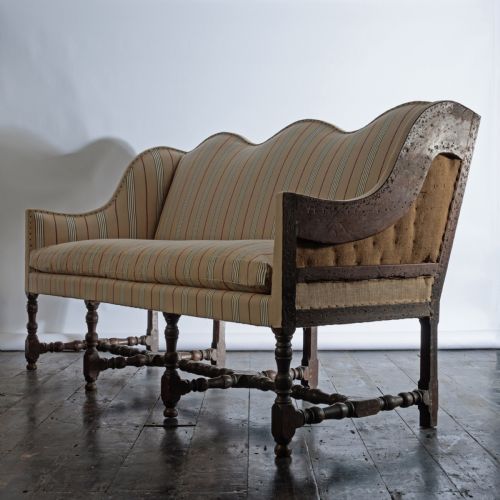
The form appears in several distinct stylistic guises across the inventory, including camel back designs, Hepplewhite and Chippendale revivals, and substantial country house seating. Frames are encountered in mahogany, walnut, and rosewood, carrying various textiles from cotton damask to contemporary upholstery.
Materials and construction
The structural framework relies on dense hardwoods such as mahogany and walnut, chosen for their ability to support the complex compound curves of the serpentine front rail. Exposed show-wood frames often feature carved mahogany details, turned legs, or brass castors.
Traditional upholstery techniques utilise foundational webbing, jute, and stuffing materials beneath the top fabric layers to build up the characteristic camel back and buttoned contours.
Upholstered Serpentine Sofa Retail Price Guide 2026
Typical asking prices for upholstered serpentine sofa among the pieces listed under this phrase on Sellingantiques today, from the lower quarter to the upper quarter. They describe what is for sale here now, not the wider market.
Listed pieces span from the seventeenth-century baroques through Georgian styles up to the twentieth century.
Variations in quality
Quality rests in the precision of the frame's serpentine sweep and the integrity of the underlying joinery, which dictates how well the silhouette holds its tension over generations. Finer examples display crisp hand-carving on exposed show-wood and balanced proportions that echo their eighteenth-century origins.
The execution of the upholstery foundation also separates standard pieces from superior ones, visible in the resilience of the springing and the clean alignment of fabric patterns across complex curves.
Howard and Sons
The Upholstered Serpentine Sofa Glossary
- Serpentine
- A front rail or edge that curves outward in the middle and inward at the sides. This fluid shape creates a graceful profile typical of finer seating.
- Camel back
- A sofa back featuring a continuous, smooth hump or arch that mimics the animal's silhouette. It provides a structured, elegant upper border.
- Show-wood
- Portions of the timber frame left visible around the upholstered sections. It highlights the quality of the wood and any carving.
- Button upholstery
- A technique where depressions are created across the fabric surface by pulling strings or twine through to the frame. This secures the internal stuffing in a diamond pattern.
- Hepplewhite manner
- A design style inspired by the eighteenth-century cabinet maker George Pendleton Hepplewhite, characterised by lightness, elegance, and classical motifs.
Upholstered Serpentine Sofa: Frequently Asked Questions
What is a serpentine sofa?
A serpentine sofa is a traditional seat featuring an undulating front rail that curves outward in the middle and inward at the edges. This design creates a dynamic and graceful outline.
Such pieces date across multiple centuries, encompassing eighteenth-century proportions, Victorian walnut frames, and later revival styles.
How do I date a serpentine sofa?
Dating relies on examining the timber of the frame, the carving style, and the construction methods used beneath the upholstery. Eighteenth-century models differ significantly from Victorian show-wood frames or twentieth-century interpretations.
Details such as leg shape, stretcher arrangements, and secondary woods offer clear clues to the period of origin.
Where should I place this sofa?
These sofas work well as focal points in drawing rooms, studies, or large living spaces where their curved profiles can be appreciated from multiple angles. Their classic silhouettes complement both traditional interiors and eclectic modern rooms.
Ensure adequate clearance around the piece so the serpentine front rail remains fully visible.
Are these sofas comfortable for daily use?
Many of these pieces offer supportive seating, though older frames often utilise traditional webbing and horsehair stuffing that feels firmer than modern foam. The depth and back height vary according to the specific period and style.
Reviewing the internal padding and spring structure helps determine the daily seating experience.