


Upholstered Parlor Chairs
These upholstered parlor chairs bring the rich textures and carved woods of the Victorian and Edwardian eras straight into a modern room.
Upholstered Parlor Chairs
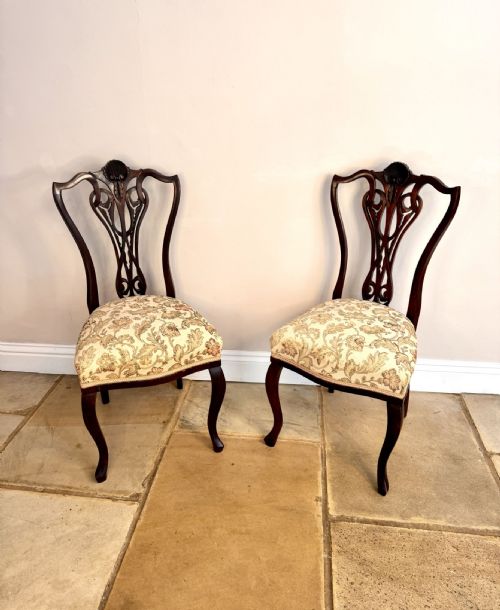
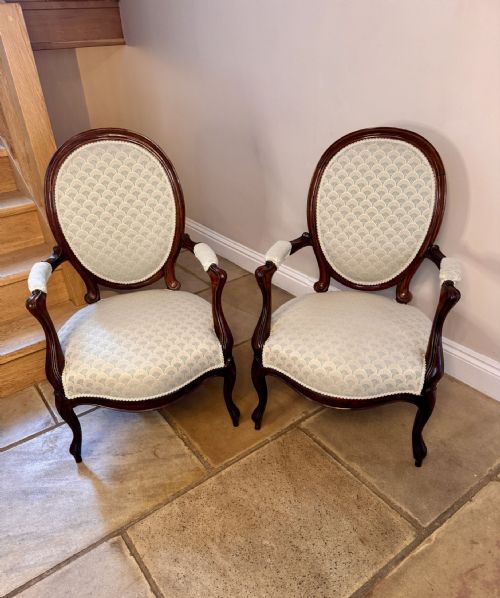
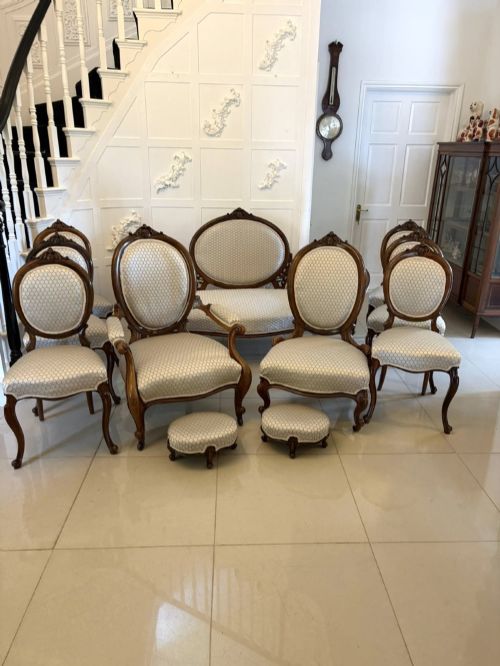
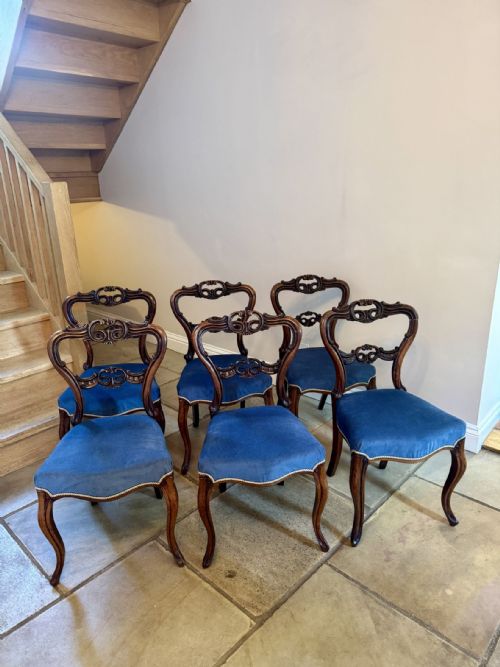
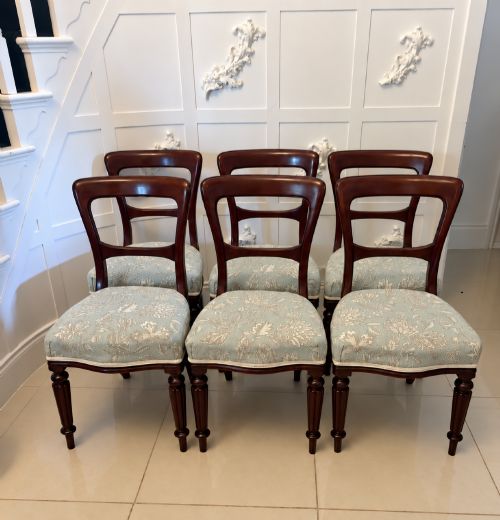
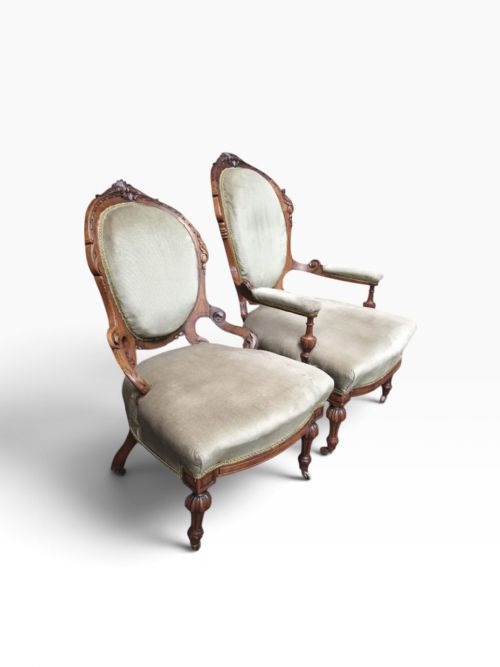
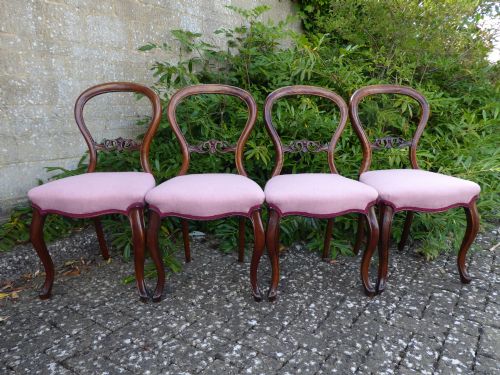
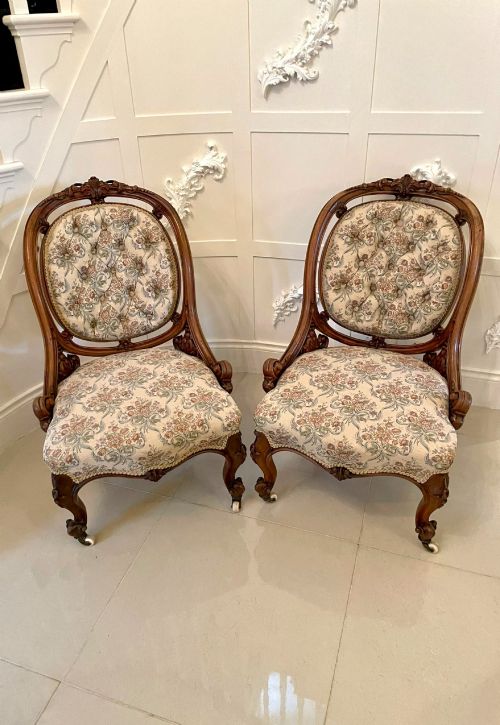
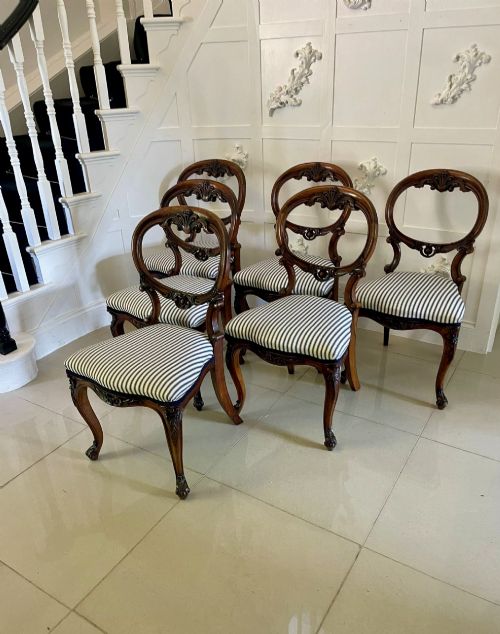
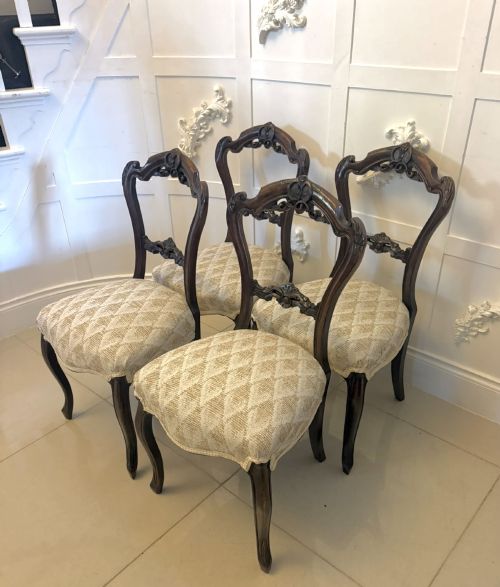
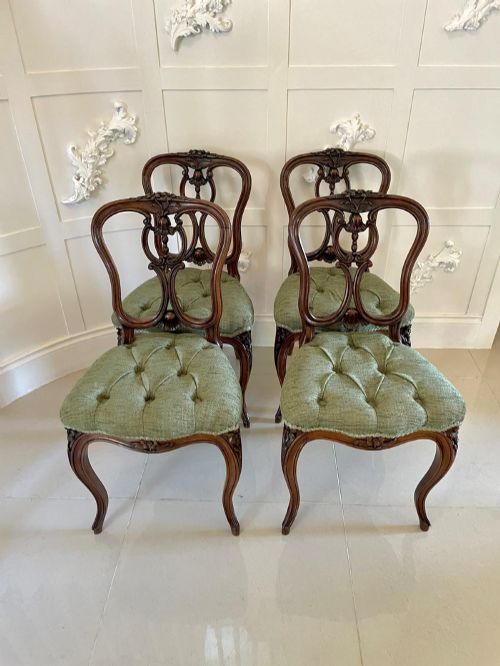
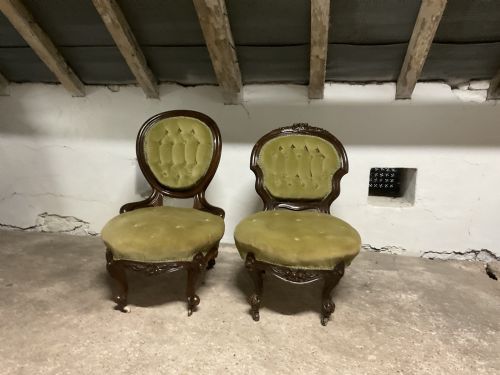
When you search for upholstered parlor chairs, you encounter seating designed for formal reception rooms and domestic entertaining during the nineteenth and early twentieth centuries. These pieces encompass everything from single occasional seats and library chairs to multi-piece salon suites complete with sofas and footstools. The most common versions on this page are Victorian walnut and mahogany examples, ranging from balloon back dining chairs to carved armchairs and parlour chairs.
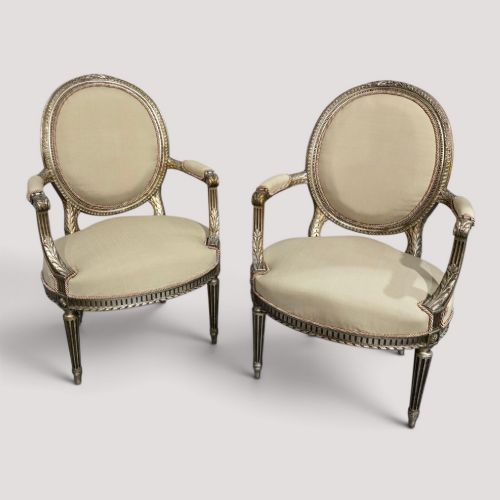
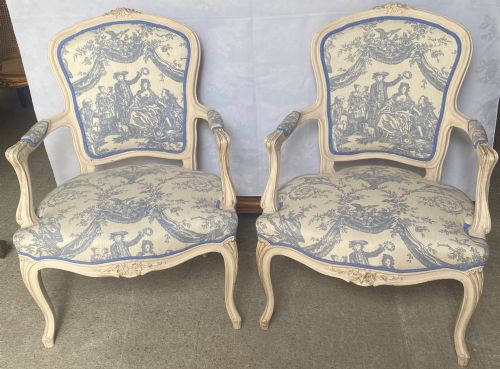
The selection also reaches into Edwardian Sheraton Revival forms and French-influenced revival styles, showing how seating evolved from mid-century exuberance to lighter, inlaid designs. You will find matched sets of four or six alongside pairs and individual salon chairs, giving you flexibility for both large dining tables and quiet corners. Their forms rely heavily on traditional timber frames softened by upholstery fabric, velvet, and textile coverings.
How they were made
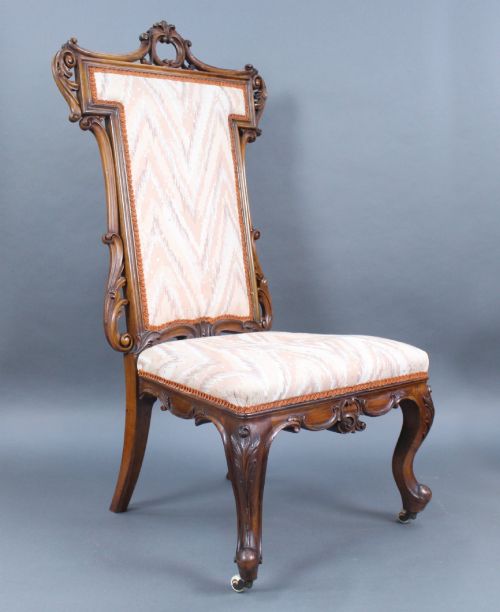
Craftsmen built the frames of these chairs using dense hardwoods such as mahogany, walnut, and rosewood, often shaping the timber into curved cabriole legs or reeded supports. Carved showwood frames left polished timber exposed around upholstered panels, while marquetry inlay added decorative surface detail to select parlor chairs. Brass elements sometimes reinforced structural points or decorated castors on heavier armchairs and salon suites.
Makers integrated sprung settee bases and deep-pile brocade or velvet upholstery to ensure comfort alongside formal elegance. Balloon back dining chairs and high-back parlor chairs relied on steam-bent timber to achieve their characteristic curved silhouettes without compromising structural strength.
Upholstered Parlor Chairs Retail Price Guide 2026
Typical asking prices for upholstered parlor chairs among the pieces listed under this phrase on Sellingantiques today, from the lower quarter to the upper quarter. They describe what is for sale here now, not the wider market.
Listings span from the 1850s Victorian era through Edwardian times, featuring mahogany, walnut, rosewood, and velvet textiles.
What varies in quality
The distinction between standard domestic seating and exhibition quality pieces lies in the crispness of the timber carving and the choice of dense grain woods like rosewood and walnut. Superior examples demonstrate deeply sculpted frames, intricate marquetry inlay, and harmonious proportions across an entire matching salon suite or set of dining chairs.
A higher standard also shows in the retention of original showwood finish and the integration of substantial sprung bases that maintain their tension over decades of use.
The Upholstered Parlor Chairs Glossary
- Showwood
- Timber frame left visible around the upholstered portions of a chair or sofa. It allows the grain and carving of walnut or mahogany to contribute to the visual design.
- Balloon back
- A chair back shaped in a continuous closed curve resembling a balloon. This form was widely utilised in nineteenth-century dining and parlor seating.
- Cabriole leg
- A furniture leg that curves outward and then tapers inward toward the foot, mimicking animal limbs. It frequently terminates in scroll or pad feet on Victorian and Edwardian chairs.
- Marquetry
- Decorative patterns formed by fitting together thin veneers of various coloured woods. It appears on the flat surfaces of finer parlor chairs and cabinets.
- Settee
- A small upholstered sofa designed for seating two or more people. They share matching design elements with companion armchairs in larger salon suites.
Upholstered Parlor Chairs: Frequently Asked Questions
What is a parlor chair?
A parlor chair is a form of Victorian or Edwardian seating designed specifically for reception rooms where guests were entertained. These chairs prioritised decorative carving and comfortable upholstery over heavy daily dining use.
They appear in various formats on this page, including occasional chairs, nursing chairs, and high-back parlor models, often utilising walnut or mahogany frames.
How do I spot a Victorian parlor chair?
Victorian parlor chairs typically feature dark hardwoods like walnut or mahogany, frequently accented with deep-buttoned upholstery, velvet, or brocade fabric. Look for characteristic silhouettes such as balloon backs, carved showwood frames, and cabriole legs.
Many examples also incorporate revival styles, ranging from Rococo curves to Neoclassical symmetry.
Can I use these chairs for everyday dining?
Many listings include sets of four or six chairs originally intended for dining rooms, alongside single armchairs and salon seating. These sturdy timber frames and sprung bases handle regular daily use well.
Ensure the seat height and depth match your table and personal comfort preferences before placing them in a modern dining setting.
What is an Edwardian salon chair?
Edwardian salon chairs date from the early twentieth century and generally present a lighter, more refined aesthetic than their Victorian predecessors. They often feature Sheraton Revival influences, satinwood or mahogany frames, and delicate marquetry inlay.
These chairs suit smaller spaces and function well as occasional seating in bedrooms or drawing rooms.