


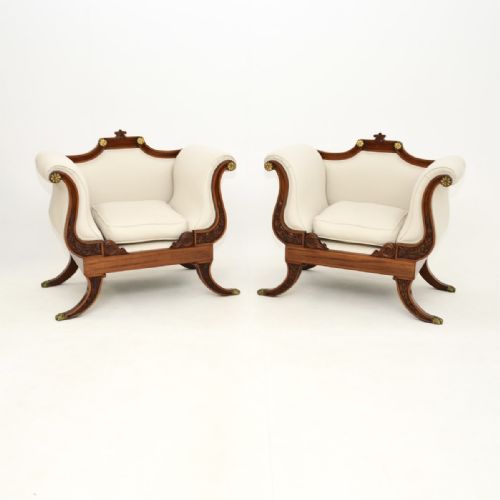


Upholstered Leather Fireside Chairs
These upholstered leather fireside chairs offer deep comfort and period character, bringing traditional warmth and distinguished seating to any room.
Upholstered Leather Fireside Chairs
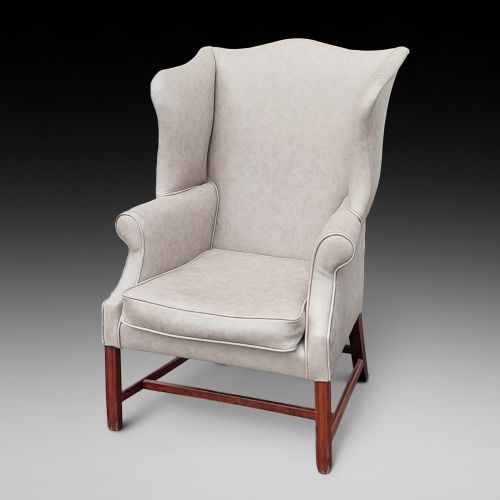
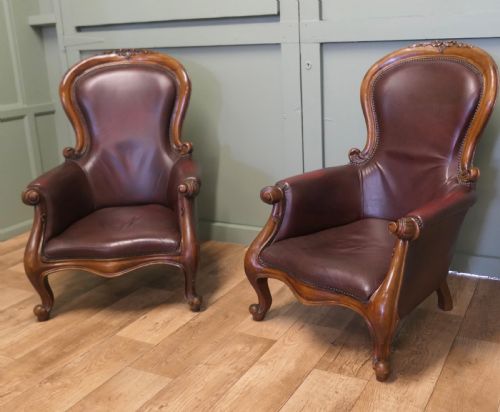
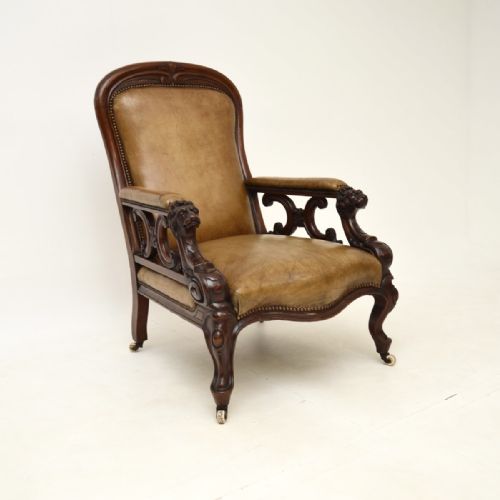
When you search for upholstered leather fireside chairs, you are looking at substantial seating designed for warmth and long periods of reading or resting near a hearth. The examples gathered here span periods from the Regency era through to the early twentieth century, taking the form of library chairs, wingbacks, and spoon backs.
You are most likely to meet Victorian and early twentieth-century armchairs in this selection, often constructed with deep seats and sturdy wooden frames. These pieces appear in styles ranging from Georgian revivals to Scottish School designs, reflecting the varied tastes of their original domestic settings.
The objects listed range from sturdy oak and walnut frames to mahogany armchairs and French seating. Alongside standard armchairs, the selection includes pairs, rocking chairs, and larger library chairs upholstered in durable hide.
How they were made
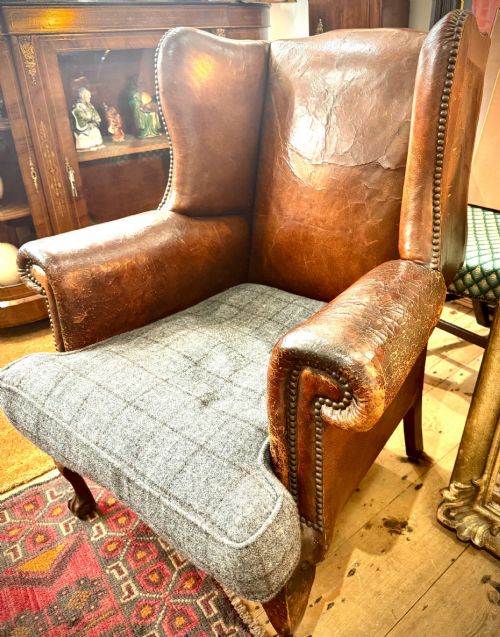
Makers built the structural frames of these chairs using traditional timbers such as mahogany, oak, walnut, and general wood, joining them with joinery appropriate to periods ranging from the mid-nineteenth century to the early twentieth century. These wooden skeletons were then padded and upholstered in leather, occasionally complemented by wool or secured with metal studs.
Detailing often included carved woodwork, brass accents, and metal stud work to anchor and finish the leather upholstery securely. Frames followed specific stylistic traditions, including Queen Anne revival curves, Regency proportions, and Victorian carved mahogany work.
Upholstered Leather Fireside Chairs Retail Price Guide 2026
Typical asking prices for upholstered leather fireside chairs among the pieces listed under this phrase on Sellingantiques today, from the lower quarter to the upper quarter. They describe what is for sale here now, not the wider market.
What varies in quality
The distinction between standard examples and finer pieces rests upon the integrity of the timber frame and the skill of the original joinery. Chairs featuring robust carved mahogany or walnut demonstrate a higher standard of craftsmanship than simpler utility frames.
Another measure of quality is the retention and quality of the leather upholstery and the precision of the metal stud work. Pieces that maintain their structural firmness in the armchairs and wingbacks represent the more accomplished end of the range.
Howard & Sons
The Upholstered Leather Fireside Chairs Glossary
- Wingback
- An armchair with side panels, or wings, attached to the back and designed to shield the sitter from drafts. This form is common in the nineteenth and early twentieth-century selections.
- Spoon back
- A padded chair back shaped in the outline of a spoon, typically associated with Victorian seating. It provides ergonomic support to the spine.
- Hide
- The natural leather skin utilised for upholstery. In these listings, it appears in various colours including green and red.
- Elbow throne
- A large, substantial armchair with substantial armrests, seen in Welsh oak library and hall seating forms.
- Regency style
- A design influence derived from the early nineteenth-century aesthetic, characterised by classical restraint and clean lines.
Upholstered Leather Fireside Chairs: Frequently Asked Questions
What periods do these chairs come from?
The pieces span from the Regency era and mid-nineteenth century through the Victorian period, Edwardian times, and into the early twentieth century. They show stylistic influences ranging from Queen Anne revivals to Scottish School design.
Buyers will find that Victorian and early twentieth-century examples form the core of the available selection, alongside pieces influenced by Georgian and Regency aesthetics.
How were leather fireside chairs used?
These chairs were placed near hearths in libraries, halls, and sitting rooms to provide comfort and protection from drafts. Their deep seats and upholstered backs suited prolonged sitting for reading or resting.
Many examples, such as the wingback and library chair forms, were specifically engineered for warmth and comfort in domestic rooms during colder months.
What materials are used in these chairs?
The frames utilise traditional timbers including mahogany, oak, walnut, and general wood, paired with leather upholstery. Additional materials include metal studs and wool.
Brass details and exposed timber frames work alongside the leather hides to define the physical construction of each piece across the different periods.
How do I identify different styles?
Styles are identified by their structural silhouettes and decorative elements, such as the characteristic side panels of wingbacks or the curved profile of spoon backs. Cabinetwork details point towards specific revivals like the Queen Anne or Georgian styles.
Examining the woodwork, frame proportions, and upholstery style helps place a chair within its Victorian, Regency, or Edwardian context.