



Tan Leather Lounge Chairs
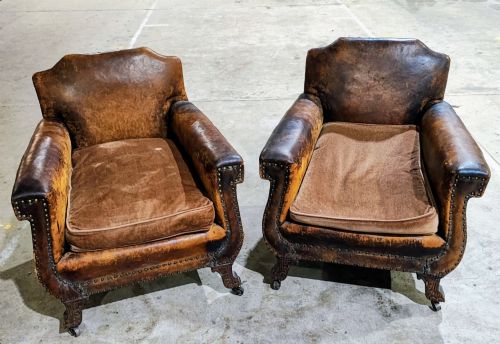
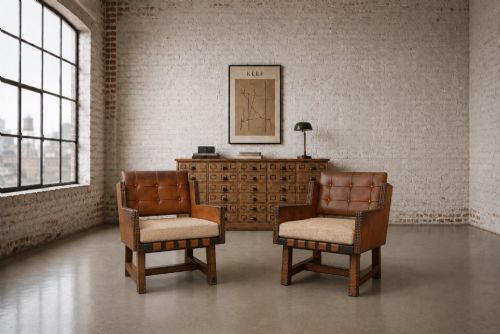
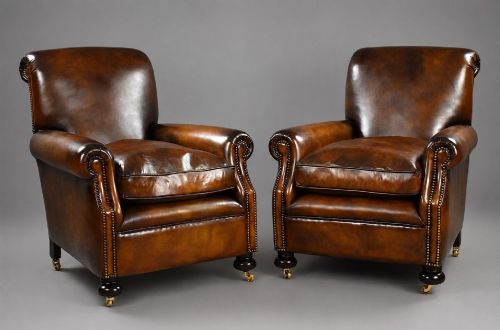
These tan leather lounge chairs offer deep comfort and rich patination, spanning periods from Victorian to Art Deco.
Tan Leather Lounge Chairs
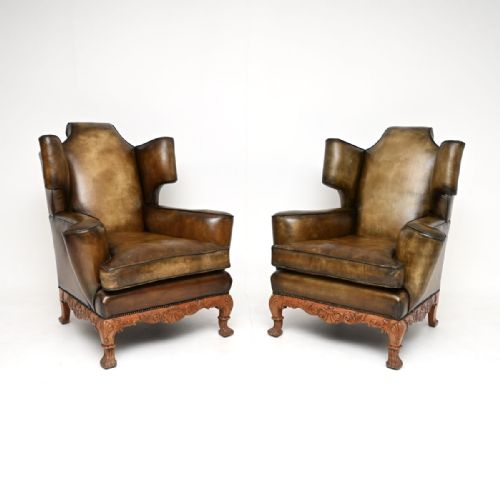
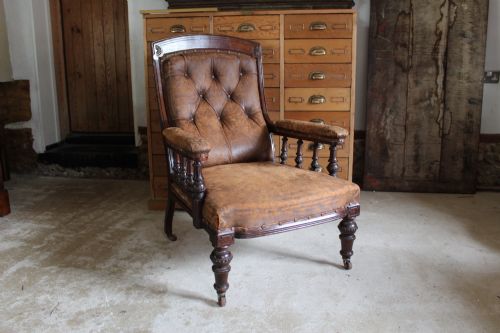
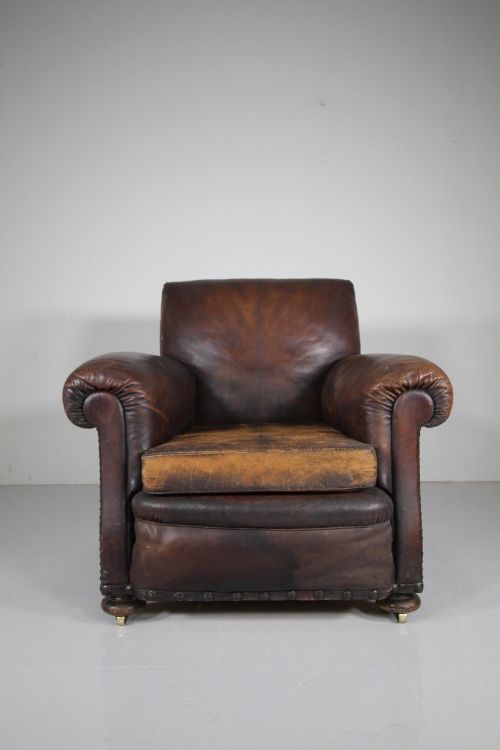
When searching for tan leather lounge chairs, you encounter robust seating forms designed for relaxation, including club armchairs, wingbacks, and library chairs. The selection ranges from Victorian frames to 1920s and 1930s Art Deco styles.
Most examples you meet on this page are generous armchairs built for domestic comfort, often appearing in pairs or suites alongside hardwood or mahogany framing. Victorian and Edwardian iterations sit alongside French and English Art Deco designs.
Origins span English country houses, colonial workshops, and French studios, utilising traditional joinery and upholstery methods suited to heavy daily use.
How they were made
Makers constructed these frames from solid hardwoods including oak, walnut, and mahogany, providing sturdy skeletons capable of supporting deep springing systems. Brass hardware, such as castors and nailhead trim, frequently secures the upholstery.
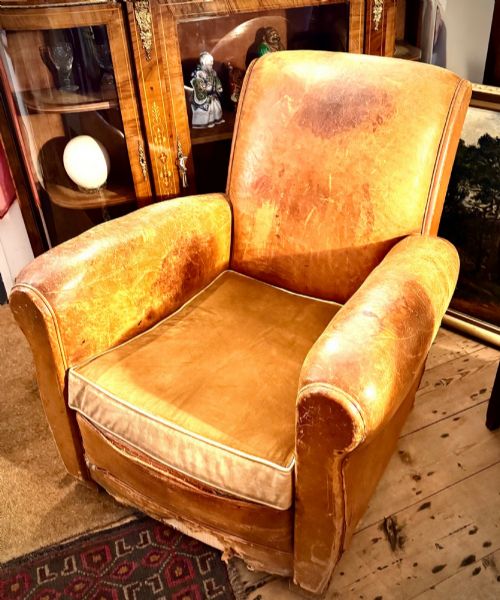
The primary material is leather, often hand-dyed or finished to achieve deep caramel and cigar brown tones through decades of use and care. Padding relies on traditional stuffings enclosed within button-backed or plain pulled leather covers.
Tan Leather Lounge Chairs Retail Price Guide 2026
Typical asking prices for tan leather lounge chairs among the pieces listed under this phrase on Sellingantiques today, from the lower quarter to the upper quarter. They describe what is for sale here now, not the wider market.
Listings feature pieces spanning the Victorian era through the 1930s, constructed in leather, oak, mahogany, and brass.
What varies in quality
Quality rests in the integrity of the timber frame and the depth of the leather hide, where hand-carved details like lion motifs elevate specific Victorian and colonial pieces above standard production. The patination of the leather, developed naturally over time, marks the distinction between ordinary upholstery and exceptional survivals.
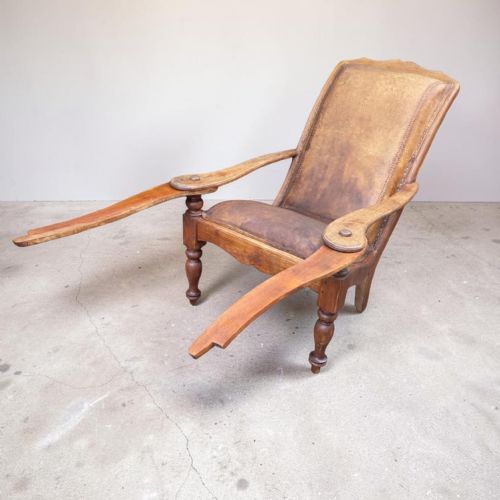
Comfort and mechanical complexity also divide the range, as seen in metamorphic and reclining mechanisms that demand precise engineering. Maker attribution, such as specialised firms like Foot and Sons, distinguishes standard club chairs from notable design examples.
Foot and Sons
The Tan Leather Lounge Chairs Glossary
- Club chair
- A deep, low-seated armchair upholstered in leather, designed for lounging. These pieces typically feature rounded backs and generous armrests.
- Wingback
- An armchair with high backs and side panels designed to shield the sitter from drafts. Early examples often incorporate exposed oak or mahogany legs.
- Metamorphic
- Describing furniture designed to transform its function, such as an armchair adapting into a recliner or chaise lounge. These pieces rely on adjustable mechanical hardware.
- Art Deco
- A design style prevalent in the 1920s and 1930s characterised by streamlined geometric forms and smooth leather surfaces. French and English interpretations dominate this aesthetic.
- Patina
- The surface sheen and colour variation developed on leather and wood through age, handling, and maintenance. A rich patina indicates long-term use and quality hide.
Tan Leather Lounge Chairs: Frequently Asked Questions
What defines a club armchair?
A club armchair is a low, deep-seated chair upholstered in heavy leather, designed primarily for relaxation in studies and libraries.
These pieces feature padded armrests and solid internal frames built for durability.
How do I identify Art Deco chairs?
Art Deco chairs typically display smooth, streamlined profiles with rounded club shapes and minimal ornamentation. They often date from the 1920s and 1930s.
The leather on these pieces is commonly hand-dyed in caramel or cigar brown shades.
Were these chairs used in offices?
Many examples, particularly Victorian library chairs and metamorphic designs, served professional and domestic study spaces.
Their adjustable mechanisms and supportive wingbacks suited long hours of reading and writing.
How should I care for vintage leather?
Vintage leather benefits from regular dusting and occasional conditioning to maintain suppleness and preserve the natural patination.
Avoiding direct sunlight prevents the hide from drying out over time.