


Upholstered French Daybed
An upholstered french daybed offers an indulgent spot for daytime resting, combining classic continental elegance with deep comfort.
Upholstered French Daybed
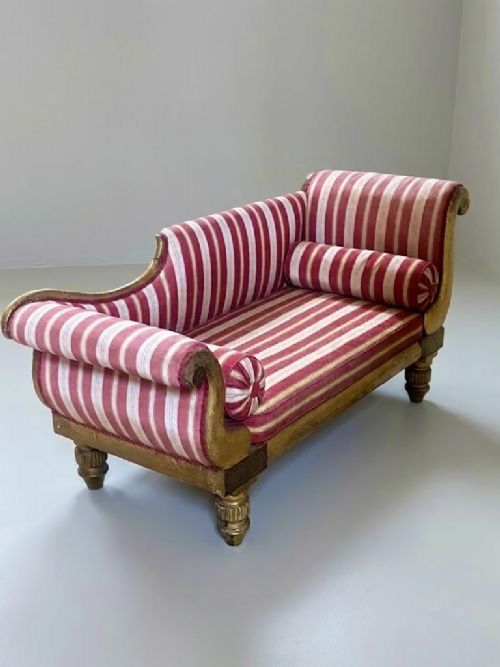
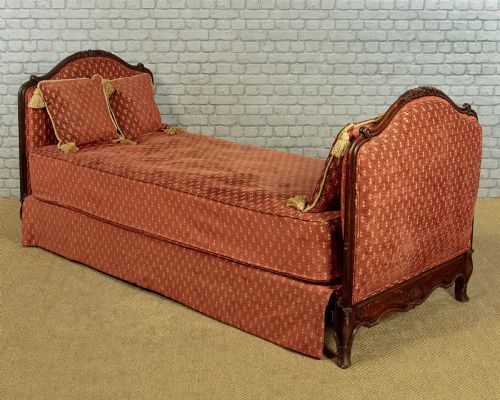
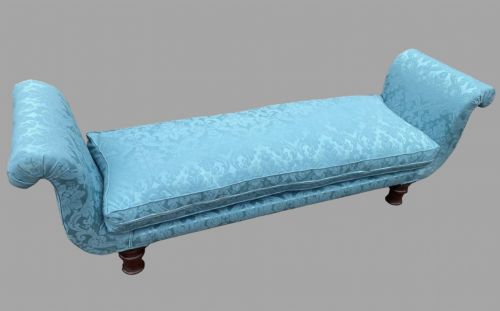
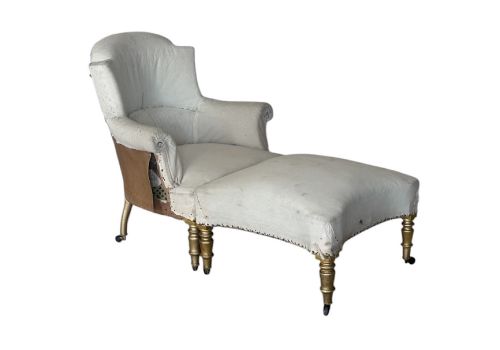
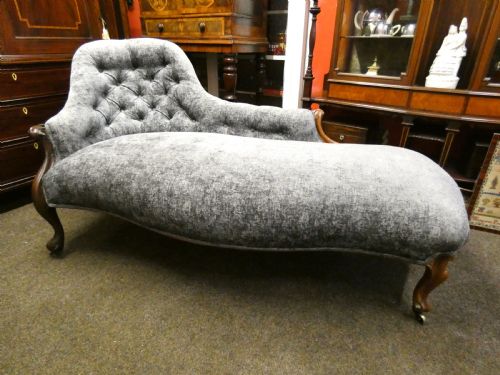
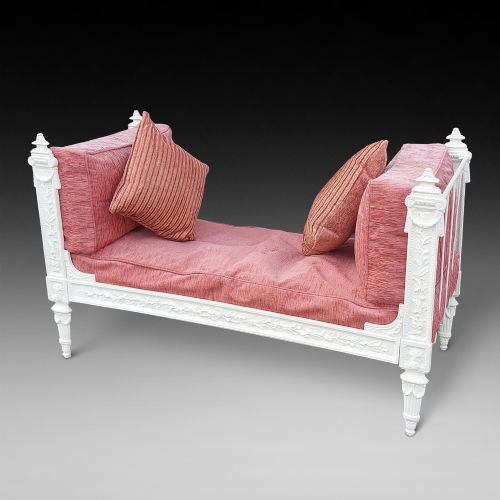
When searching for an upholstered french daybed, buyers encounter an array of elongated seating designed for reclining, ranging from nineteenth-century pieces to early twentieth-century examples. The selection includes forms such as duchesse brisées, lit bateaux, sleigh daybeds, and chaise longues.
Originating predominantly from nineteenth-century France alongside Victorian interpretations, these pieces combine supportive timber frames with soft upholstery. They serve as functional seating and striking focal points in a drawing room or bedroom.
Most items on this page lean towards French Provincial, Louis XV style, and French Empire aesthetics. Buyers are most likely to meet nineteenth-century frames upholstered in modern or antique fabrics, silk, and velvet.
How they were made
Cabinetmakers utilised sturdy hardwoods such as mahogany, walnut, and giltwood to construct the structural frames of these daybeds. Decorative accents often involved intricate carving or gilt decoration applied directly to the timber.
Upholstery techniques combined supportive internal webbing with traditional stuffing materials, finished with outer layers of silk, velvet, or patterned fabric. Detail work frequently incorporated buttoning and brass elements to secure and adorn the textile panels.
Listings feature periods spanning from the 1880s through the 1930s, utilising materials including mahogany, walnut, brass, silk, and velvet.
What varies in quality
The distinction between standard examples and superior pieces rests on the carving precision and the integrity of the wooden frame. Hand-carved giltwood and solid walnut structures demonstrate greater craftsmanship than simpler iron or secondary timber constructions.
The choice of covering textile and the execution of the upholstery dictate the overall refinement of the piece. Original paint finishes and high-grade silk or velvet heighten the visual harmony of the daybed.
The Upholstered French Daybed Glossary
- Duchesse brisée
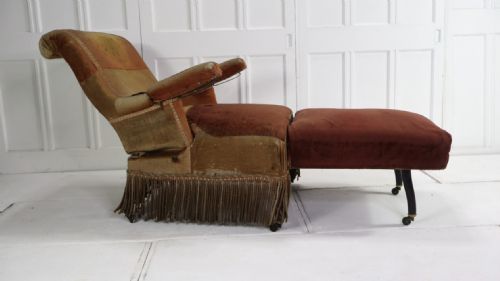
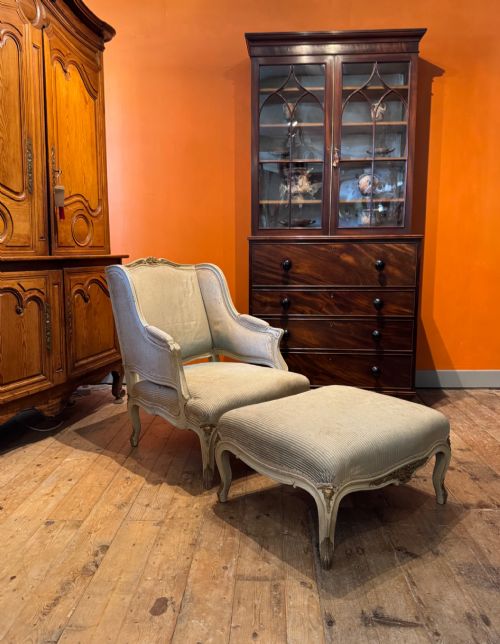
- A multi-piece chaise longue system comprising a chair and one or two footstools that lock together to form an extended resting surface.
- Lit bateaux
- A boat bed featuring scrolling head and footboards of equal or similar height, often adapted for daytime seating.
- Giltwood
- Timber coated with a thin layer of gold leaf or gilt preparation, commonly seen on decorative nineteenth-century frames.
- Napoleon III
- A French design period spanning the mid to late nineteenth century, known for eclectic revivals and luxurious upholstery.
- Chaise longue
- Literally translating to long chair, this form combines a chair with a seat long enough to support the legs.
Upholstered French Daybed: Frequently Asked Questions
Where should I put a daybed?
These pieces suit generous bedrooms, drawing rooms, or quiet reading corners where their length can be appreciated without blocking walkways.
Positioning them against a wall allows the carved backrest and upholstery to become a visual anchor for the room.
How do I clean antique upholstery?
Regular gentle vacuuming with a soft brush attachment removes surface dust from silk, velvet, and standard fabric coverings.
Professional textile cleaners should handle deeper stains to protect the delicate antique fibres beneath.
Are daybeds comfortable for sleeping?
While designed primarily for daytime lounging and reclining, many nineteenth-century examples offer ample length for an afternoon nap.
The inclusion of an elevated headboard or scrolling end provides natural support for the head.
How do I identify a Louis XV style piece?
Louis XV style items typically feature characteristic cabriole legs, asymmetrical floral carvings, and flowing curved wooden lines.
These design traits emphasise lightness and graceful curves rather than rigid symmetry.