

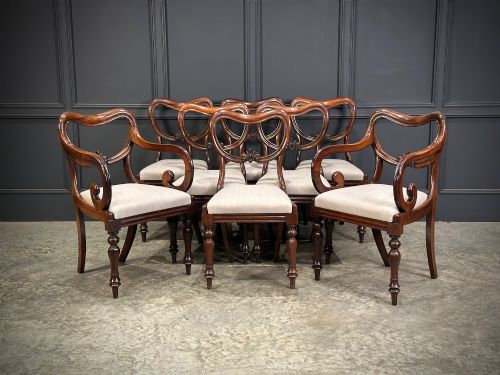
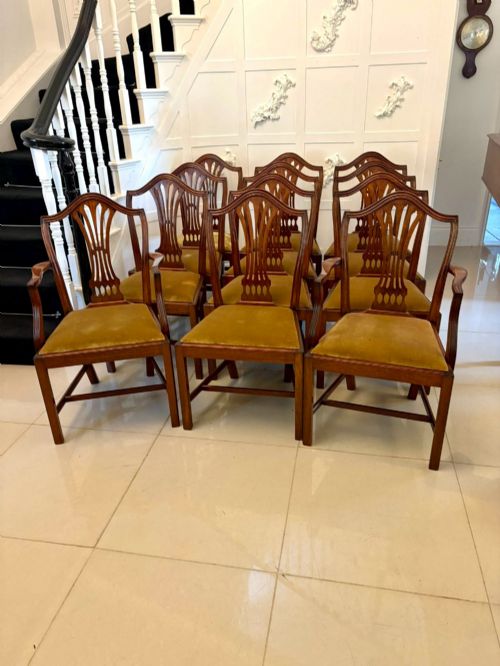
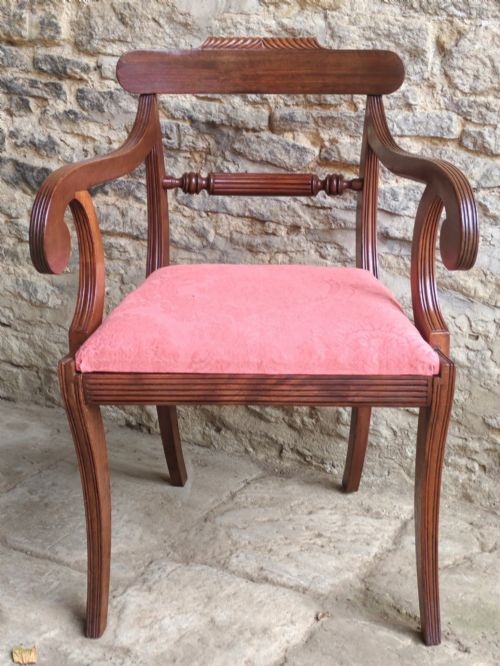
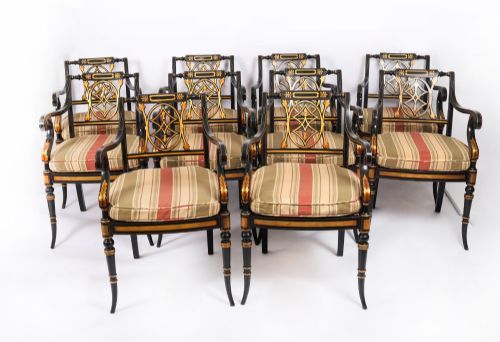
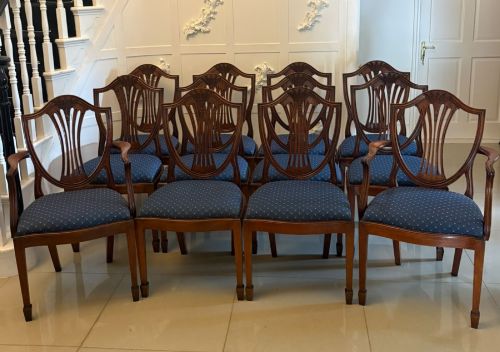
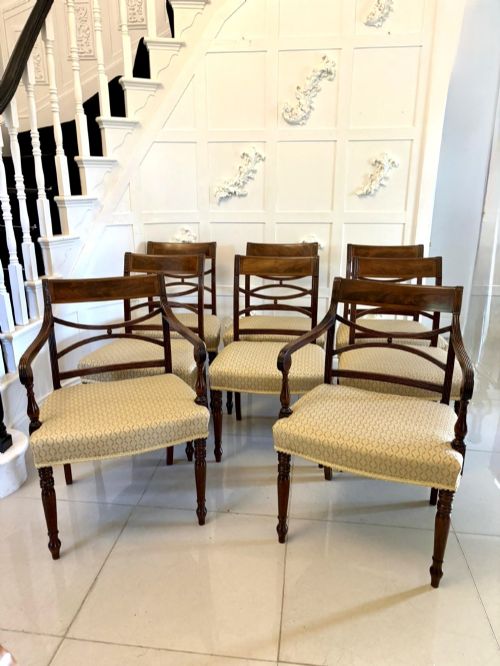
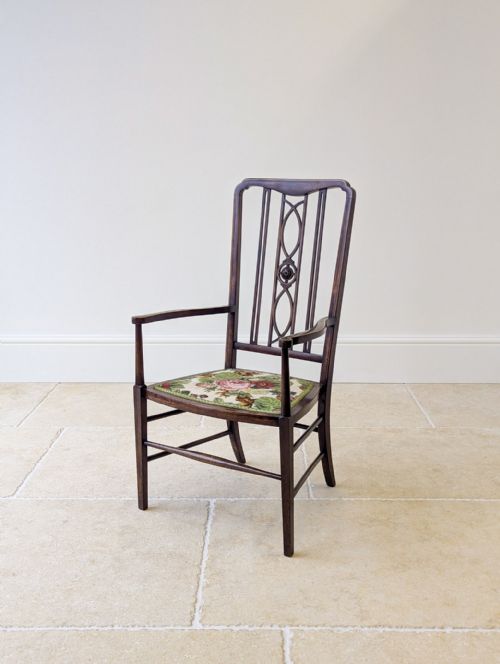
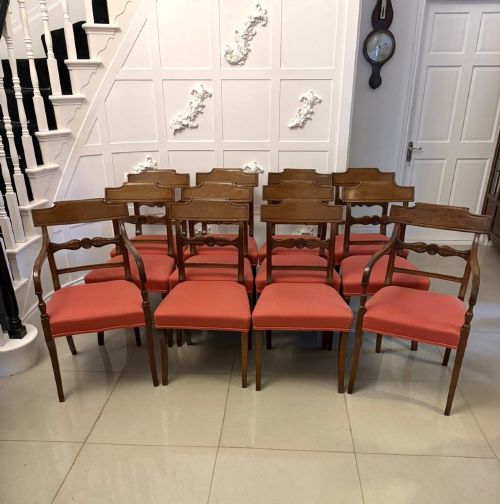
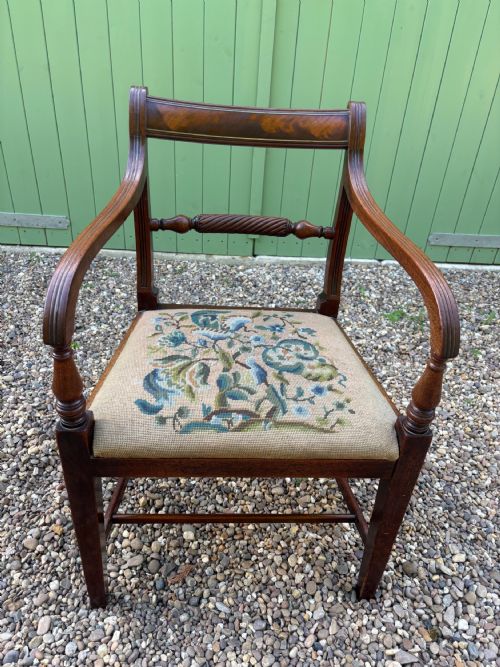
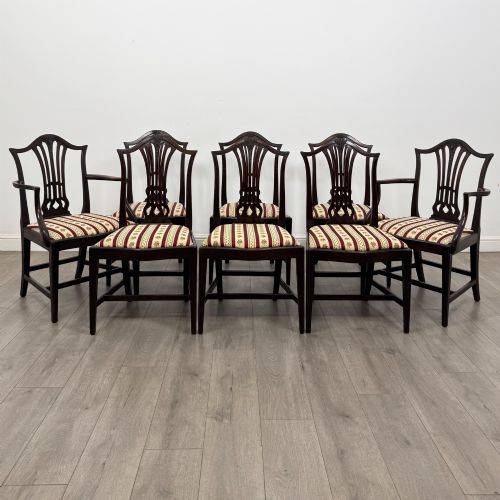
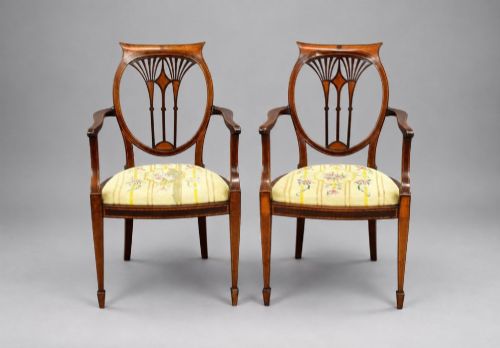
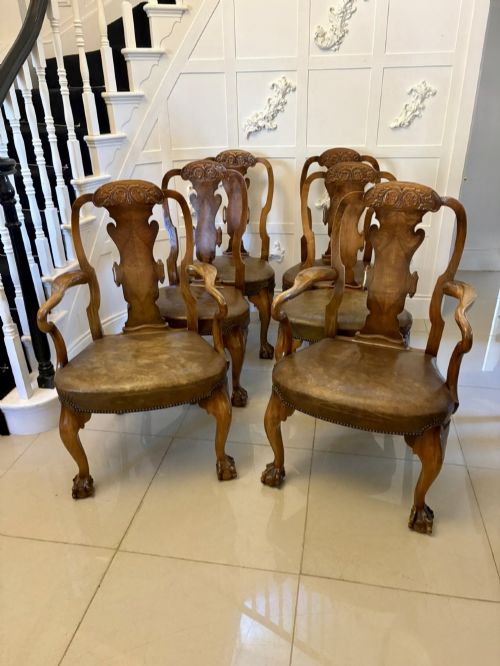
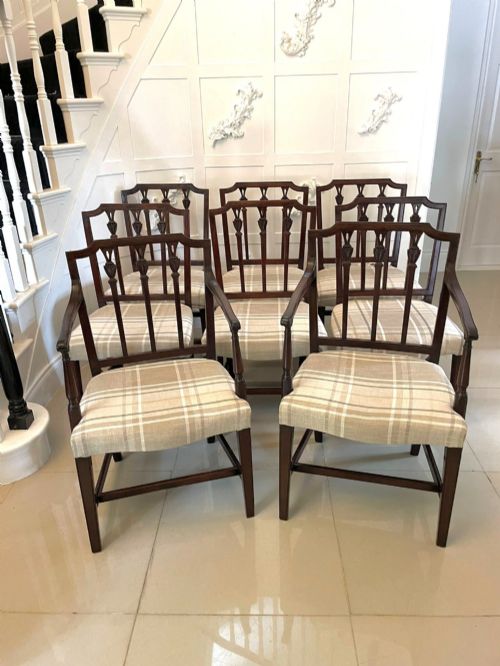
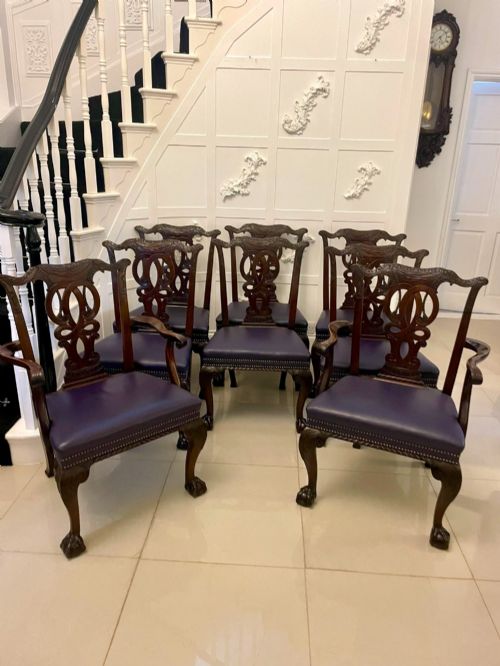
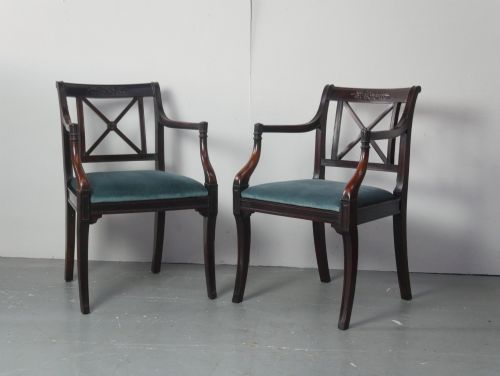
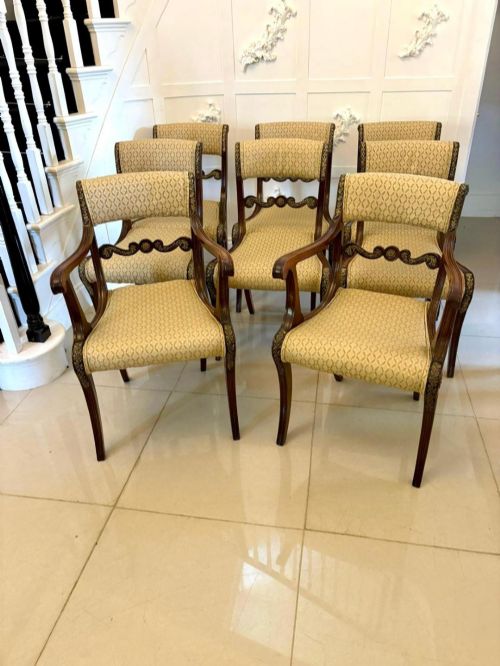
Upholstered Dining Armchair
An upholstered dining armchair brings support and presence to the table, combining a timber frame with a padded seat.
Upholstered Dining Armchair
When you search for an upholstered dining armchair, you encounter robust seating designed for the head of a table or companion use. The pieces appearing here span from the eighteenth century through the Victorian period and into the twentieth century, including revival designs.
Makers often describe these forms as carvers, elbow chairs, or desk chairs. You will find them constructed primarily in mahogany, alongside oak and walnut frames, paired with various fabric, leather, and upholstery options.
The aesthetic draws heavily on Georgian, Regency, and Edwardian traditions, encompassing shield backs, rope backs, and pierced splats. These seating options reflect changing domestic comforts across centuries of British dining habits.
Materials and Construction
Frames rely on dense hardwoods, principally mahogany, oak, and walnut, chosen for structural strength in supporting upright forms. Timber components are joined through traditional cabinetry methods, allowing carved details along the backsplats and arms.
Seating surfaces incorporate fabric upholstery and leather, often secured over webbed frames and stuffing materials. Brass elements occasionally appear as decorative accents or castors on desk and bureau seating.
Upholstered Dining Armchair Retail Price Guide 2026
Typical asking prices for upholstered dining armchair among the pieces listed under this phrase on Sellingantiques today, from the lower quarter to the upper quarter. They describe what is for sale here now, not the wider market.
Rosewood roundels occasionally hide structural secrets in late eighteenth-century seating.
Judging Quality
The refinement of the timber carving dictates visual success, distinguishing standard production from pieces with crisp detail along the arms and shield backs. Selection of grain and depth of colour in the mahogany or walnut frame also influence the overall standard.
Structural integrity depends on the original joinery remaining firm without excessive movement in the elbow joints. The neatness of the upholstery finish and the appropriateness of the textile choice contribute to the final presentation.
Howard and Sons·Maple and Co·Alfred Allen of Birmingham·Gillows
The Upholstered Dining Armchair Glossary
- Carver
- A dining chair featuring arms, traditionally placed at the head of the table. These examples often match a larger set of side chairs.
- Splat
- The vertical central strip of wood within the back of a chair. It frequently displays pierced or carved decorative patterns.
- Shield back
- A chair back design shaped like a heraldic shield, popular in late eighteenth-century furniture and subsequent revivals.
- Elbow chair
- An alternative term for an armchair, referencing the supportive rests for the arms. These pieces offer wider seating dimensions than standard chairs.
Upholstered Dining Armchair: Frequently Asked Questions
What is a carver chair?
A carver chair is an armchair designed specifically to match a set of dining chairs. They traditionally sat at the heads of the dining table.
Today, they function similarly in larger dining arrangements, providing additional elbow room and support.
How do I spot a Regency chair?
Regency chairs typically exhibit classical influences inspired by ancient Rome and Greece. Look for sabre legs, reeded frames, and brass inlay.
Mahogany remains the predominant timber for this period, often paired with rope back designs or curved top rails.
Can I mix armchairs with side chairs?
Mixing armchairs with side chairs follows a long-established dining tradition. Placing carvers at the table ends creates a balanced arrangement.
Ensure the timber tones and general height align so the seating sits comfortably together around the room.
What defines an Edwardian armchair?
Edwardian armchairs often draw on earlier Georgian and Sheraton styles through revival designs. They frequently incorporate lighter timbers and subtle inlay work.
These pieces reflect the comfortable domestic interiors of the early twentieth century, utilising cane panels alongside upholstered pads.