



Upholstered Bergere
An upholstered bergere brings deep French seating comfort and traditional cane panels into a room with genuine period character.
Upholstered Bergere
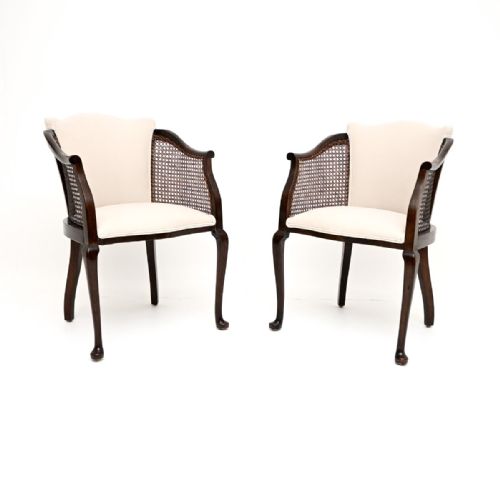
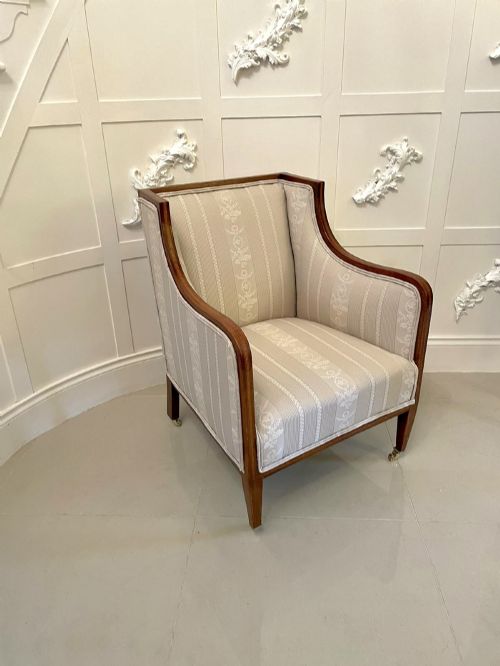
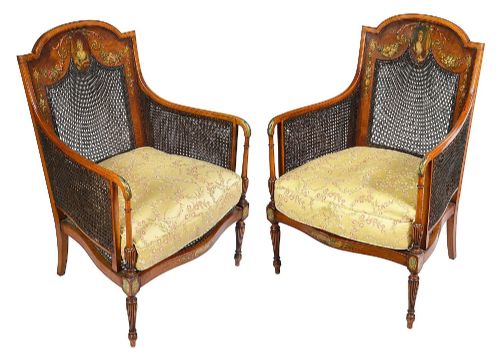
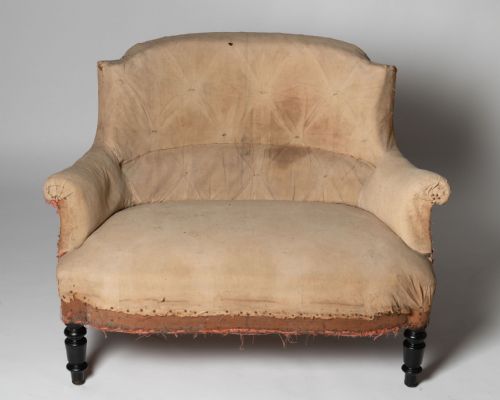
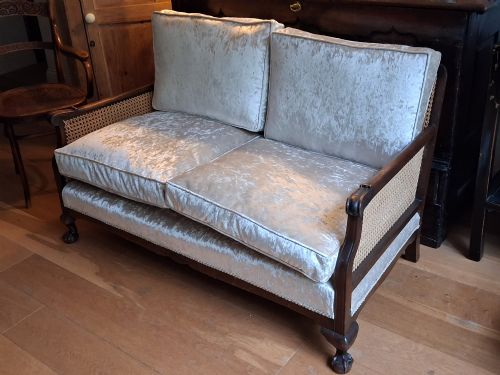
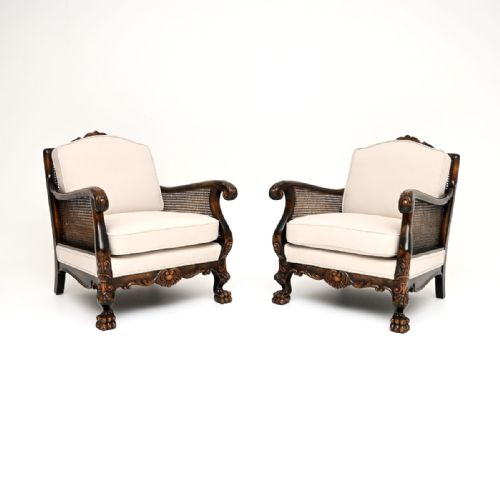
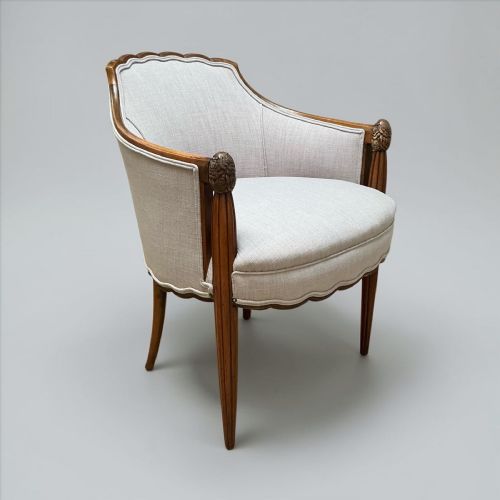
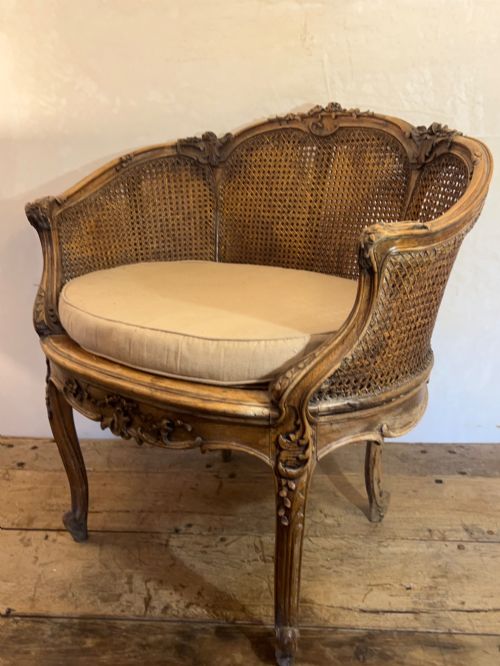
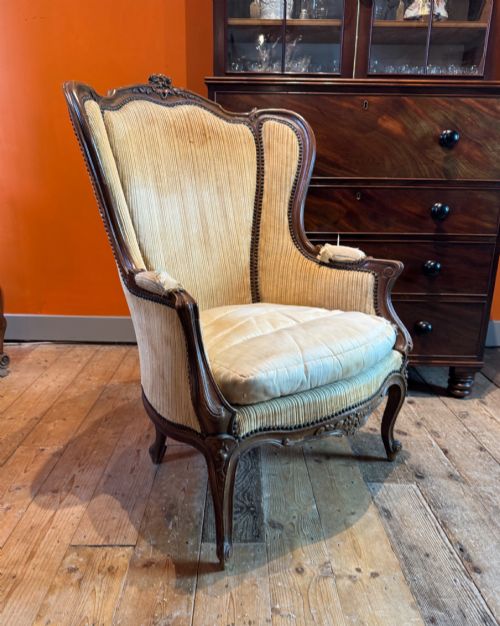
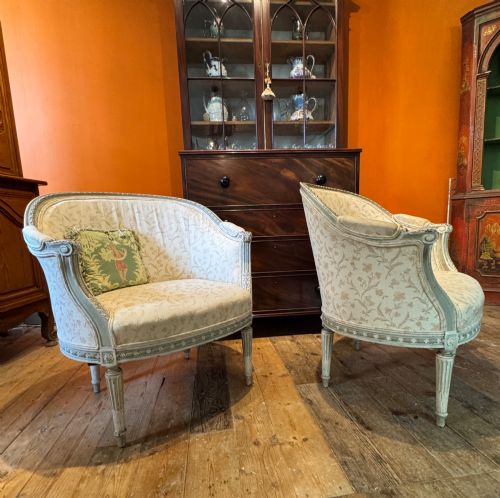
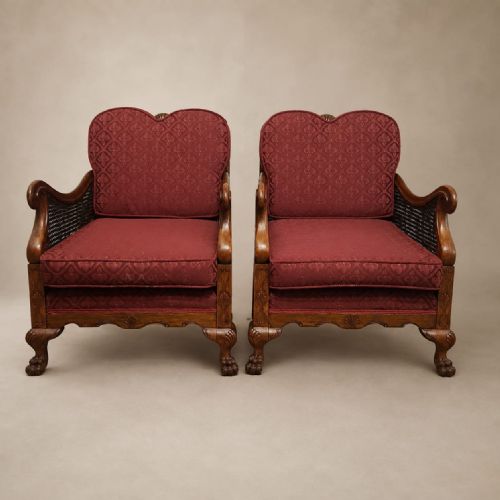
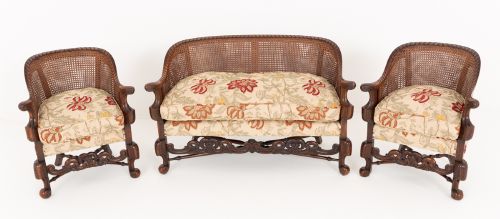
An upholstered bergere is a closed-sided armchair or settee featuring exposed wooden frames and woven cane sides or backs. These traditional seats span the nineteenth century, the Edwardian era, and the nineteen-twenties, incorporating French regional designs and revival styles.
The pieces appearing on this page include mahogany, walnut, satin birch, and painted frames paired with fresh fabric, velvet, silk, or leather upholstery. Buyers frequently encounter armchairs, matching pairs, and occasional sofas bearing Louis XV and Louis XVI stylistic influences.
How they were made
Cabinetmakers shaped structural frames from hardwoods such as mahogany, walnut, beech, and satinwood, frequently finishing them with carved giltwood details or original paint. Split cane or traditional cane work forms the distinctive tight side and back panels seen across these models.
Makers integrated loose feather cushions and tight squabs upholstered in fabric, silk, or leather. Joinery relies on traditional hand-carved elements, brass mounts, and inlaid marquetry accents.
Upholstered Bergere Retail Price Guide 2026
Typical asking prices for upholstered bergere among the pieces listed under this phrase on Sellingantiques today, from the lower quarter to the upper quarter. They describe what is for sale here now, not the wider market.
What varies in quality
Quality rests in the crispness of the hand-carved wooden frame and the tightness of the woven cane work. Superior examples display dense, well-figured timber like mahogany or walnut and retain balanced proportions.
The distinction between standard and exceptional pieces depends on whether original paint or subtle giltwood survives intact on the frame. Master cabinetwork shows in the seamless integration of curved cane panels with upholstered cushions.
Henri Jacob
The Upholstered Bergere Glossary
- Bergere
- A closed-arm upholstered armchair of French origin featuring solid wooden frames and cane panels. It usually includes a loose seat cushion for comfort.
- Canework
- A method of weaving rattan or cane slips tightly through frame perforations to form decorative side panels or backs. This technique provides flexible support.
- Giltwood
- Timber coated with a thin layer of gold leaf or metallic gilt. It appears frequently on formal salon seating.
- Marquetry
- Inlaid wood veneers arranged in decorative patterns across structural surfaces. It surfaces on refined cabinet frames and library chairs.
- Duchesse brisee
- A two or three-part chaise longue combination consisting of an armchair and an extension stool. It creates an extended resting place.
Upholstered Bergere: Frequently Asked Questions
What is an upholstered bergere?
An upholstered bergere is a traditional armchair or settee with enclosed wooden sides, woven cane panels, and soft seat cushions. They offer deep seating and distinct period silhouettes.
Most examples date from the nineteenth century through the nineteen-twenties, drawing on French design influences like Louis XV and Louis XVI.
How do I identify a Louis XV style bergere?
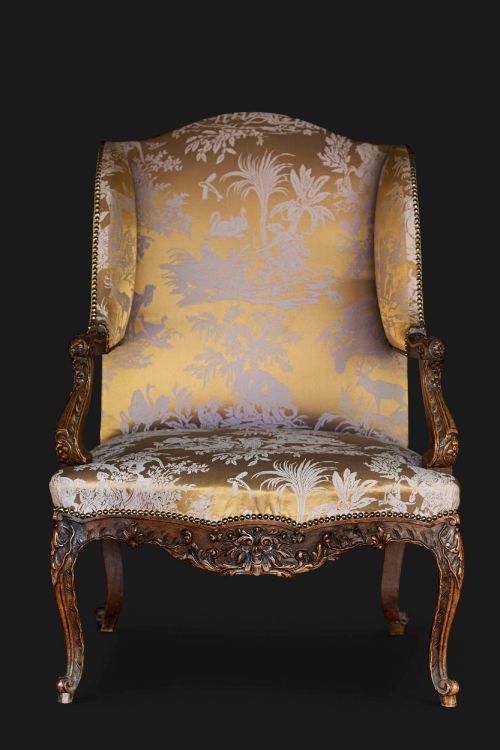
Louis XV style chairs feature characteristic cabriole legs, asymmetrical floral carvings, and curved lines throughout the wooden frame. The armrests often sweep backward to accommodate wide garments.
These frames use walnut, beech, or painted finishes rather than rigid straight lines.
Where should I place a bergere in my home?
A bergere works well as a reading chair in a library, a fireside seat in a living room, or an accent piece in a bedroom. Their finished cane backs mean they look striking when viewed from behind in an open room.
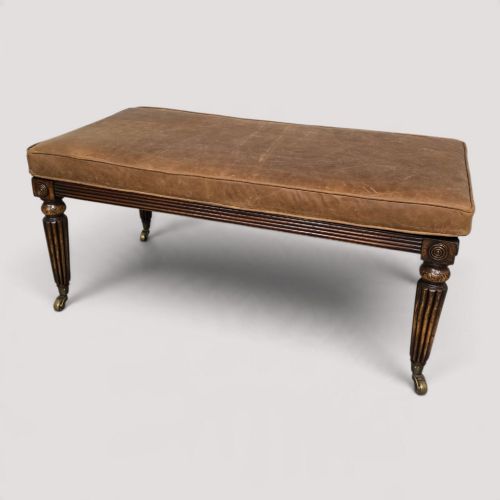
Pairing them with a matching footstool or ottoman creates a comfortable relaxation spot.
How do I care for antique cane panels?
Antique cane requires gentle dusting with a soft brush and occasional light moisture to keep the plant fibres from drying out and snapping. Avoid placing cane furniture directly next to intense heat sources.
Preserving the original tension in the woven cane panels maintains the structural integrity of the seat.