



Upholstered Recliner Chair
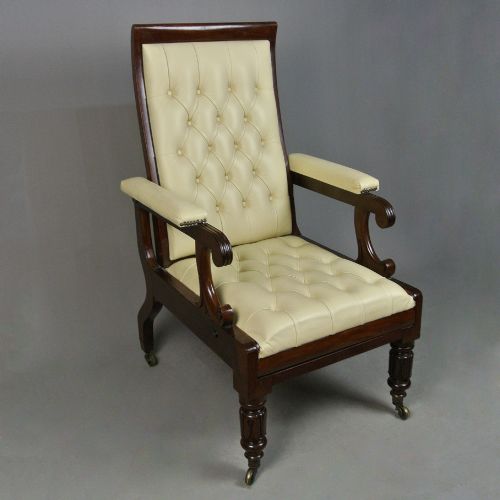
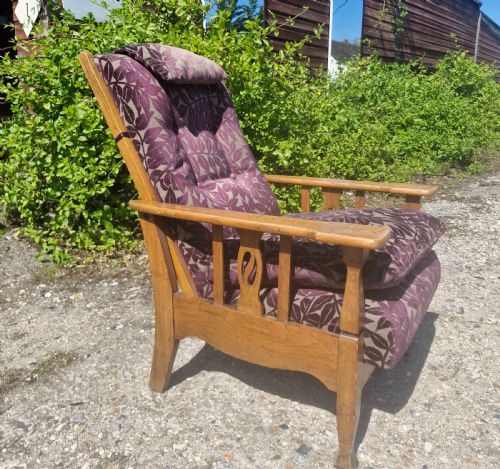
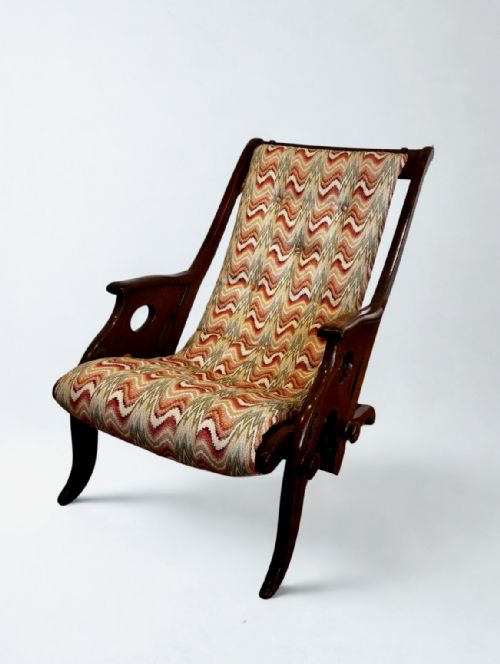
An upholstered antique recliner chair offers sophisticated physical comfort, combining period cabinet-making with ingenious mechanical adjustment.
Upholstered Recliner Chair
An upholstered antique recliner chair is a seat designed to alter its physical angle, drawing upon 19th-century mechanical and library seating traditions. When searching for an upholstered antique recliner chair, buyers encounter diverse forms ranging from library armchairs to daybeds and chaise longues.
The selections span the 19th Century, Victorian period, Regency, and Arts and Crafts movements. Many pieces incorporate adjustable mechanisms intended for reading, resting, or extended lounging.
Makers such as Minter, Jas Shoolbred, and Foot and Son appear in the evidence alongside French Second Empire and English library designs. Oak, mahogany, ebonised wood, and rosewood form the structural framework for these reclining seats.
What varies in quality
The sophistication of the mechanical adjustment mechanism dictates much of the distinction between standard seating and high-end library chairs. Pieces attributed to specialist makers or patented designs demonstrate superior engineering in their sliding and tilting actions.
Timber selection and cabinet-making execution separate ordinary production from finer workshops. Solid rosewood, figured mahogany, and carefully turned ebonised wood denote higher initial manufacture than simpler utility frames.
Upholstered Recliner Chair Retail Price Guide 2026
Typical asking prices for upholstered recliner chair among the pieces listed under this phrase on Sellingantiques today, from the lower quarter to the upper quarter. They describe what is for sale here now, not the wider market.
Listings feature 19th-century oak, mahogany, rosewood, and ebonised wood frameworks upholstered in leather, velvet, and damask.
J. Herbert McNair·Jas Shoolbred·Foot and Son
The Upholstered Recliner Chair Glossary
- Reclining chair
- A seat engineered with a movable back or mechanism allowing the user to lean backward into a resting position. These often include sliding actions or ratchet adjustments.
- Chaise longue
- An elongated upholstered chair designed for reclining with legs supported, bridging the form of a chair and a daybed. They appear frequently in 19th-century French and Victorian interiors.
- Ebonised wood
- Timber treated to imitate ebony, creating a dense black finish popular on 19th-century library and salon seating. It provides a sharp contrast against colourful upholstery fabrics.
- Library chair
- A heavy, substantial armchair designed for prolonged reading, occasionally fitted with mechanical adjustments or reading desks. Examples by makers like Minter represent the type.
- Campaign armchair
- A portable folding or dismantling chair made for travel, typically constructed from durable timbers like rosewood or mahogany with brass mounts.
Upholstered Recliner Chair: Frequently Asked Questions
How do antique reclining mechanisms work?
Many 19th-century chairs utilise brass ratchets, sliding components, or weighted pivots to alter the angle of the backrest. These systems allowed the sitter to adjust the posture without leaving the seat.
Library chairs by makers such as Minter often employ specialised mechanical linkages hidden within the wooden frame.
What is the difference between a chaise longue and a recliner?
A chaise longue provides a fixed elongated platform for full-body reclining in a single stationary position. An upholstered antique recliner chair relies on adjustable mechanical parts to change angles.
Both forms served domestic relaxation spaces during the Victorian and 19th-century periods.
Which woods were used for these chairs?
Cabinet-makers utilised solid oak, mahogany, rosewood, and ebonised wood for the structural frames. Oak predominates in Arts and Crafts examples, while mahogany and rosewood appear in library and French designs.
Brass hardware frequently accompanies these timbers to facilitate moving parts.
Are these chairs suitable for daily use?
Many period reclining chairs were built with robust solid timber frames designed for heavy domestic and library service. Their traditional construction accommodates ongoing sitting when maintained properly.
Care should be taken with the internal mechanical components and historical upholstery fabrics.