



Tufted Back Velvet Chaise
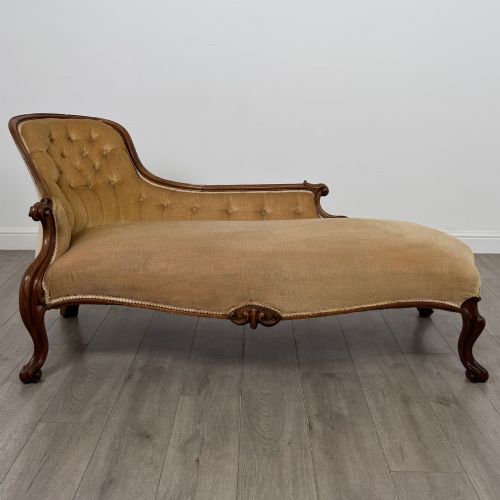
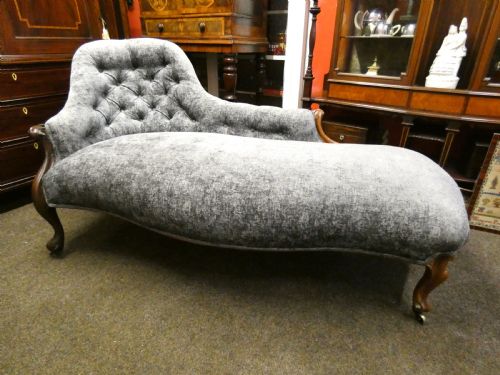
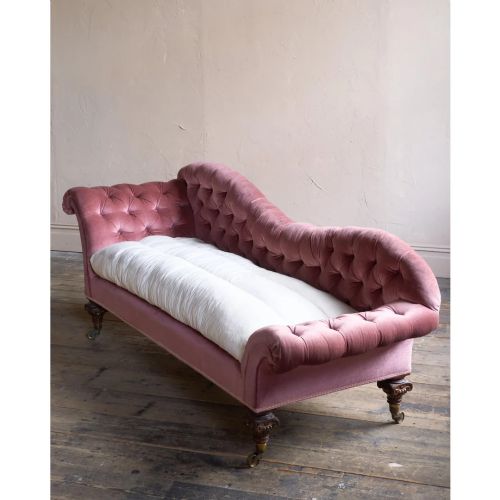
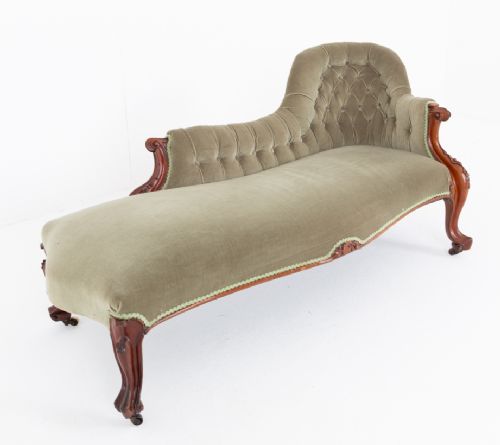
These tufted back velvet chaise pieces combine deep upholstery and rich timber frames, offering a striking centrepiece for a traditional drawing room.
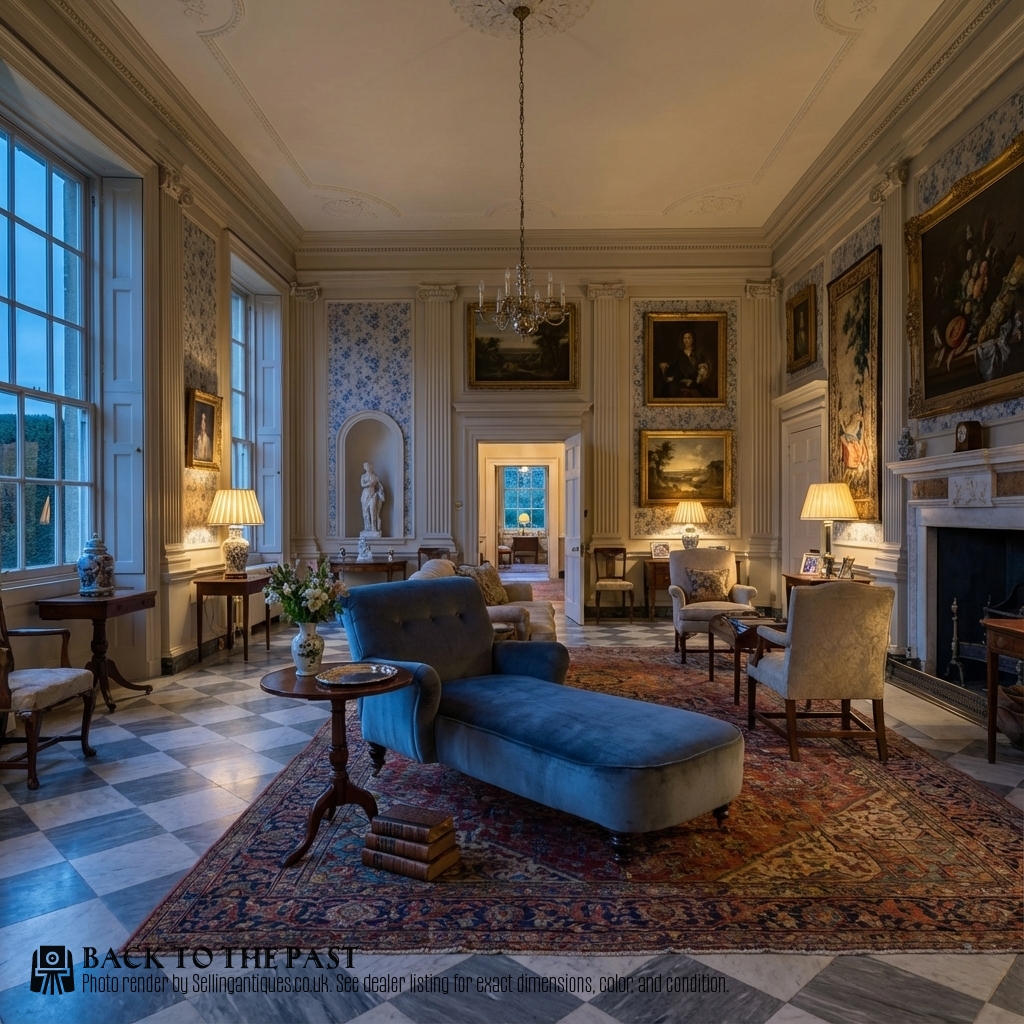
Tufted Back Velvet Chaise
A tufted back velvet chaise brings historic comfort into a modern interior, drawing on Victorian and Regency forms designed for reclining. These daybeds and salon pieces appear in forms ranging from early Victorian rosewood frames to nineteenth-century mahogany daybeds.
The most common versions on this page are Victorian and nineteenth-century chaise longues featuring buttoned upholstery and timber frames of mahogany, rosewood, or walnut. Alongside traditional chaise longues, you will find conversation seats and salon suites sharing the same buttoned velvet finish.
Makers and craftsmen of the period shaped these daybeds for formal reception rooms, often mounting them on intricate supports like ionic column legs or barley twist frames. Choosing one of these seating options means selecting a piece shaped by nineteenth-century social habits and domestic design.
Materials and construction
Frames rely on dense timbers such as mahogany, rosewood, walnut, and general hardwoods, providing a sturdy architectural skeleton for the upholstered upper sections. Carved details and shaped wooden supports define the structural character of each daybed.
Upholstery relies on tactile velvet fabrics stretched over buttoned padding, secured with traditional techniques that create the signature tufted appearance. Brass fixtures and iron components occasionally support the timber structures and reclining mechanisms.
Tufted Back Velvet Chaise Retail Price Guide 2026
Typical asking prices for tufted back velvet chaise among the pieces listed under this phrase on Sellingantiques today, from the lower quarter to the upper quarter. They describe what is for sale here now, not the wider market.
Listings feature nineteen-century pieces spanning the Regency and Victorian periods, utilising rosewood, mahogany, walnut, and brass.
Judging quality and craftsmanship
Quality rests in the depth of the timber carving and the precision of the buttoning across the velvet upholstery. Finer examples display richly grained rosewood or mahogany frames with crisp, hand-carved ornamentation rather than plain timber.
The structural integrity of the frame and the proportion of the scrolling backrest separate standard production from superior craftsmanship. Pieces retaining their original timber frames and coherent period details hold greater authority than heavily altered examples.
Howard and Sons
The Tufted Back Velvet Chaise Glossary
- Chaise longue
- An elongated chair for reclining, combining the characteristics of a chair and a couch. These pieces feature a single raised backrest at one end.
- Buttoned
- An upholstery technique where indentations are formed by pulling twine through the padding and securing it with buttons. This creates the tufted texture seen on nineteenth-century velvet seating.
- Barley twist
- A decorative turning style resembling a twisted rope, often used for wooden legs and upright framing members. This ornamental detail appears frequently on Victorian furniture.
- Settee
- A small upholstered sofa with a back and arms, designed to seat two or more people. These pieces often match the stylistic vocabulary of contemporary chaise longues.
- Ionic column
- A classical architectural column style featuring scroll-shaped ornaments on the capital, occasionally adapted as a structural leg on nineteenth-century seating.
Tufted Back Velvet Chaise: Frequently Asked Questions
What is a tufted back velvet chaise?
A tufted back velvet chaise is a nineteenth-century reclining seat upholstered in velvet with deep buttoning.
These pieces were designed for drawing rooms and boudoirs to allow semi-reclined seating.
How do I date a Victorian chaise?
Dating relies on examining timber choices like rosewood or mahogany, alongside framing styles from the Regency and Victorian eras.
Cabinetmakers shifted from classical Regency lines to heavier carved Victorian ornament as the nineteenth century progressed.
Where should I place a daybed?
These seating forms work best in large living spaces or bedrooms where their elongated silhouettes can be viewed from multiple angles.
Positioning them away from direct sunlight protects the velvet pile from fading over time.
How do I care for antique velvet?
Regular brushing with a soft bristle tool helps maintain the nap of the velvet and removes surface dust.
Avoiding moisture and harsh cleaning agents preserves the historic fabric and the underlying buttoned tufting.