

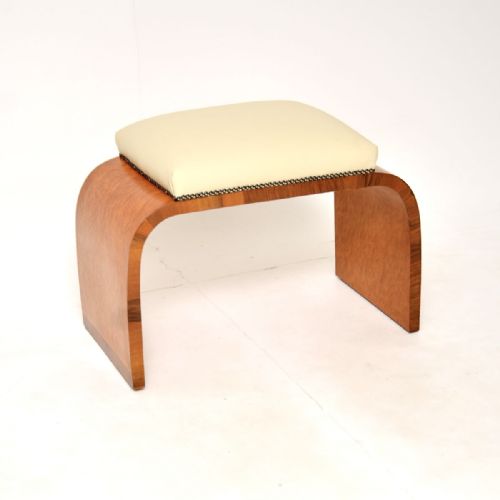
U Shaped Stool
A u shaped stool brings distinct curved lines and period character to a room, offering functional seating with notable sculptural presence.
U Shaped Stool
A u shaped stool encompasses varied curved forms designed for seating or support, spanning periods from the eighteenth century through the art deco era. These pieces draw attention through unusual profiles such as serpentine outlines, concave sides, and drum shapes.
The selections encountered here range from mahogany Georgian designs to nineteen-thirties oak dressing stools and leather footstools. Alongside conventional seating, related forms emerge including garden seats and side tables sharing curved profiles.
Origins stretch across English workshops, French provincial sources, and Qing dynasty examples inlaid with mother-of-pearl. Buyers select these items to introduce architectural interest and historical depth into domestic interiors.
How they were made
Cabinetmakers utilised dense timbers including mahogany, oak, rosewood, and birds eye maple to construct the solid frames of these stools. Woodworkers shaped these hardwoods through careful cutting and joinery to achieve characteristic curves and slats.
Upholstery techniques incorporated leather and fabric to cover padded seats on pieces like Edwardian and art deco examples. Artisans also employed ceramic, glazed earthenware, and carved hongmu wood for specific garden seats and drum-shaped tables.
U Shaped Stool Retail Price Guide 2026
Typical asking prices for u shaped stool among the pieces listed under this phrase on Sellingantiques today, from the lower quarter to the upper quarter. They describe what is for sale here now, not the wider market.
An eccentric leather pig footstool brings whimsical animal presence to the floor alongside traditional mahogany seating.
What varies in quality
Quality separates through the precision of the timber shaping and the integrity of the joinery within the frame. Pieces displaying refined serpentine or concave contours reflect greater skill in execution than standard rectilinear forms.
The choice of materials dictates the standing of the piece, with figured woods like birds eye maple and rosewood indicating higher ambition. Surface treatments, from hand-carved details to mother-of-pearl inlay, further distinguish superior examples from simpler rustic items.
Omersa Workshop·Liberty s·Minton
The U Shaped Stool Glossary
- Serpentine
- A curved line that turns inward and outward in a continuous flowing wave. This shape appears frequently on eighteenth-century seating frames.
- Birds eye maple
- Timber figured with small circular markings resembling tiny eyes. Cabinetmakers prized this decorative wood during the art deco period.
- Hongmu
- A dense Chinese hardwood translating to red wood. Artisans utilised this material for carved barrel and drum-shaped tables.
- Creamware
- Light-coloured earthenware developed in the eighteenth century. It forms the body of glazed ceramic garden seats.
- Slatted
- Constructed with narrow strips of wood placed with spaces between them. This technique provides ventilation and distinct visual rhythm on seat tops.
U Shaped Stool: Frequently Asked Questions
How do I date a wooden stool?
Dating relies on examining the timber species, construction methods, and stylistic cues present in the piece. Eighteenth-century examples often feature solid mahogany with hand-cut joinery.
Later pieces from the nineteen-thirties incorporate art deco veneering or specific hardware. Comparing the finish and wear patterns to documented examples helps confirm the period.
Where should I place a shaped stool?
A shaped stool serves multiple functions as a seat, footrest, or small side table within living spaces. Placing one beside a chair provides a convenient surface or additional seating.
Ceramic garden seats function both indoors and outdoors to add sculptural contrast. Their compact size allows them to fit easily into hallways and bedrooms.
How do I care for leather upholstery?
Leather upholstery requires gentle cleaning with a soft cloth to remove dust and prevent drying. Avoiding direct sunlight preserves the natural colour and suppleness of the material.
Periodic application of appropriate conditioning treatments maintains the finish on antique leather surfaces. Careful handling ensures the leather remains resilient over time.