

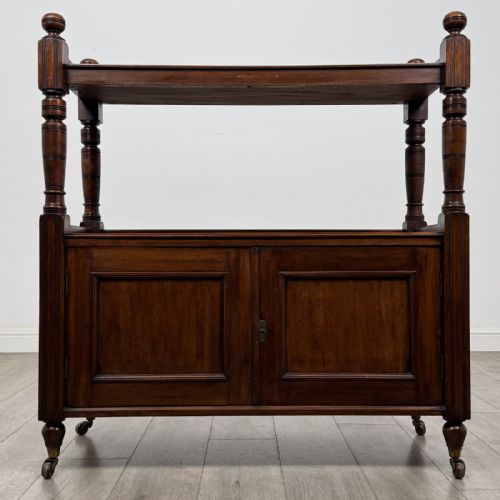
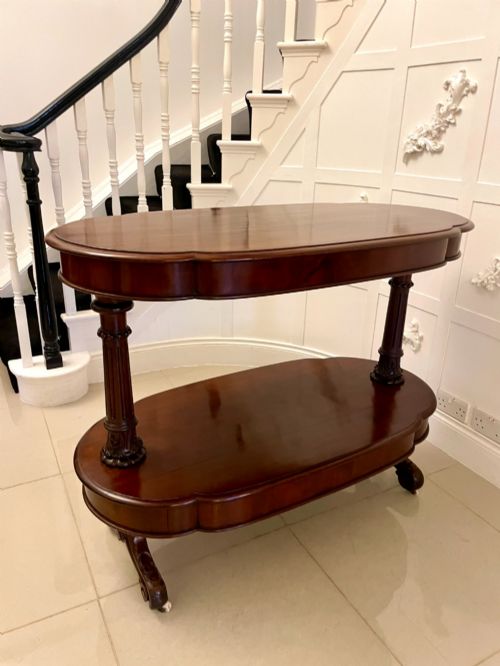
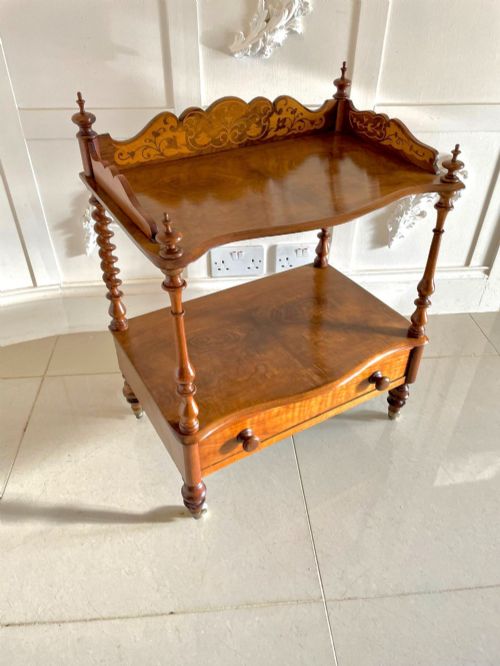
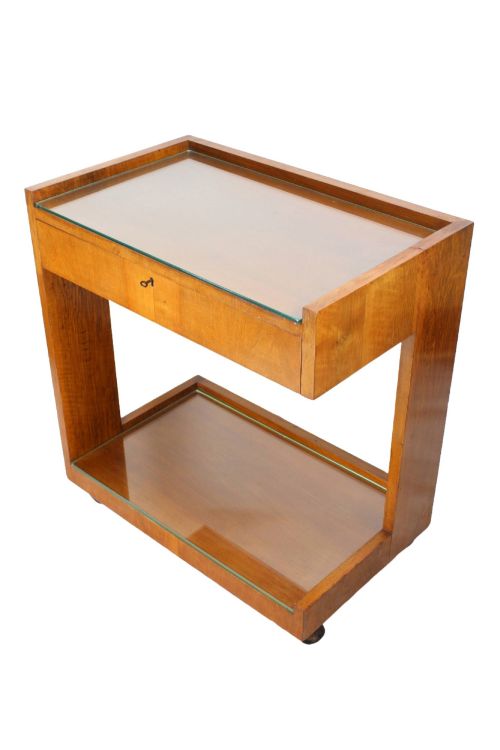
Two Tier Trolley
When you search for a two tier trolley, you are looking at practical mobile furniture designed to move food, drinks, and serving items between rooms.
Two Tier Trolley
A two tier trolley provides two distinct horizontal surfaces arranged vertically to transport or display items while taking up minimal floor space.
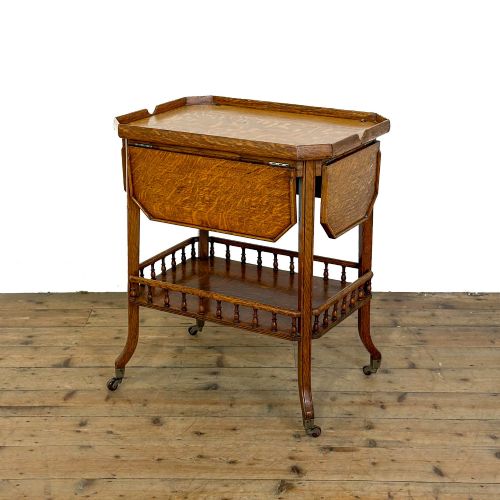
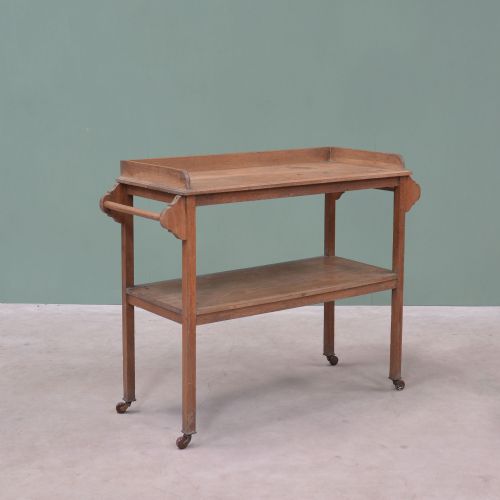
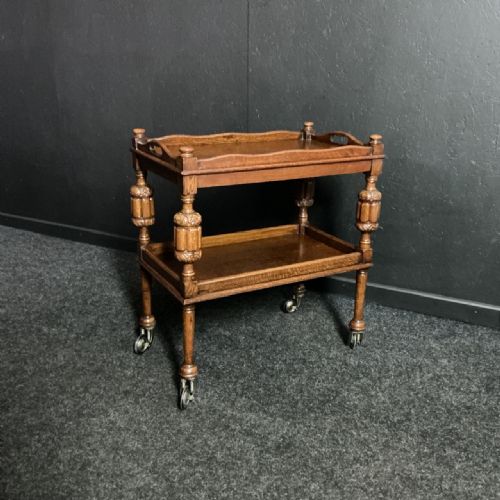
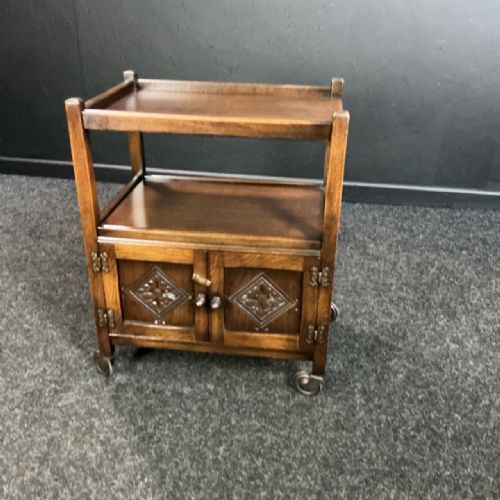
The versions most commonly met on this page span from Edwardian and 1920s oak tea trolleys to Art Deco walnut and chrome designs.
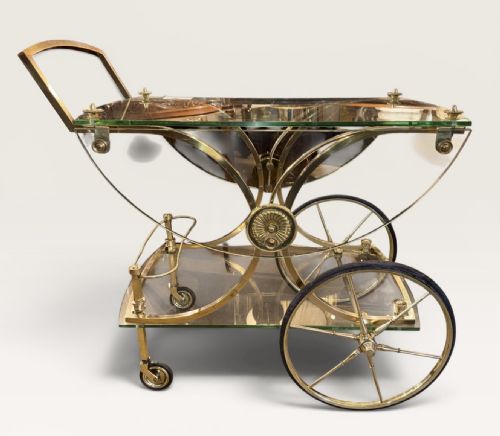
Makers adapted these pieces into specialised forms like drinks trolleys, bar carts, dumb waiters, and etageres using timber, brass, and glass.
Materials and Construction
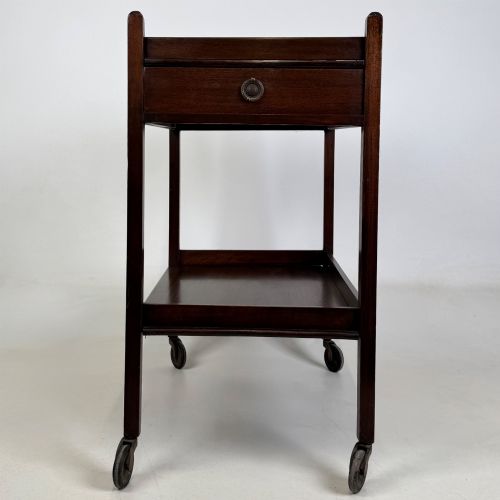
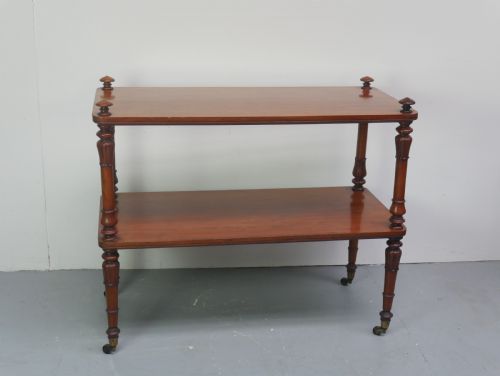
Construction relies heavily on traditional cabinet-making timbers such as mahogany, oak, and walnut, frequently enhanced with brass fittings, castors, and drop-leaf mechanisms.
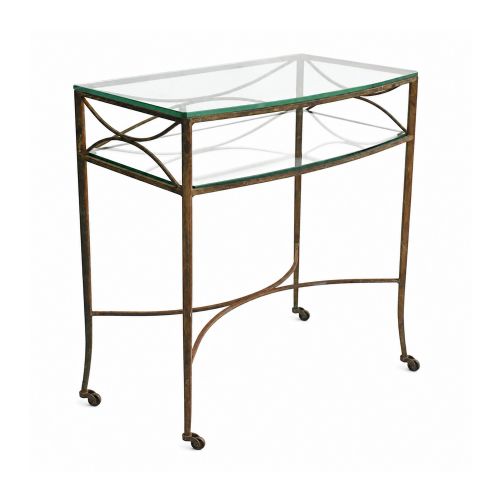
Twentieth-century pieces introduce modern industrial materials like chromium plating, sheet glass, mirror glass, and lacquered brass to the traditional two-tier frame.
Two Tier Trolley Retail Price Guide 2026
Typical asking prices for two tier trolley among the pieces listed under this phrase on Sellingantiques today, from the lower quarter to the upper quarter. They describe what is for sale here now, not the wider market.
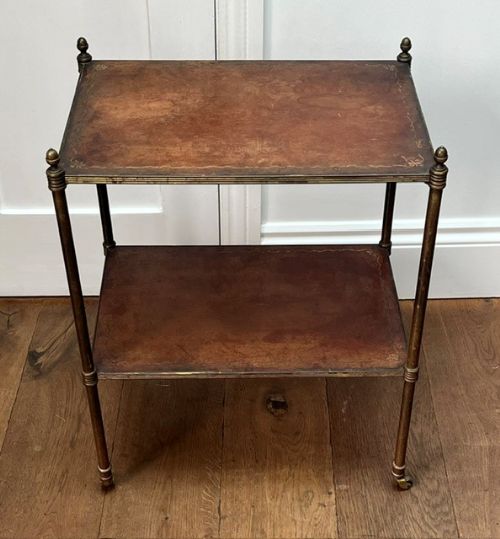
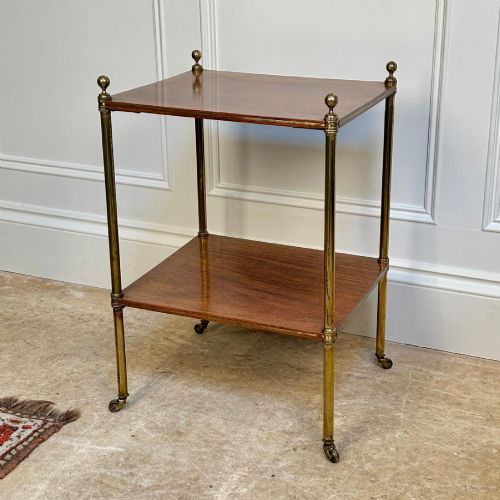
Listings feature woods like mahogany, oak, walnut, rosewood, and ebonised wood alongside brass, chrome, glass, and leather.
Indicators of Quality
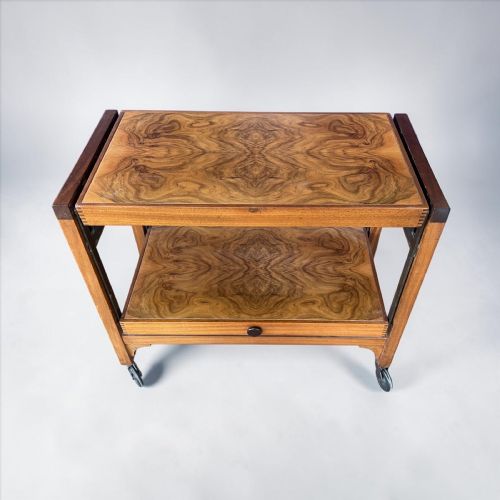
Quality rests upon the selection of timber grains, such as burr walnut or figured mahogany, and the robustness of the structural joints and castor wheels.
Mallett of London·Maison Bagues·Lusty of Leicester·Aldo Tura·Jas Shoolbred
The Two Tier Trolley Glossary
- Etagere
- An open tiered piece of furniture intended for the display of ornaments, serving items, or books. It utilises multiple open shelves rather than enclosed cupboards.
- Dumb Waiter
- A tiered serving stand or small table traditionally used to hold dishes or drinks without requiring a servant present. These frequently feature round or oval revolving trays.
- Barley Twist
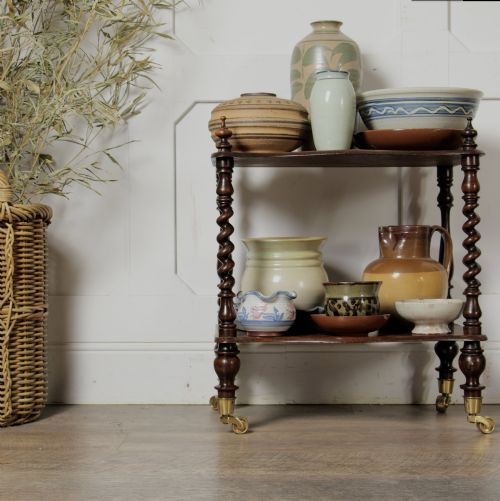
- A type of turned woodwork resembling a spiralling rope or barley sugar stick. This decorative turning is especially common on Edwardian and 1920s oak supports.
- Rafraichissoir
- A specialised French serving or wine table equipped with metal inserts or containers for cooling bottles. They typically feature two tiers and a wooden framework.
Two Tier Trolley: Frequently Asked Questions
What rooms suit a two tier trolley?
These pieces function well in sitting rooms, dining spaces, and studies as mobile side tables or drinks stations. Their wheels allow them to move easily where surface space is needed.
They also serve effectively as permanent display stands for plants, books, or collections when stationary.
How do I distinguish Edwardian from Art Deco models?
Edwardian trolleys commonly feature turned oak or mahogany legs, such as barley twist supports, and sometimes incorporate drop leaves or folding actions. Their design emphasises traditional cabinet-making.
Art Deco examples lean toward geometric lines, utilising chrome, black glass, mirror panels, and smooth walnut surfaces to create a modern aesthetic.
Were these trolleys always used for tea?
While afternoon tea was a primary use during the Edwardian period and the 1920s, many were built for broader serving tasks. They acted as butler's buffets and dining room assistants.
By the Art Deco era, the focus shifted toward cocktail culture, leading to dedicated drinks trolleys and bar carts.
Do these trolleys require special maintenance?
Maintenance depends on the materials, requiring gentle cleaning for polished wood surfaces and specific care for chrome or brass elements to prevent tarnishing. Castors benefit from occasional checks to ensure smooth rolling.
Glass and mirror shelves need standard glass cleaner applied carefully to avoid damaging surrounding wood or metal frames.