

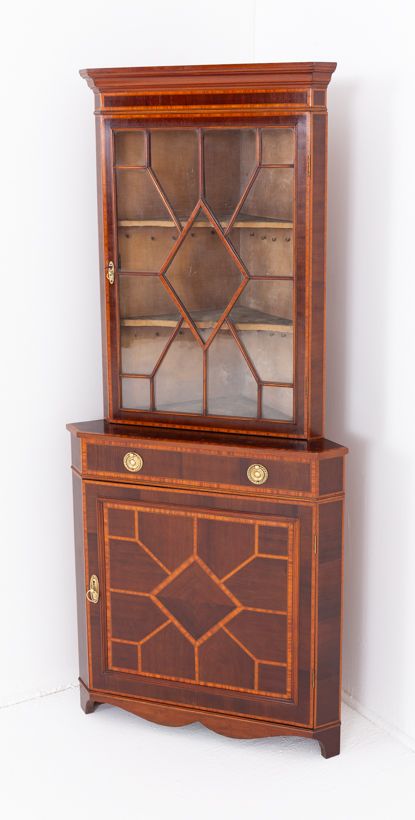


Two Tier Glazed Vitrine
A two tier glazed vitrine offers dedicated vertical display space for treasured objects, bringing proportion and light to a room.
Two Tier Glazed Vitrine
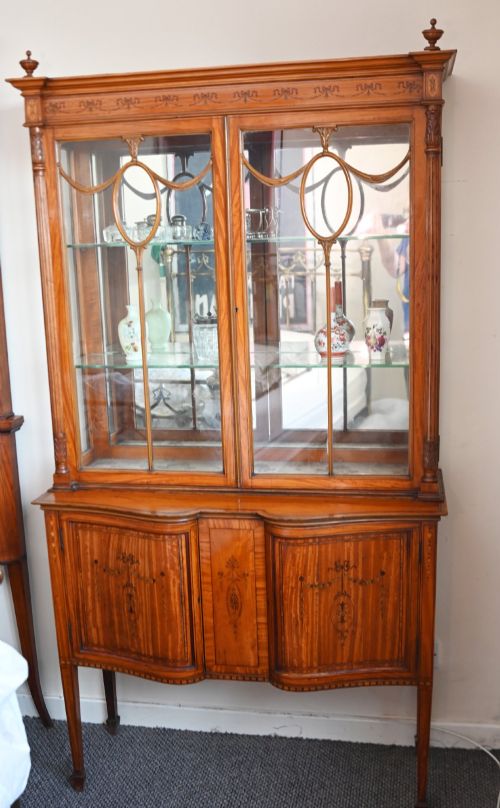
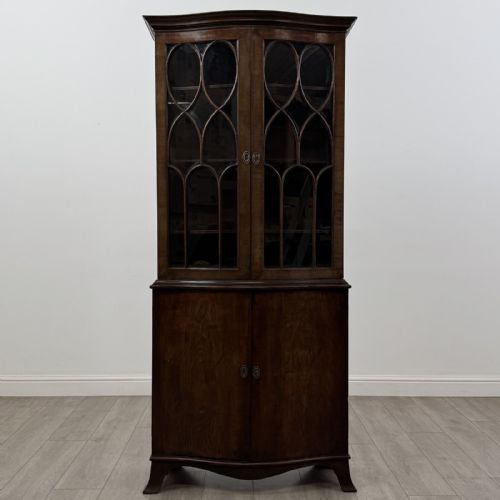
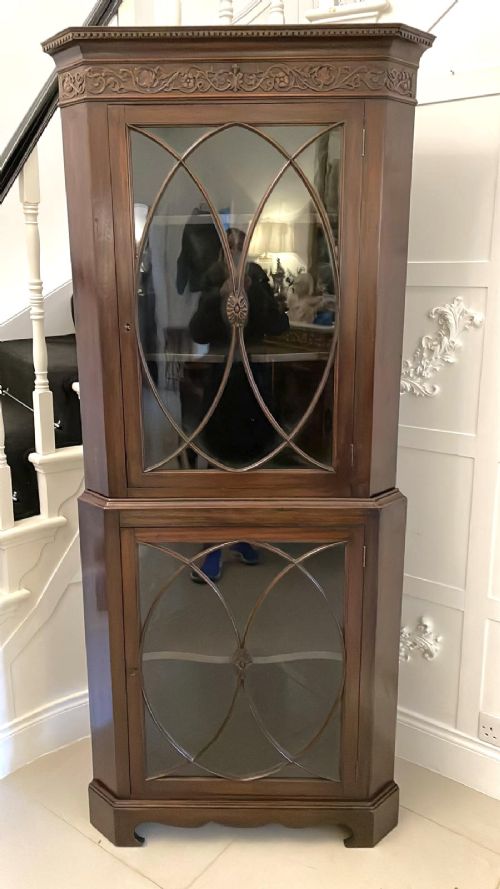
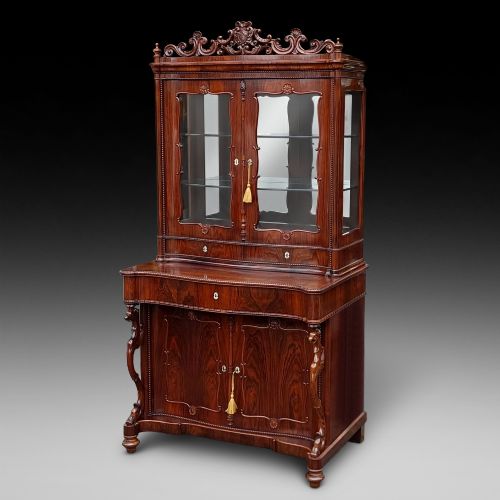
A two tier glazed vitrine is primarily found in forms such as display cabinets, corner cabinets, and bookcases spanning the eighteenth century through to the Edwardian period and nineteen-thirty. These pieces serve to exhibit books, ceramics, and ornaments behind glass doors while protecting them from dust.
The selection ranges from revivalist pieces in Sheraton and Georgian styles to continental examples including Biedermeier, French Directoire, and Italian provincial designs. Cabinets vary from tall upright display cases to corner pieces designed to utilise awkward angles in domestic interiors.
How They Were Made
Construction relies heavily upon cabinet timbers such as mahogany, rosewood, walnut, and satinwood, frequently enhanced with marquetry inlay or painted surfaces. Glazing bars organise the glass panels, particularly in astragal configurations seen on eighteenth and nineteenth century examples.
Metalwork plays a functional and decorative role, utilising brass for handles, hinges, and occasional ormolu mounts. Secondary softwoods often form the internal carcasses and backing boards of these cabinets.
Two Tier Glazed Vitrine Retail Price Guide 2026
Typical asking prices for two tier glazed vitrine among the pieces listed under this phrase on Sellingantiques today, from the lower quarter to the upper quarter. They describe what is for sale here now, not the wider market.
Country house pieces carry the faint aroma of old wax and centuries of closed-door gossip.
What Varies In Quality
The refinement of timber selection and decorative technique separates standard examples from exceptional ones, particularly where marquetry, painted finishes, and figural wood veneers are employed. Finer pieces demonstrate meticulous attention to timber grain alignment and crispness in carved mouldings or brass mounts.
Proportion and architectural balance dictate the success of the design, especially within revival pieces where historical models are reinterpreted. Superior internal fitting, such as adjustable shelving and well-executed glasswork, distinguishes the construction.
The Two Tier Glazed Vitrine Glossary
- Vitrine
- A glass-fronted cabinet designed for displaying objects of curiosity or fine porcelain. These pieces typically feature glazed doors on the upper tier to maximise visibility.
- Astragal
- A moulding profile used to divide glass panes within a door or window frame. In cabinet making, fine wooden astragals create geometric lattice patterns.
- Marquetry
- The art of applying decorative veneer pieces in various woods to form pictorial or geometric patterns. This technique frequently decorates satinwood and mahogany surfaces.
- Ormolu
- Gilt bronze applied as a decorative mount to furniture pieces, particularly popular in French and revivalist cabinet design. It provides metallic contrast to dark woods like mahogany and rosewood.
Two Tier Glazed Vitrine: Frequently Asked Questions
What is a two tier glazed vitrine used for?
These cabinets provide enclosed shelving primarily intended for the display and protection of porcelain, glassware, and small collections. The glazed upper sections allow objects to be viewed easily from across a room.
The lower sections or cupboard bases offer concealed storage for items that require tidying away out of sight, combining utility with display space.
How do I identify a Georgian revival cabinet?
Revival pieces draw upon the architectural proportions, classical motifs, and timber choices characteristic of eighteenth-century furniture. Cabinet makers during the nineteenth and early twentieth centuries frequently adopted these earlier idioms.
Examining the construction methods, backboards, and secondary timbers helps distinguish a later revival piece from an original eighteenth-century example.
Where should I place a corner cabinet?
Corner cabinets fit directly into ninety-degree room junctions, making efficient use of floor space that often remains empty. They work well in dining rooms or drawing rooms to anchor the corners of the space.
Placement should consider natural light sources to prevent excessive glare on the glass panes, ensuring the contents remain clearly visible.
Are these cabinets suitable for books?
Several examples function as glazed bookcases, providing enclosed shelving that protects volumes from dust and direct sunlight. Adjustable wooden shelves accommodate varying book heights.
Care should be taken to check the depth of the shelves, as older display cabinets can sometimes be too shallow for modern folio volumes.