


Two Tier Brass Stand
A two tier brass stand brings practical tiered surfaces and bright metalwork into a room, making it a versatile choice for holding plants, books, or tea wares.
Two Tier Brass Stand
When you search for a two tier brass stand, you are looking at dual-level furniture pieces that incorporate brass frames, mounts, or galleries across various historic periods. These items range from small occasional tables and plant stands to étagères and trivets originating from Victorian, Regency, and Edwardian workshops.
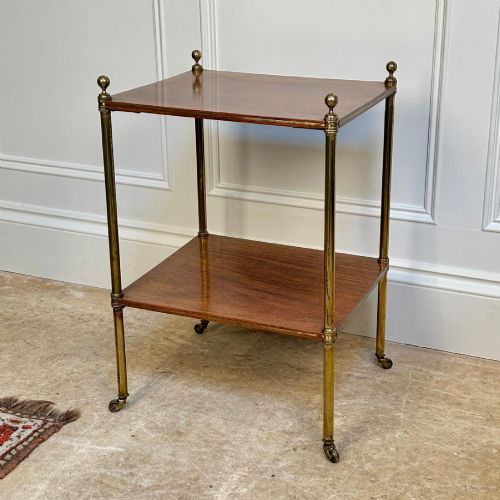
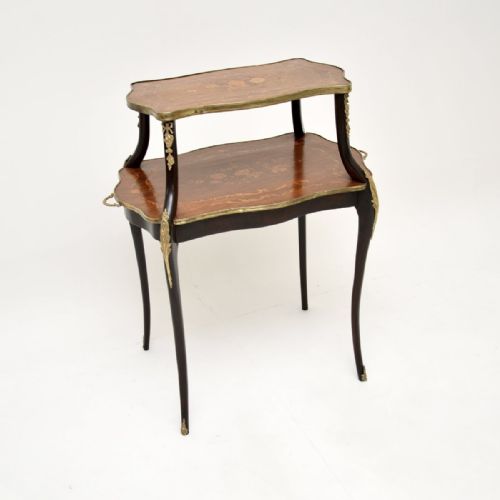
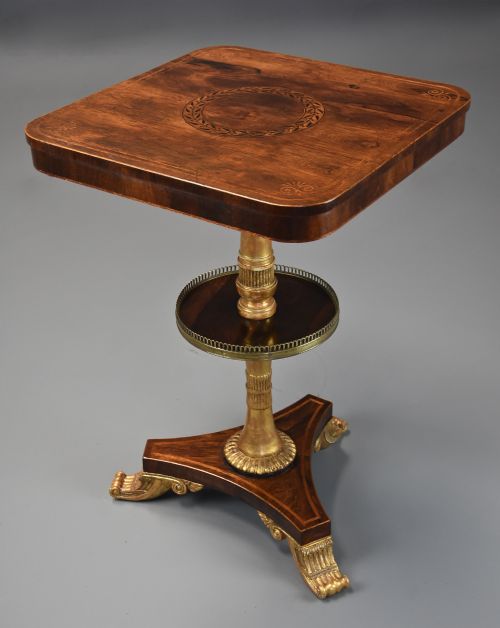
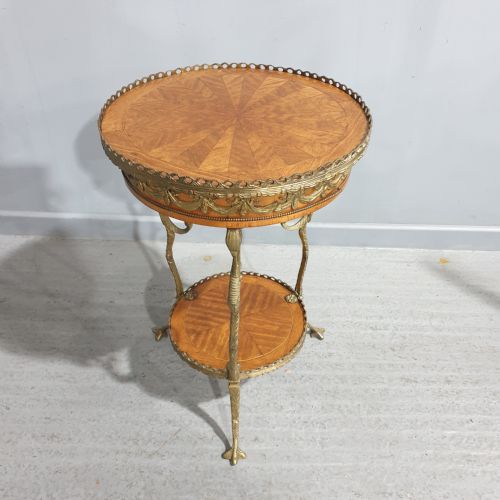
The version you are most likely to meet on this page combines brass structural elements or decorative mounts with timber tiers of mahogany, rosewood, or walnut. Many examples draw on French design styles like Louis XV, Napoleon III, and Empire, featuring inlaid marquetry or marble tops alongside their tiered brass framework.
How they were made
Cabinetmakers constructed the main framework and shelves using dense timbers such as mahogany, rosewood, kingwood, and walnut, often applying intricate floral marquetry or parquetry veneers. They integrated cast and chased or gilt brass, bronze, and ormolu for mounts, galleries, feet, and structural uprights.
Makers finished these surfaces with hand-polished French polish to highlight the grain of the woods, while marble tops and onyx slabs were fitted tightly into cast brass frames to create durable upper surfaces.
Listings feature items spanning the nineteenth century through the 1930s, utilising brass combined with mahogany, rosewood, walnut, marble, and onyx.
What varies in quality
The distinction between ordinary and exceptional pieces lies in the crispness of the brass casting and the refinement of the secondary materials. Superior examples display finely chased ormolu mounts, tight parquetry or marquetry patterns, and substantial marble or figured rosewood tiers that remain stable within their frames.
Simpler pieces rely on plain sheet brass or minimal framing with straightforward mahogany or walnut shelves. The presence of signed metalwork, heavy gauge brass components, and intricate hand-inlay elevates a piece from a basic utilitarian stand to a refined item of furniture.
George Bullock·W. Turner Lord & Co·Linke·Donald Ross
The Two Tier Brass Stand Glossary
- Étagere
- A set of open shelves or tiers designed for displaying small objects, ornaments, or books. These pieces usually feature slender supports and can be circular, oval, or rectangular in plan.
- Ormolu
- Gilded bronze or brass applied as decorative mounts, feet, or galleries on furniture. This material provides bright metallic contrast against dark woods like rosewood and mahogany.
- Marquetry
- Decorative veneer work formed by fitting together small pieces of coloured wood, shell, or ivory to create pictorial designs or floral patterns. It appears frequently on the tiers of French-influenced tables.
- Gueridon
- A small French occasional table supported by a central column or several legs, often featuring a circular marble top surrounded by a brass gallery. They function well as lamp or wine tables.
- Trivet
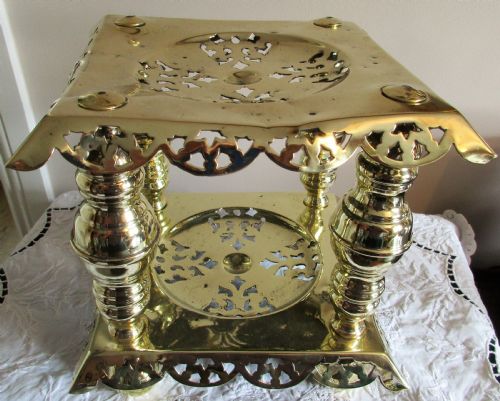
- A low metal stand traditionally used to hold a kettle or hot dish near a fire. Brass versions often incorporate two tiers for additional utility.
Two Tier Brass Stand: Frequently Asked Questions
What is a two tier brass stand used for?
These stands provide two distinct display or storage surfaces within a compact footprint, making them suitable for holding table lamps, house plants, or decorative objects.
Historically, specific variants served as tea tables, kettle trivets, or bedside etagères to keep everyday items within easy reach.
How do I care for brass and wood tiers?
Dust the timber and brass surfaces regularly with a soft, dry cloth to prevent the buildup of grime.
Avoid using harsh chemical polishes on the brass, as abrasive cleaners can strip the original patination and damage adjacent wood veneers.
Are these stands purely French in origin?
Not all pieces originate from France, though many adopt French decorative idioms such as Louis XV, Napoleon III, and Empire styles.
English makers also produced numerous variations during the Regency, Victorian, and Edwardian eras using indigenous timbers alongside imported brass components.
How can I tell a Victorian stand from a Regency one?
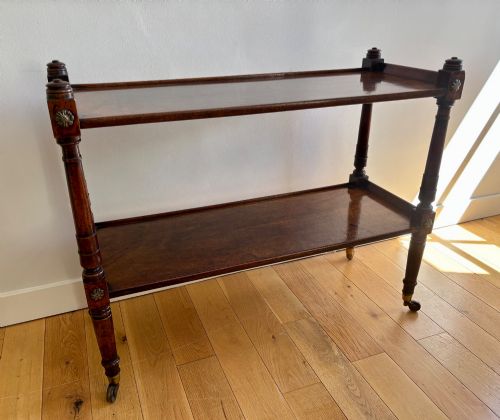
Regency pieces often display restrained classical lines, utilising dense rosewood or mahogany with understated brass inlay or brass reeded legs.
Victorian and later 19th-century examples tend to incorporate heavier ormolu mounts, more elaborate marquetry, or alternative top materials like marble and onyx.