
Two Sided Desk
A two sided desk provides a working surface accessible from both directions, combining practical double-sided utility with period craftsmanship.
Two Sided Desk
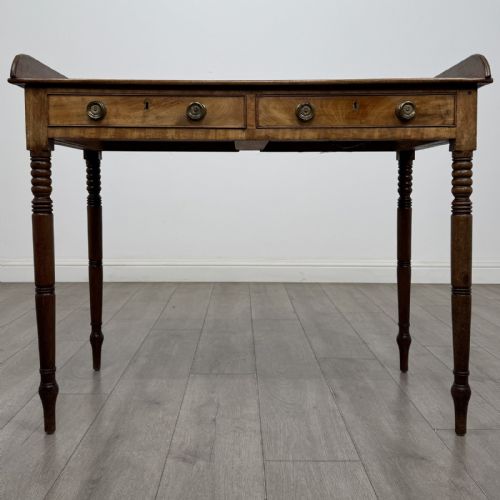
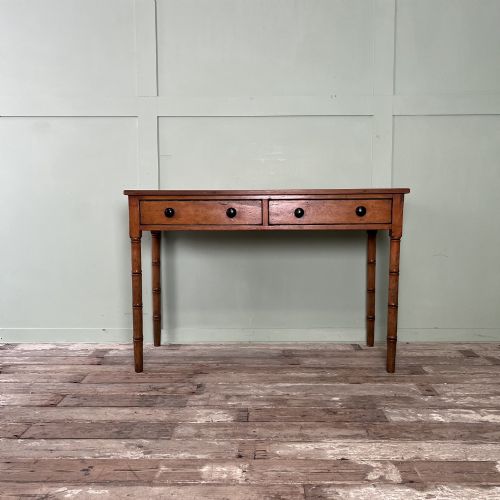
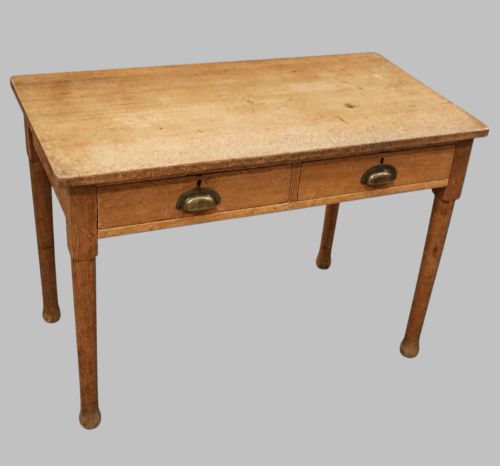
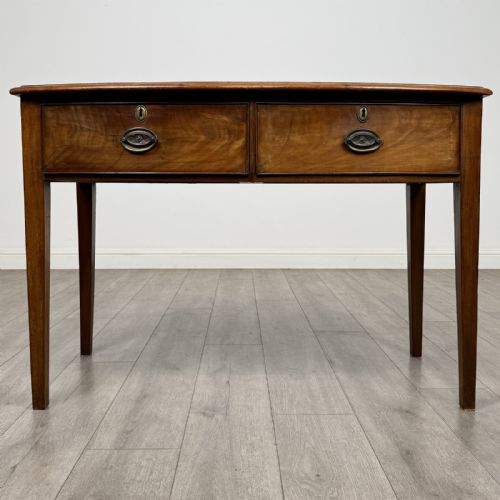
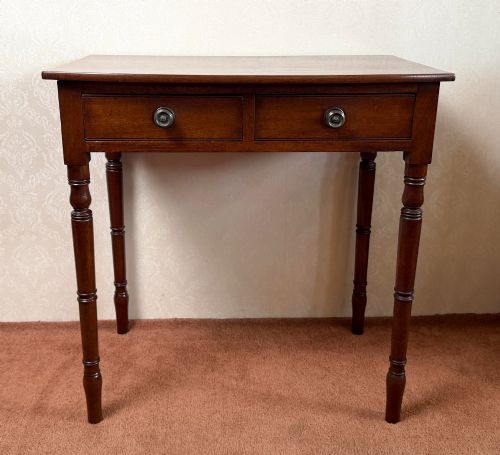
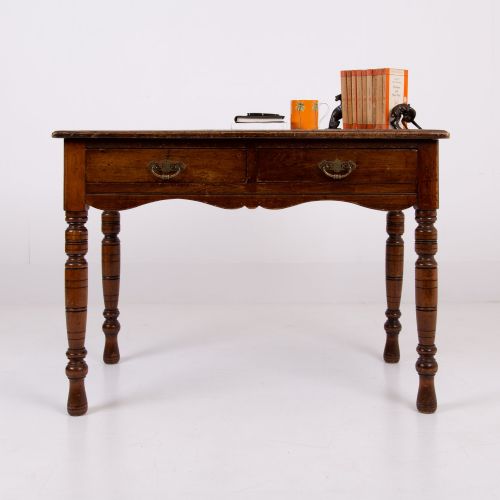
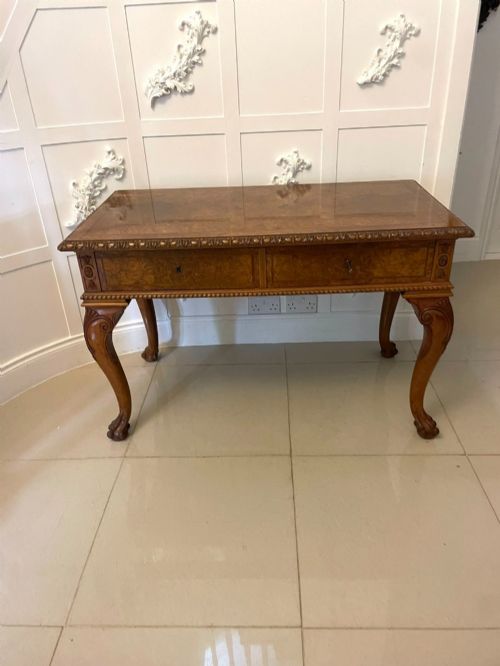
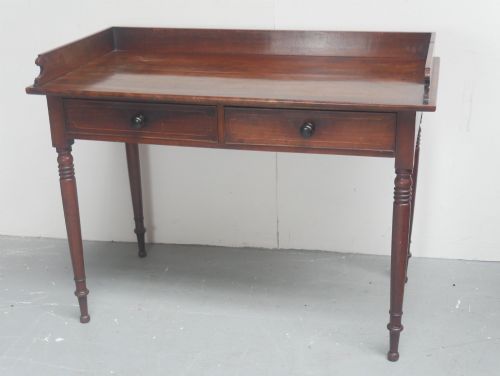
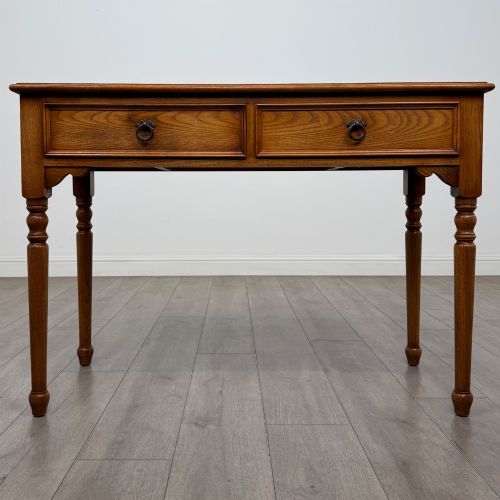
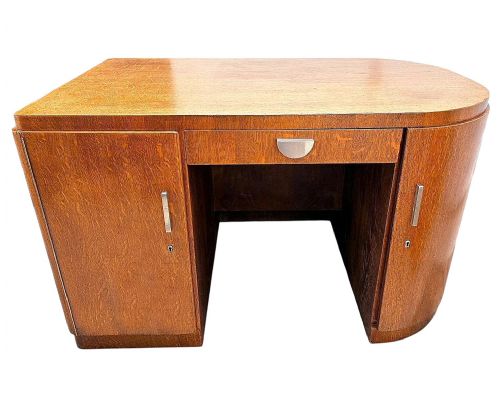
A two sided desk offers functional workspace on opposing sides, appearing across periods from the Georgian era through to the Art Deco movement. These pieces frequently emerge in forms such as writing tables, console tables, and freestanding hall tables designed to sit away from a wall.
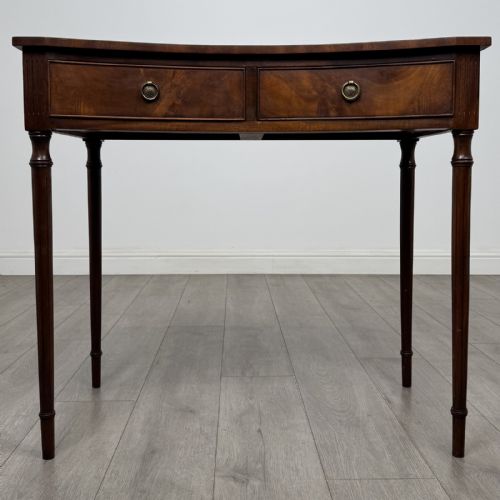
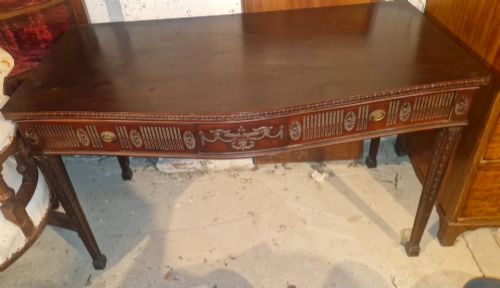
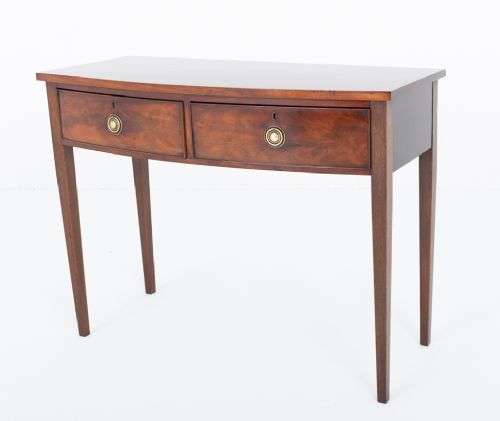
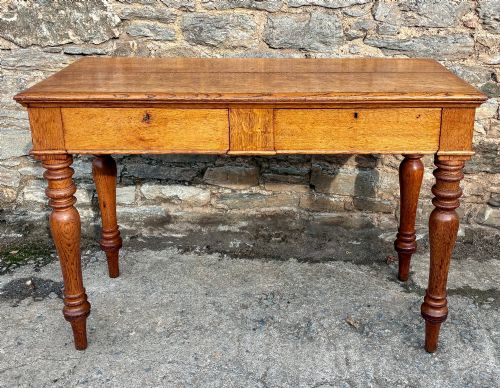
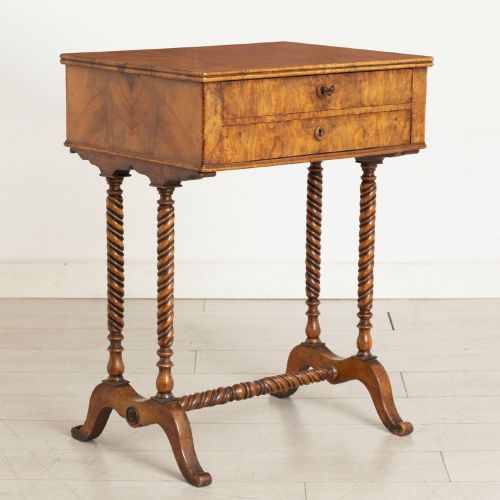
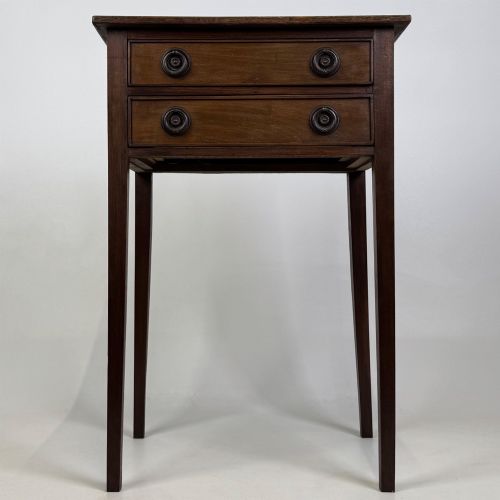
Mahogany, oak, and walnut dominate the construction of these items, often accompanied by inset leather writing surfaces and multiple drawers. Buyers encounter variations including shaped fronts, raised galleries, and tapered or barley twist legs depending on the specific period of manufacture.
The selection ranges from early nineteenth-century Regency examples to Edwardian and early twentieth-century interpretations. Cabinetmakers constructed these versatile items to serve as functional office furniture as well as decorative centrepieces in larger rooms.
Materials and construction
Cabinetmakers utilised dense hardwoods such as mahogany, oak, and walnut for the primary frames and carcases, sometimes applying burr walnut veneer or satinwood for decorative effect. Brass hardware, including handles and key escutcheons, provides functional detailing across multiple styles.
Writing surfaces frequently integrate inset leather panels, tooling the perimeter with gold leaf in traditional formats. Joinery techniques rely on solid timber framing, dovetailed drawer construction, and structural turned or tapered legs to support the dual-access design.
Some tables double as sewing stations, proving that historic multi-tasking was rarely confined to the kitchen.
Distinction in execution
The division between standard workshop production and superior craftsmanship rests on timber selection, such as the use of highly figured burr walnut veneer or solid mahogany boards rather than secondary pines. Fine examples exhibit meticulous attention to secondary timbers inside drawer linings and precise dovetail joints.
Proportion and decorative restraint differentiate high-grade pieces, where carved details, balanced brass mounts, and intact leather surfaces remain integrated. Superior items maintain structural rigidity without relying on excessive reinforcement, demonstrating the maker's mastery over the material.
Fortnum and Mason·Hubert Simpson of Kendal
The Two Sided Desk Glossary
- Freestanding
- Finished on all sides so the piece can stand independently in the middle of a room rather than against a wall. This characteristic is essential for functional double-sided access.
- Bow front
- A convex, outward-curving front elevation on a cabinet or desk. This shaping softens the linear geometry of the piece.
- Gallery
- A raised ornamental border running along the rear or side edges of a tabletop. It prevents items from sliding off the surface.
- Dovetail
- An interlocking joint formed by wedge-shaped fingers that secure drawer corners together. It represents a hallmark of traditional cabinet construction.
Two Sided Desk: Frequently Asked Questions
Where should a two sided desk go?
Position the piece in the centre of a room rather than pushed against a perimeter wall, allowing access from both opposing sides.
This placement showcases the finished rear elevation and enables two people to work simultaneously.
How do I care for the leather top?
Maintain the inset leather surface by dusting gently with a dry cloth and applying occasional neutral leather balms to prevent drying.
Avoid placing damp items directly onto the leather to protect the underlying timber and gold tooling.
Can I use these for a modern home office?
The generous proportions and dual-access drawers make these desks practical for contemporary laptops and writing materials.
Their freestanding nature provides flexible placement options within modern residential layouts.
How do I distinguish Edwardian from Georgian desks?
Georgian pieces generally display heavier mahogany construction with simpler linear geometry or characteristic tapered legs.
Edwardian examples often incorporate lighter satinwood or mahogany frames with refined decorative inlay and satin finishes.