
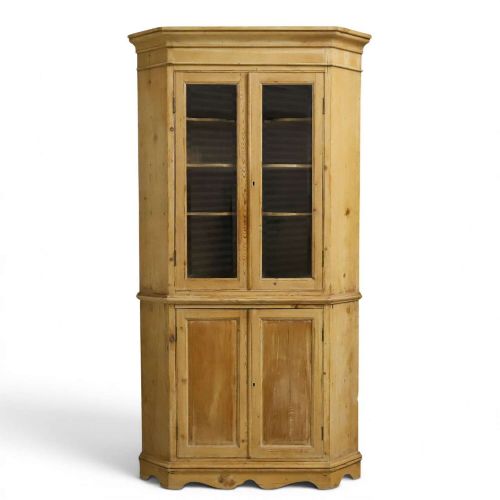
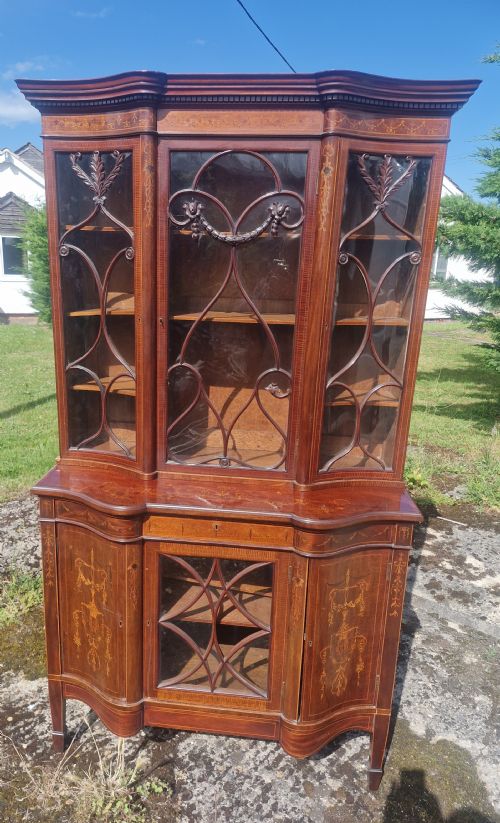


Two Piece Display Cabinet
A two piece display cabinet brings together timber and glass to show and store your belongings.
Two Piece Display Cabinet
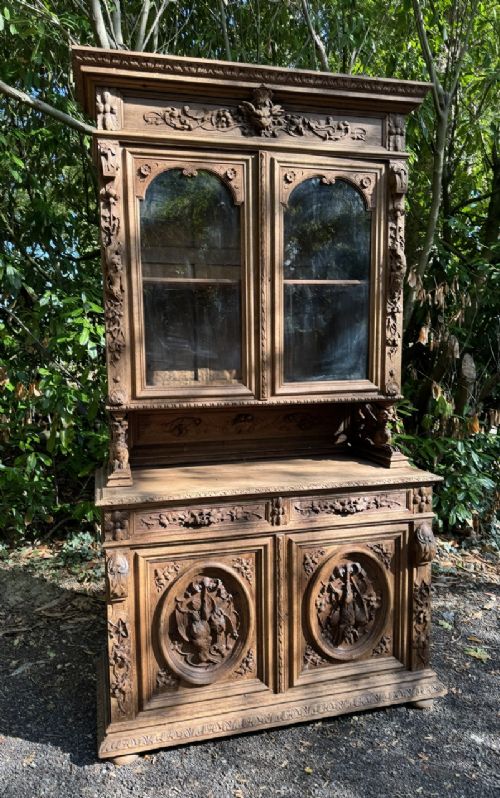
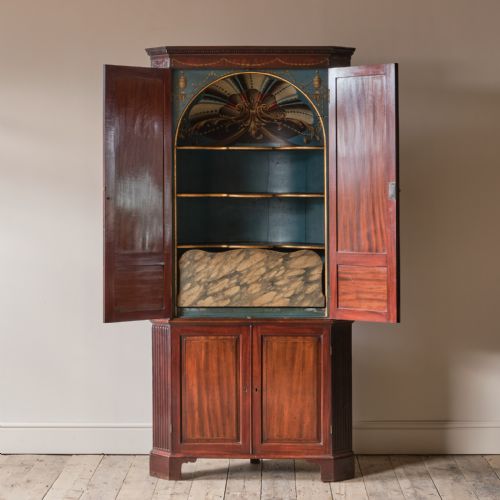
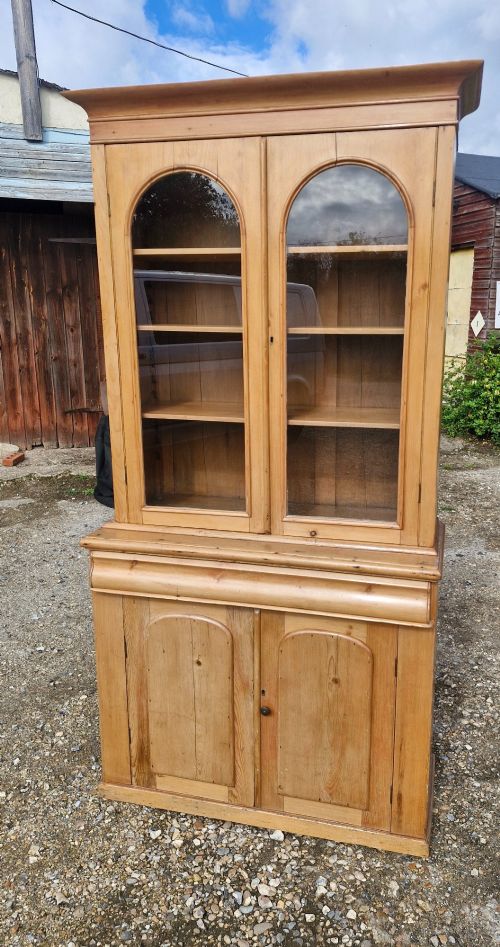
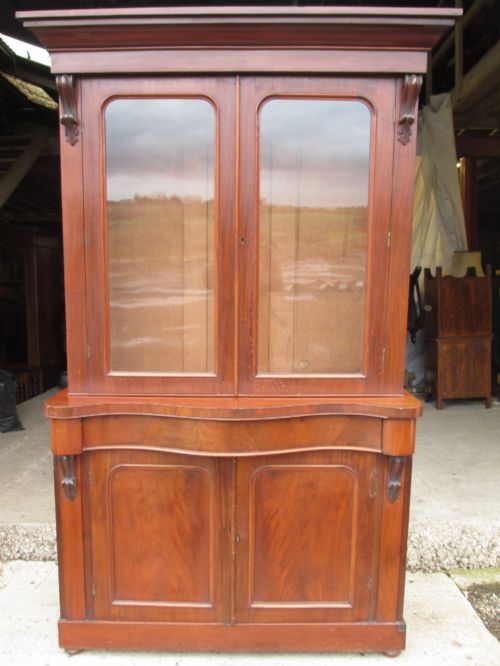
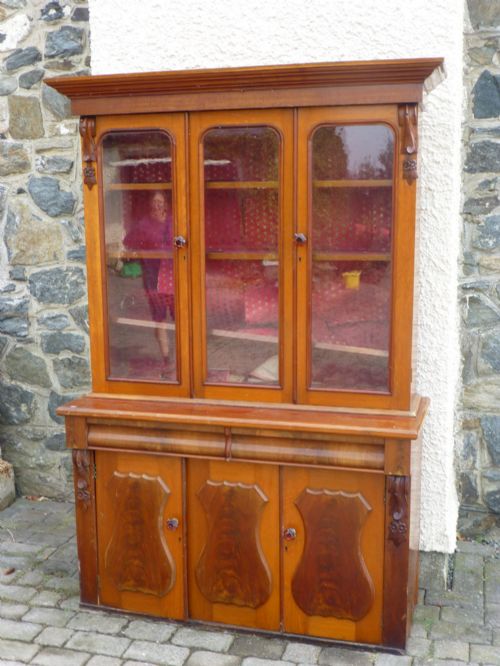
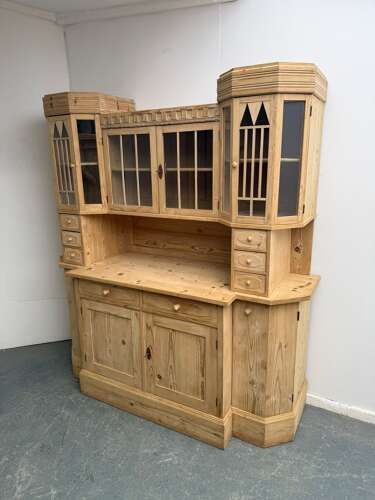
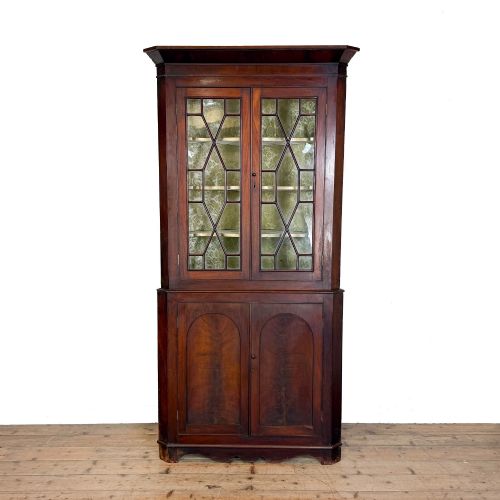
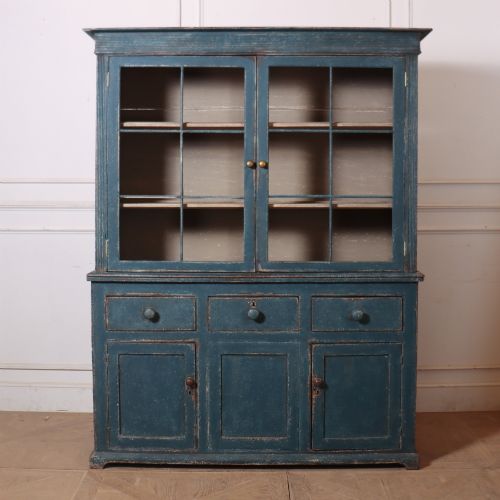
A two piece display cabinet divides into two sections, usually a glazed upper display portion resting upon a lower cupboard or dresser base, making transport easier. These pieces span periods from the eighteenth century through the Victorian and Edwardian eras, reflecting both formal and vernacular English, French, Hungarian and West Country traditions.
The form encompasses corner cupboards, kitchen dressers, bookcases and vitrines constructed to hold books, china or provisions. You will encounter painted pine country pieces alongside polished mahogany and satinwood examples inlaid with marquetry.
Regional workshops and cabinet makers produced these standing double-height storage units to anchor a room while offering split-level utility. The division between the upper glazed doors and the lower base defines the character of each example.
How they were made
Carpenters constructed the carcasses of these cabinets using solid timbers such as pine, oak and mahogany, often applying satinwood stringing or decorative marquetry veneers to the exterior surfaces. Brass hardware secures the doors and corners, while glass panels are held within wooden glazing bars or astragals.
Many vernacular examples feature painted finishes or waxed surfaces over pine and Cornish or Welsh oak, whereas formal pieces rely on the rich grain of flame mahogany. Interior shelves sit within glazed upper sections designed to protect contents from dust while keeping them visible.
Listings feature woods including pine, oak, mahogany, satinwood and brass, spanning the eighteenth century through to the Edwardian period.
What varies in quality
Quality rests upon the selection of timber and the precision of the cabinet work, from plain country pine to finely figured flame mahogany and intricate Edwardian marquetry inlay. The balance of proportions between the upper display section and the lower base dictates the visual harmony of the piece.
Finer examples display delicate astragal glazing bars, original brass fittings, and thoughtful details like bow fronts or barrel backs. The transition from simple utilitarian kitchen dressers to refined drawing-room china cabinets marks the division between everyday utility and high-status craftsmanship.
The Two Piece Display Cabinet Glossary
- Astragal
- A small moulding used to hold glass panes within a door frame, often dividing the window into smaller geometric sections.
- Vitrine
- A glass-fronted cabinet or display case designed specifically for showing porcelain, curiosities or decorative objects.
- Marquetry
- Decorative inlay work using various woods to create pictorial or geometric patterns on the surface of a cabinet.
- Bow front
- A convex, curved front section of a cabinet that softens the corners and adds depth to the profile.
- Corner cupboard
- A triangular cabinet designed to fit neatly into the corner of a room to maximise floor space.
Two Piece Display Cabinet: Frequently Asked Questions
How do I clean my cabinet?
Dust timber surfaces gently with a dry, soft cloth to prevent accumulation. Avoid modern silicone sprays that can damage older finishes.
Clean glass panes with a mild vinegar solution applied to a cloth rather than sprayed directly onto the glass. This protects the surrounding wood and glazing bars from moisture damage.
Can I use this in a modern room?
These cabinets adapt easily to contemporary interiors by providing grounded architectural presence and practical storage. Painted pine and plain oak versions suit relaxed kitchen or living spaces.
Formal mahogany and inlaid Edwardian pieces add contrast to minimalist settings while offering functional display space for books or collections. The neutral tones of natural wood and painted finishes blend with various colour schemes.
What is the difference between a dresser and a vitrine?
A dresser typically combines open or glazed shelving above with a lower sideboard base containing drawers and cupboards, often originating in kitchens or dining rooms. It serves both storage and utilitarian display purposes.
A vitrine focuses primarily on enclosed glass display for decorative objects and fine china, usually standing in formal reception rooms. The distinction lies in the balance between concealed utility and open or glass-fronted presentation.