


Two Piece Bookcase
A two piece bookcase offers the grandeur of a towering library piece while splitting apart for straightforward carriage into the home.
Two Piece Bookcase
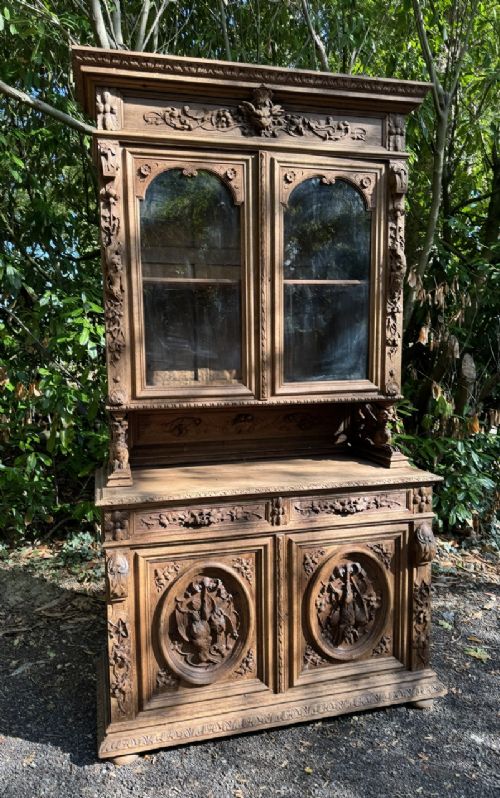
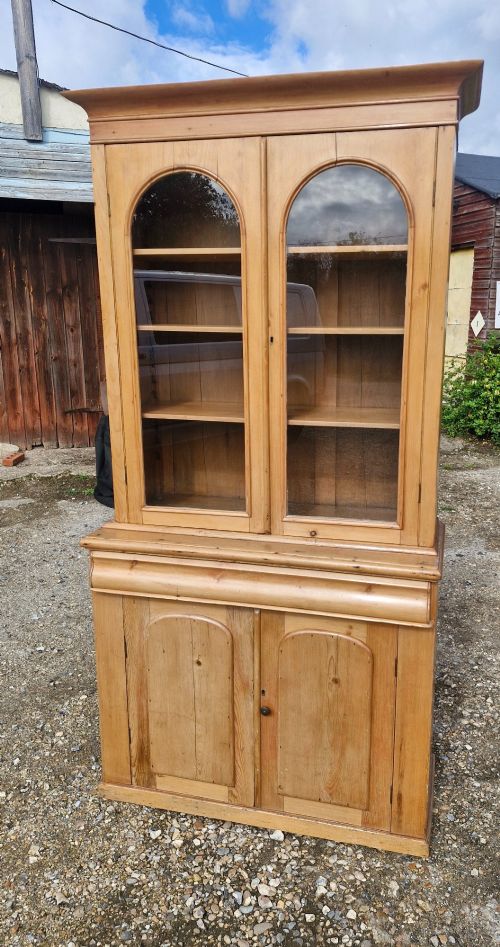
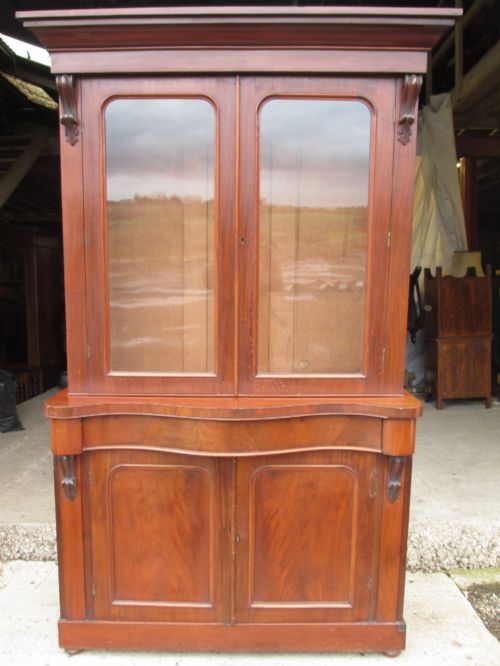
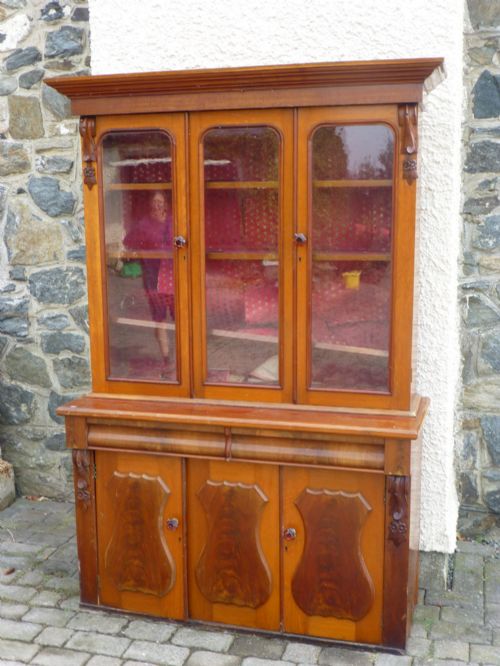
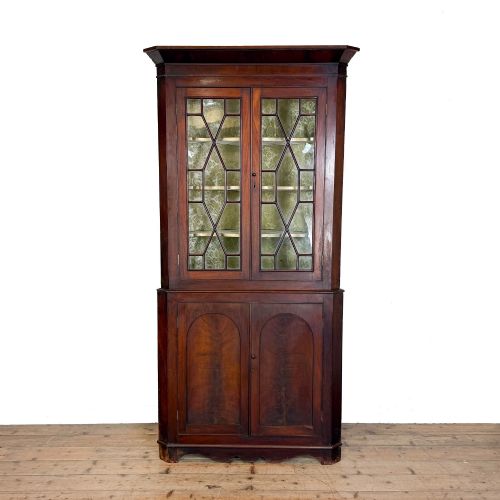
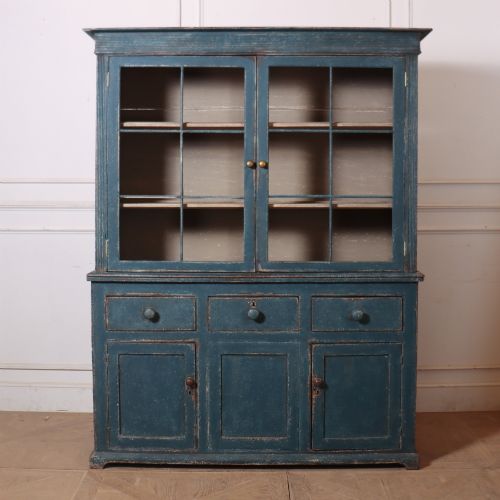
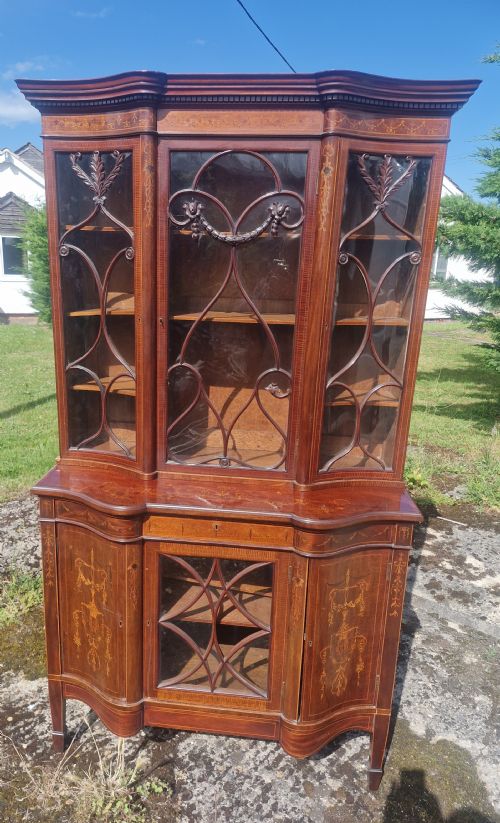
A two piece bookcase comprises a distinct upper section, typically housing shelves or glazed display space, sitting upon a lower base cabinet or chest. These modular formats span Georgian, Victorian, and Edwardian periods, alongside regional country vernacular pieces.
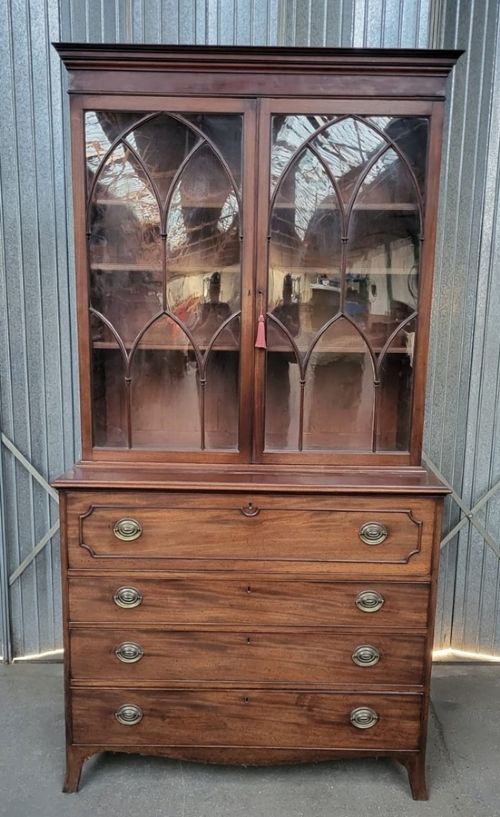
The lower half often takes the form of a chest of drawers, a secretaire drop-front desk, or panelled wooden cupboards. The upper cabinet then rests securely on top, allowing substantial furniture to navigate tight stairwells and narrow hallways with relative ease.
Mahogany and pine dominate the selection, appearing in formal Georgian library editions and robust Victorian kitchen furniture alike. Oak, satinwood, and walnut also surface, ranging from English country workshops to French provincial rooms.
How they were made
Cabinet makers utilised dense hardwoods such as mahogany and oak alongside accessible softwoods like pine, joining structural frames with traditional mortise and tenon joinery. Drawer construction relies on hand-cut dovetails, while brass hardware secures doors and internal fittings.
Glazing bars hold individual panes of glass within the upper cabinet doors, requiring careful carpentry to create astragal patterns. Surface finishes involve applied polish, wax, or painted treatments that protect the underlying wood.
Some nineteenth-century kitchen dressers retain faint flour dust tucked deep inside their old dovetails.
What varies in quality
The distinction between ordinary and superior pieces rests upon the selection of timber and the precision of its jointing. Finely figured mahogany veneers and carefully matched grain patterns mark out the upper echelons of cabinet making.
Proportion and scale dictate visual success, where a balanced relationship between the upper bookcase and the lower cabinet defines a master carpenter's work. Structural integrity in the internal shelving and smoothly operating drawers reveal the original maker's intent.
The Two Piece Bookcase Glossary
- Secretaire bookcase
- A cabinet featuring a pull-down writing drawer fitted with internal pigeonholes and small drawers, positioned between the upper shelving and the lower base. This clever hybrid serves both library and writing functions within a single footprint.
- Astragal glazed
- A door construction where slender wooden mouldings divide the glass pane into smaller geometric lights. These delicate frames strengthen the door while offering an elegant visual rhythm.
- Blind door
- A solid wooden door lacking glass panels, used on lower cabinet sections to conceal stored items. It provides a grounded visual weight beneath the lighter, glass-fronted upper bookcase.
- Cornice
- The decorative moulded projection running along the very top of the upper cabinet. It crowns the structure and often reflects the architectural taste of the period.
- Vernacular
- Regional furniture built by local craftsmen using native timbers like pine and oak rather than following strict metropolitan design rules. These pieces display honest construction suited to domestic country life.
Two Piece Bookcase: Frequently Asked Questions
How do I separate a two piece bookcase?
Most modular bookcases simply lift apart once you empty the contents and remove any internal securing brackets or screws inside the lower cabinet. Two people are necessary to steady the heavy upper glazed section while lifting it clear of the base.
Check for wooden locating pins or tongue-and-groove joints along the dividing waistline before attempting the lift. Keeping the sections apart makes moving the piece through doorways significantly safer.
Will a two piece bookcase fit in a modern room?
These cabinets provide considerable vertical storage while taking up minimal floor space, making them practical for rooms with standard ceiling heights. Measuring both the total height and the height of the individual base section ensures the upper tier clears your ceiling lights.
Their modular nature also allows you to position the base and top in different areas if ceiling clearance proves too restrictive. However, pairing them together maintains the intended architectural balance of the design.
How should I care for antique mahogany wood?
Apply a quality beeswax polish sparingly with a soft cloth to nourish the wood and maintain a gentle sheen. Avoid placing the cabinet near direct heat sources or strong sunlight, which can dry out the timber and fade the finish.
Regular dusting with a dry microfibre cloth prevents particle buildup in carved mouldings and glazed door joints. Gentle maintenance preserves the natural ageing of the timber without stripping its historical character.
How can I tell a Georgian bookcase from a Victorian one?
Georgian pieces often display refined proportions, architectural cornices, and finely figured mahogany or walnut veneers. They lean towards classical design rules established during the eighteenth century.
Victorian examples frequently present heavier proportions, robust pine or mahogany construction, and sometimes broader glass panes. Regional vernacular pieces from the nineteenth century also introduce painted finishes and utilitarian kitchen storage formats.