

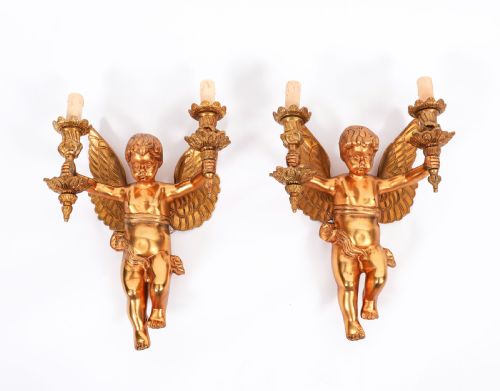


Two Light Candle Sconce
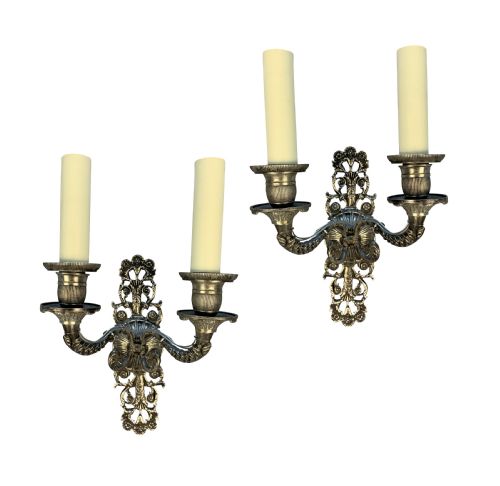
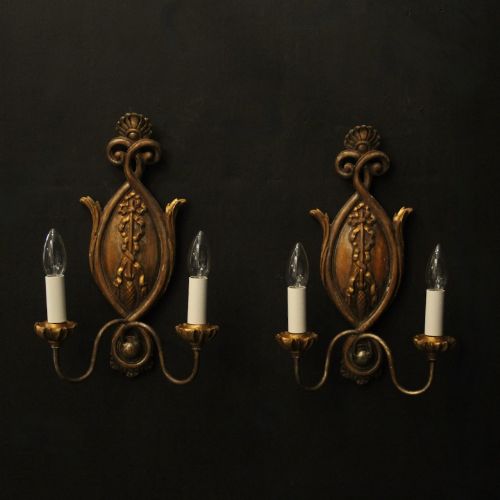
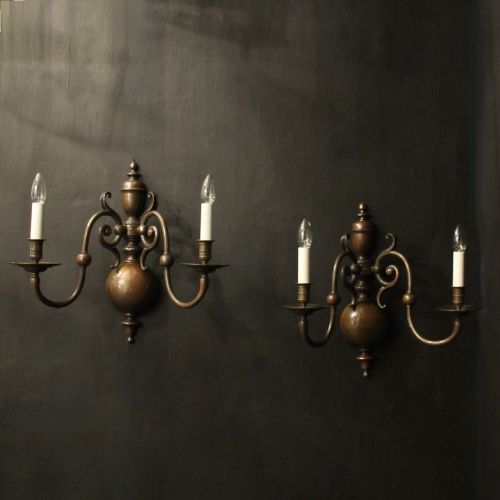
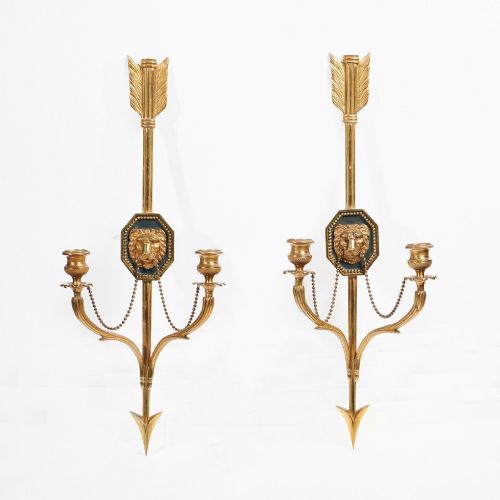
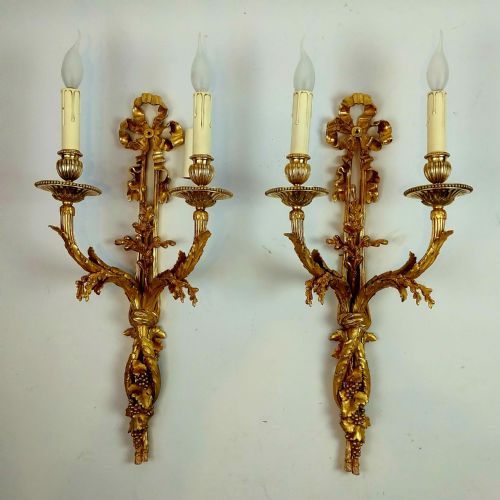
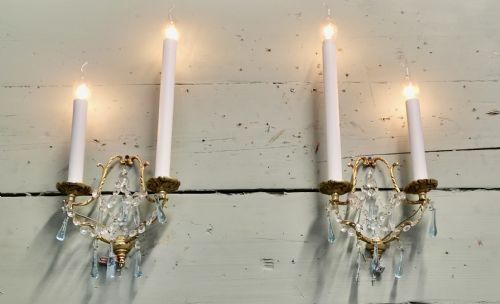
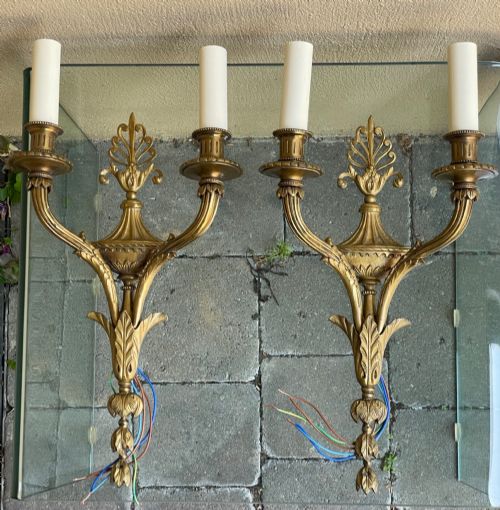
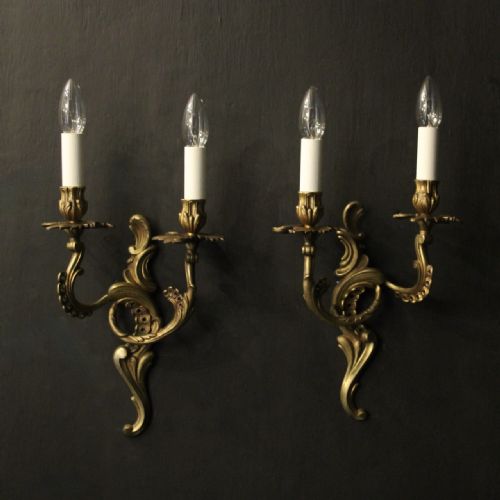
These twin arm wall fixtures provide the traditional warmth of a two light candle sconce for any interior room.
Two Light Candle Sconce
A two light candle sconce provides dual illumination from a wall mounted bracket, taking the form of twin arm wall lights, appliques, and wall chandeliers designed to hold a pair of candles. The examples found here span from the Victorian era through the early twentieth century, reflecting varied regional tastes and historical revivals.
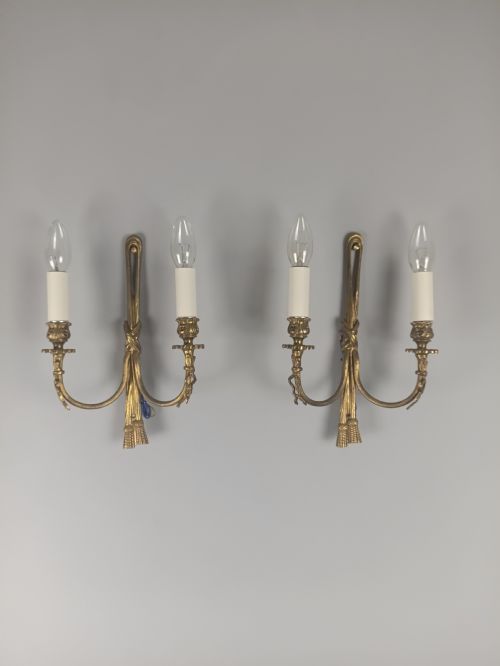
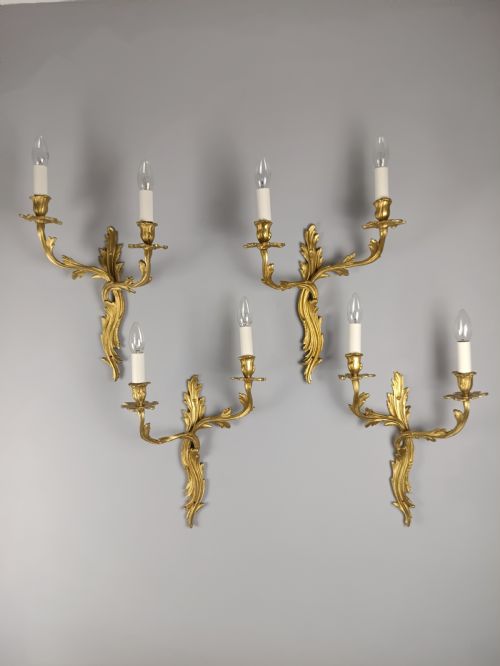
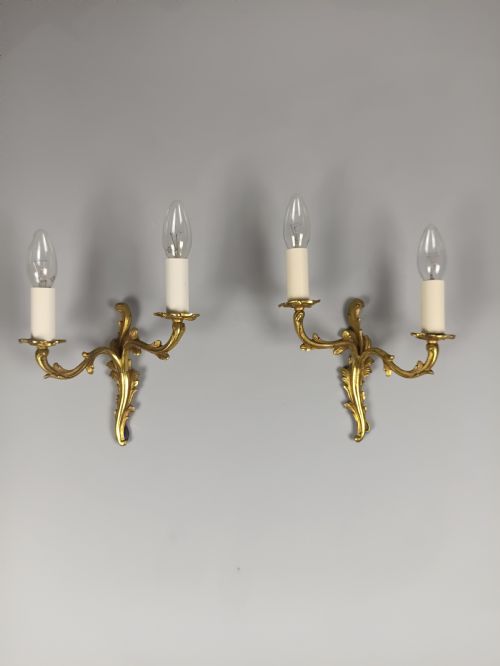
French designs dominate the selection, heavily featuring Louis XV revival, Rococo, and Empire styles rendered in cast metals. Alongside these, Florentine giltwood pieces and English brass variants appear frequently, offering distinct regional interpretations of the twin arm format.
Most entries are paired items designed for balanced placement on either side of a mirror, fireplace, or architectural feature. Single pieces and larger sets of four also occur, though pairs remain the standard format for domestic spaces.
Materials and construction methods
Foundry cast brass, bronze, and ormolu form the structural core of many pieces, often receiving a gilded surface treatment to enhance their decorative impact. These metallic bodies permit intricate casting work such as foliate scrolls, ribbon motifs, and figural details.
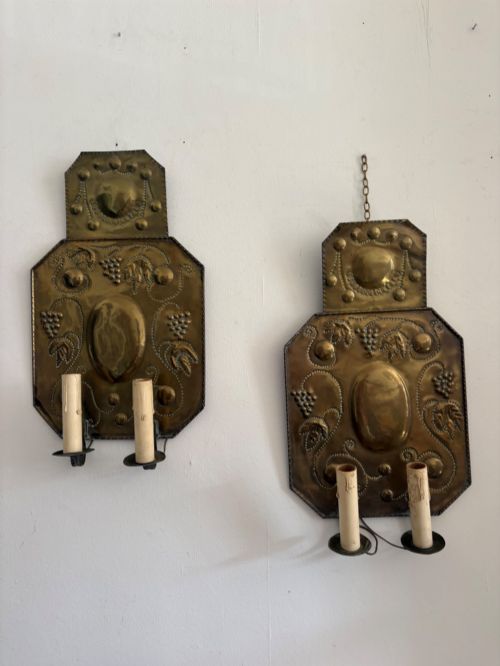
Carved and gilded wood serves as another primary medium, particularly within Florentine and Victorian examples where giltwood leaf designs define the backplates and arms. Repousse techniques appear in Dutch brasswork, using hammered sheet metal to create textured surface relief.
Carved wooden cherubs occasionally peer out from nineteenth-century Italian arms.
Distinctions in execution and finish
The refinement of the casting and chiseled detail separates standard production from finer examples. Crisp definition in the acanthus leaves, cherubs, and Rococo scrolls indicates superior workmanship in the metal foundry.
The integrity and depth of the gilding or surface plating also determine overall merit. Fire-gilded ormolu maintains a richer, more durable lustre compared to basic applied finishes, while carved wooden frames rely on the precision of the gesso and gold leaf application.
The Two Light Candle Sconce Glossary
- Ormolu
- Gilded bronze produced by applying a mercury and gold amalgam to a bronze base and heating it until the mercury evaporates. This technique creates a durable, deep golden finish found on finer antique French fixtures.
- Applique
- A wall-mounted light fixture designed to hold candles or electric lamps. The term is frequently used interchangeably with wall sconce.
- Repousse
- A metalworking technique where the metal is hammered from the reverse side to create a raised design in relief. It is characteristic of certain Dutch brass wall pieces.
- Louis XV Revival
- A nineteenth-century design movement emulating the asymmetrical curves, naturalistic plant forms, and Rococo exuberance of the mid-eighteenth French court. Sconces in this style display fluid, sweeping lines.
Two Light Candle Sconce: Frequently Asked Questions
How were these sconces originally mounted?
These fixtures were secured to interior walls using screws or wall hooks fitted through the backplate. They were typically positioned at eye level to reflect candlelight across a room.
In period settings, they frequently flanked mirrors, paintings, or fireplaces to maximise the illumination available from two candles.
Can antique sconces be wired for electricity?
Many surviving examples have been adapted for modern electrical wiring while retaining their original candle drip pans and sockets. This conversion allows them to function safely as wall lamps.
Professional rewiring preserves the structural integrity of the brass or giltwood components without altering the exterior appearance.
What is the difference between a sconce and a wall chandelier?
A wall sconce generally sits flat against the surface with a distinct backplate supporting one or two arms. Wall chandeliers tend to have more prominent, projecting multi-tier frames that extend further into the room.
Both formats utilise the twin arm configuration seen across many Victorian and early twentieth-century designs.
How do I identify a Florentine sconce?
Florentine pieces are typically carved from wood rather than cast in metal, showcasing elaborate giltwood leaf ornamentation. They often reflect regional Italian crafting traditions from the early twentieth century.
The emphasis on carved floral and foliate motifs distinguishes them from the metal-heavy French Rococo or Empire styles.