




Twisted Leg Dining Chairs
Twisted leg dining chairs bring sturdy oak and turned supports to the table, offering a tactile warmth that suits both country kitchens and formal dining rooms.
Twisted Leg Dining Chairs
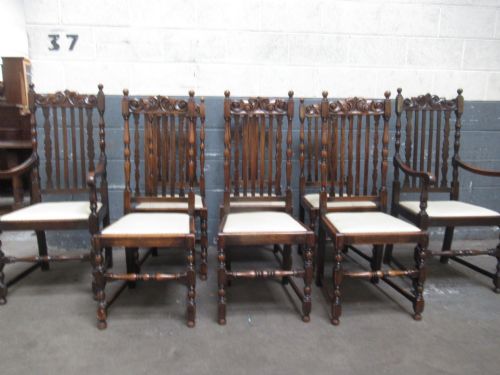
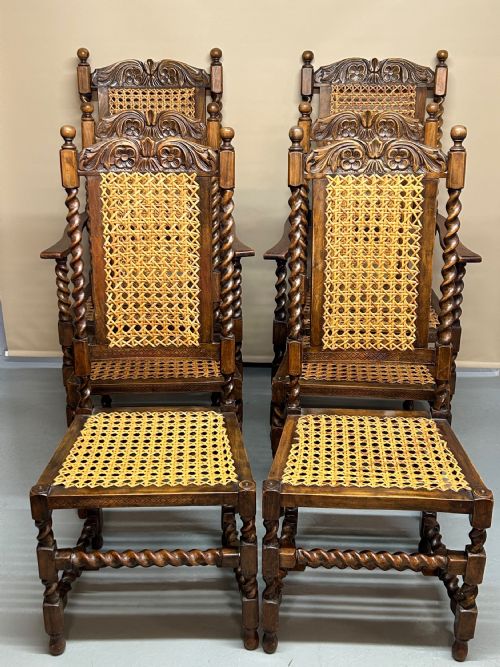
When you search for twisted leg dining chairs, you encounter seating built primarily during the Edwardian period and the 1920s, alongside earlier oak and mahogany variants. Sets often include side chairs and matching carvers with armrests, designed to sit comfortably around a dining table.
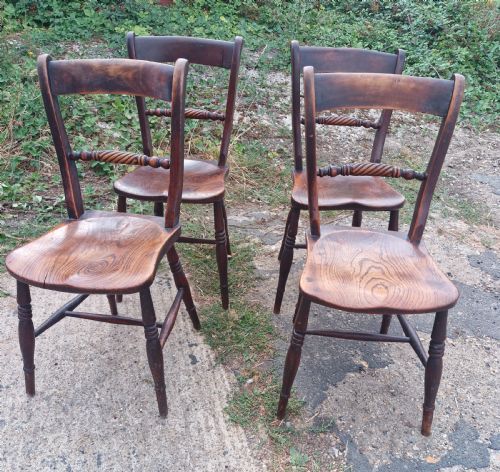
The characteristic turned supports define these pieces, appearing in oak and ash across Edwardian sets and later twentieth-century groups. These chairs frequently feature cane seats or upholstered pads, reflecting the domestic habits of their respective periods from the nineteenth century onwards.
How they were made
Cabinet makers utilised dense hardwoods such as oak, mahogany, and ash to shape the frames and turn the characteristic spiral supports on a lathe. Joinery relied on traditional mortise and tenon construction to ensure the structural rigidity required for daily dining use.
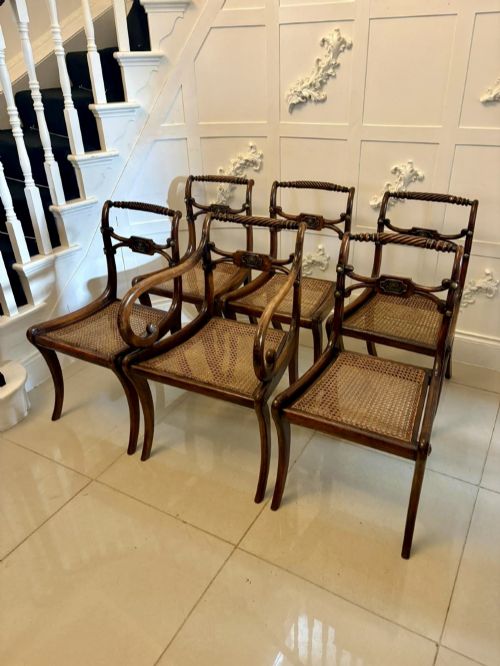
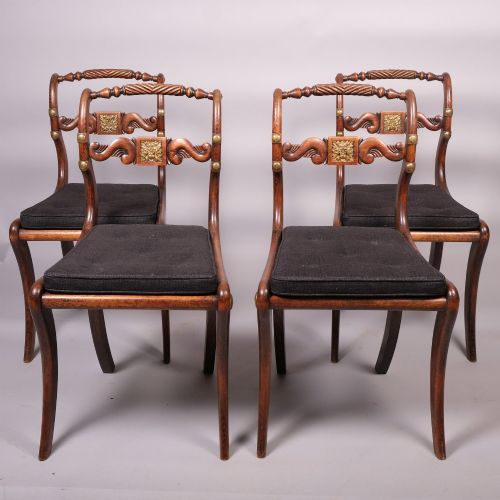
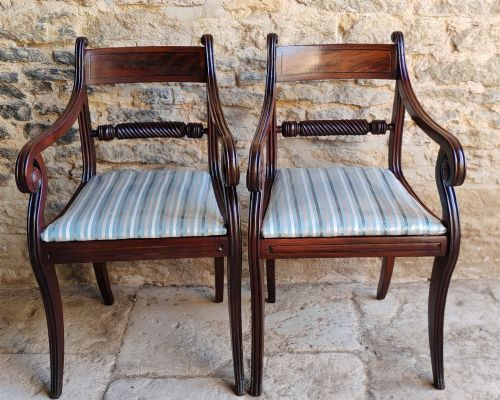
Seats incorporated woven cane panels, leather, or various upholstery fabrics stretched over stuffing. Simulated rosewood finishes also appear, created through paint techniques on simpler timbers to mimic more costly exotic woods.
Listings for twisted leg dining chairs span the Georgian, Regency, Edwardian, and 1920s periods, executed in oak, mahogany, ash, and simulated rosewood.
What varies in quality
The integrity of the timber framing and the precision of the lathe work dictate the standard of these chairs. Sharply defined turns in the wood and tight, well-fitted joints demonstrate superior craftsmanship compared to loose or heavily restored frames.
Matching across a set influences desirability, as complete groups of six or eight hold greater cohesion than assembled pairs. The original condition of cane work or structural upholstery also separates standard utility pieces from finer examples.
Liberty & Co
The Twisted Leg Dining Chairs Glossary
- Carver chair
- An armchair designed specifically for the head of a dining table. These typically feature open arms to accommodate sitting comfortably while dining.
- Cane seat
- A woven panel made from rattan material fitted into the seat frame. It provides a lightweight and flexible surface.
- Bergere
- An upholstered chair style featuring woven cane panels enclosed within a wooden frame. This construction appears on seats from the early twentieth century.
- Side chair
- An upright chair built without armrests. These pieces tuck neatly alongside a dining table.
Twisted Leg Dining Chairs: Frequently Asked Questions
Are twist leg chairs Edwardian?
Many examples featuring barley twist legs date from the Edwardian era and the 1920s, particularly in oak.
However, turned timber supports also appear on earlier regional furniture and revival pieces from the nineteenth century.
How do I clean cane seats?
Cane requires gentle maintenance using a damp cloth to wipe down the rattan strands without soaking the material.
Keeping the cane slightly hydrated helps prevent brittleness over years of domestic use.
Can I mix carvers with side chairs?
Traditional dining sets frequently pair a matching set of single side chairs with one or two carver armchairs for the ends of the table.
This arrangement mirrors historical dining room layouts where hosts sat in armchairs.
What wood were they made from?
Timbers vary by period, with oak and ash appearing frequently in twist leg and farmhouse chairs.
Mahogany and simulated rosewood predominate in Regency and Georgian dining seats.