






Twisted Brass Candlesticks
Twisted brass candlesticks bring warmth and structural rhythm to a room, cast in solid metal through centuries of changing domestic taste.
Twisted Brass Candlesticks
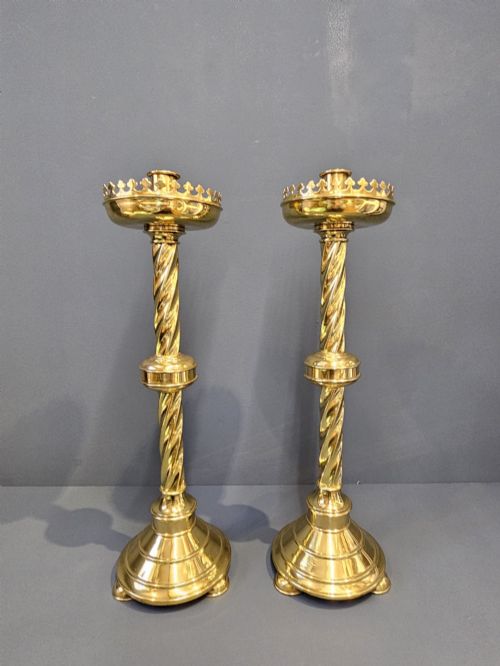
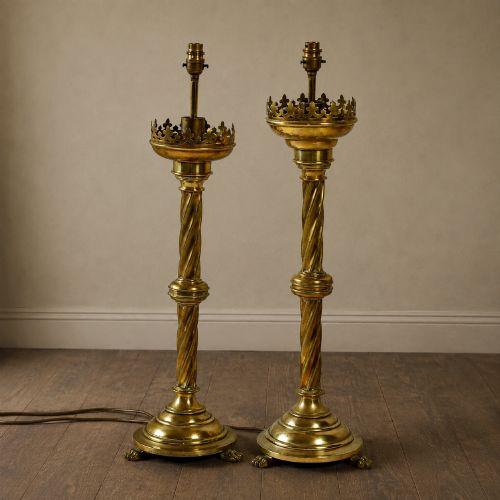
Twisted brass candlesticks are lighting accessories defined by their helical shafts, appearing across Georgian, Victorian, and Edwardian periods in various domestic and ecclesiastical forms. When you search for twisted brass candlesticks, you encounter tall church altar pieces, smaller desk varieties, and occasional dual-purpose table lamps.
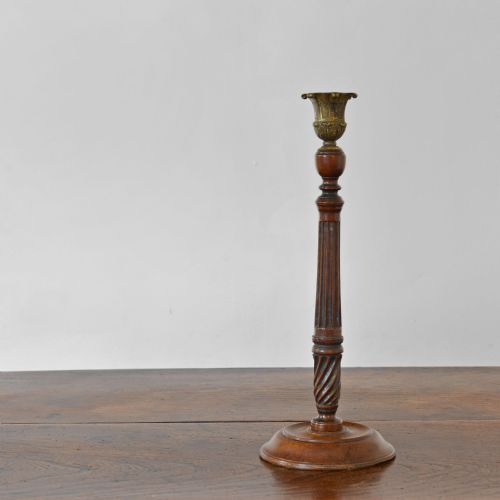
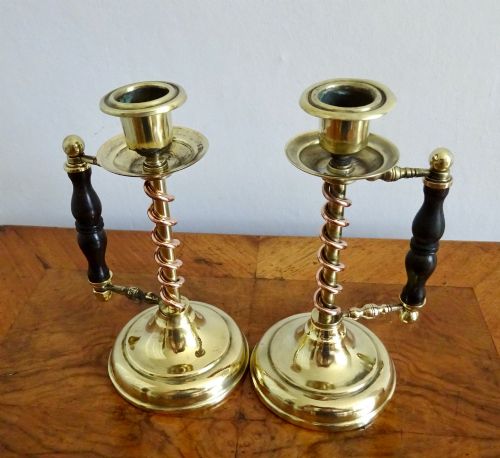
The materials paired with the metal vary, with many examples combining solid brass stems with turned oak, mahogany, or copper elements. These pieces range from simple single sticks to substantial pairs and sets designed for liturgical use or grand interior display.
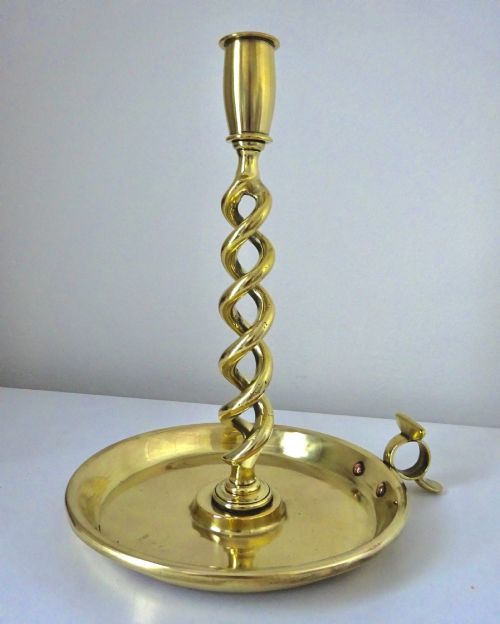
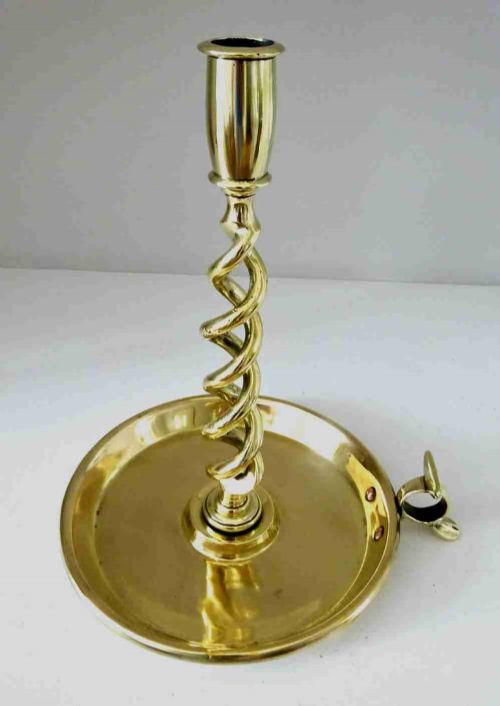
Origins stretch from the eighteenth century into the early twentieth century, showing revivals in Gothic, Jacobean, and Arts and Crafts styles. The twist itself takes different paths, from tight double helix formations to open barley twist wooden shafts capped in brass.
Materials and construction methods
Makers utilised cast brass for the structural components, often combining the metal with turned hardwoods such as oak and mahogany. Copper components also appear in specific Arts and Crafts examples, adding tonal variety to the finished pieces.
The helical forms are achieved through metal casting and woodworking techniques, shaping solid brass bars into twists or turning timber on a lathe. Fitted bases, handles, and drip pans are incorporated to complete the functional design of the candlesticks.
Twisted Brass Candlesticks Retail Price Guide 2026
Typical asking prices for twisted brass candlesticks among the pieces listed under this phrase on Sellingantiques today, from the lower quarter to the upper quarter. They describe what is for sale here now, not the wider market.
Markers of distinction and build
Quality rests in the precision of the twist and the weight of the casting, distinguishing heavy ecclesiastical or fine domestic examples from lighter production. Crisp definition along the helical ridges shows the maker's control over the material.
The integration of mixed materials reveals standard of execution, particularly where brass fittings join turned oak or mahogany bases. Proportions between the stem, drip pan, and base dictate the visual balance of the object.
T Thomason and Co
The Twisted Brass Candlesticks Glossary
- Barley twist
- A helical column resembling the shape of a barley sugar stick, popular in furniture and candlestick design. This form creates diagonal movement along the vertical shaft.
- Double helix
- Two intertwined spiral strands running parallel along the stem of the candlestick. This technique adds visual complexity to the central shaft.
- Ecclesiastical
- Pertaining to the Christian church or clergy, describing larger candlesticks and altar lights made for religious settings. These pieces often feature heavier brass construction.
- Drip pan
- A shallow circular tray positioned beneath the nozzle to catch melting wax. This feature protects surfaces and tables from falling wax.
- Fitted base
- A weighted or specifically shaped platform designed to support tall or heavy stems securely. It prevents the candlestick from tipping during use.
Twisted Brass Candlesticks: Frequently Asked Questions
How do I date twisted brass candlesticks?
Dating relies on the manufacturing techniques, base construction, and the stylistic cues of the period. Georgian and Victorian examples show distinct casting methods and weight differences compared to later Edwardian pieces.
Examining the wear patterns, patination on the metal, and the type of fixings used inside the base helps narrow down the decade of production.
Were these used in churches or homes?
Twisted brass candlesticks served both domestic and ecclesiastical environments. Large, heavy examples often originated from churches as altar lights, while smaller pairs were made for dining tables and sideboards.
Ecclesiastical pieces typically stand taller and heavier, designed to hold thick candles for ceremonial spaces.
Why do some have wooden bases?
Makers frequently combined metals and timber, particularly during the Arts and Crafts and Jacobean Revival periods. Oak and mahogany provided sturdy, contrasting foundations for the bright brass stems.
This mixed-material approach introduced warmth and textural variety to interior lighting accessories.
How should I clean antique brass?
Preserving the historical surface requires minimal intervention, avoiding harsh chemical polishes that strip away the aged patina. Gentle dusting with a soft cloth keeps the metal stable without removing its character.
Allowing the brass to retain its natural darkening marks preserves the visual history of the piece.