




Twist Leg Dining Chairs
Twist leg dining chairs bring a distinct turned profile to the table, combining structural support with decorative depth.
Twist Leg Dining Chairs
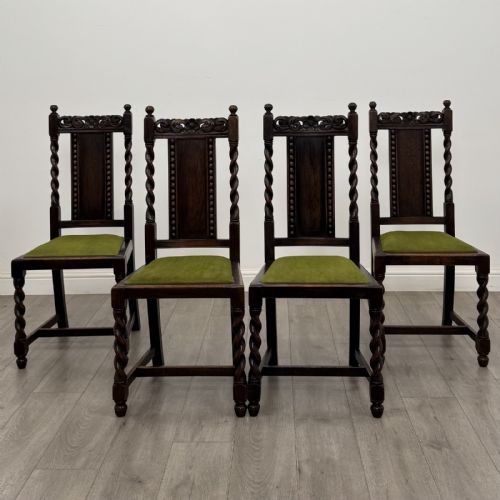
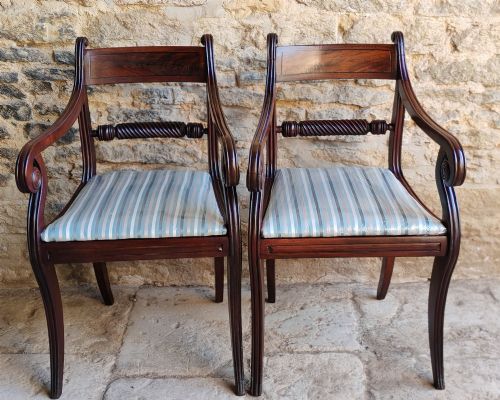
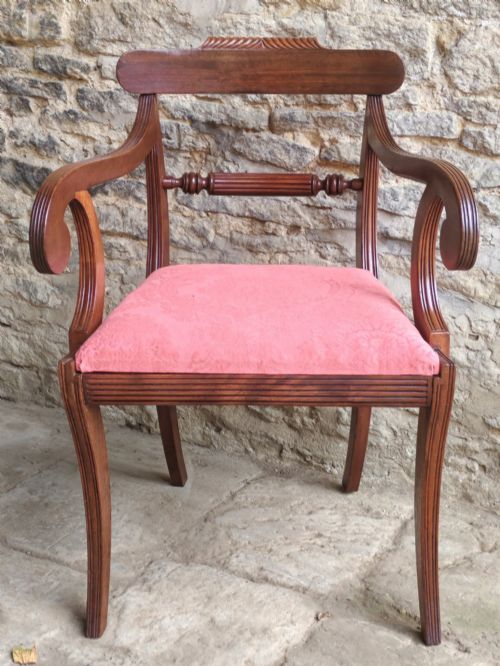
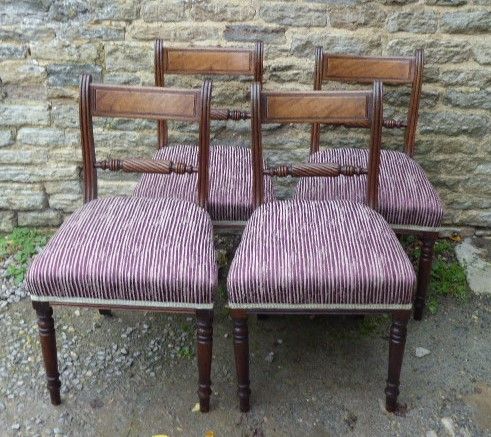
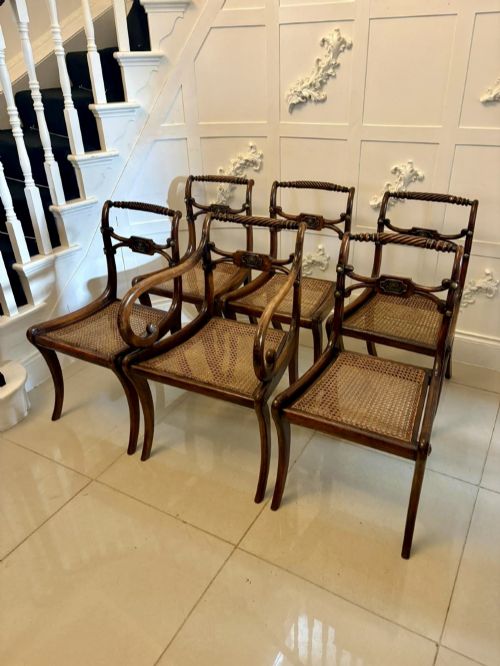
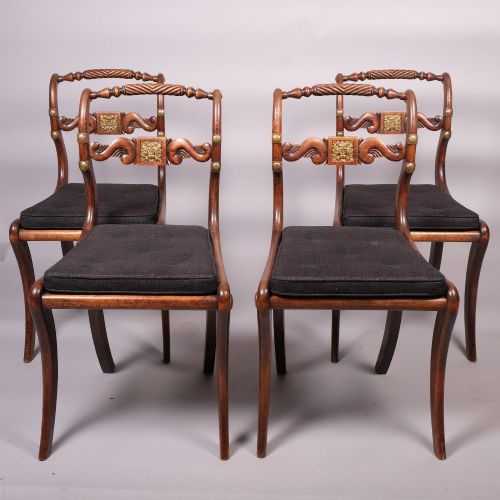
Twist leg dining chairs encompass dining chairs, side chairs, and carver chairs built across several historical periods. When searching for twist leg dining chairs, buyers encounter pieces ranging from early nineteenth-century Regency designs to twentieth-century oak revivals.
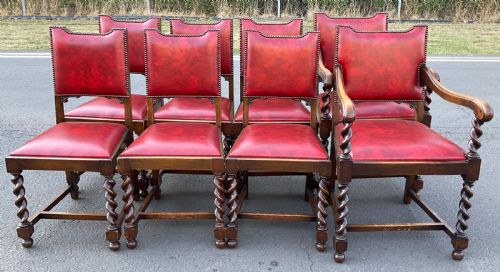
The selection on this page demonstrates that these seats appear in varying group sizes, from individual carvers to complete sets of eight. Oak and mahogany serve as the primary timbers supporting these turned supports.
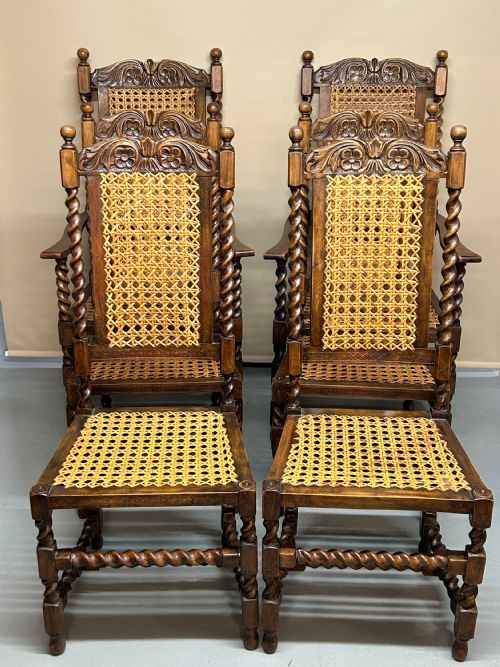
The turned elements appear alongside styles such as Jacobean Revival and Arts & Crafts, showing how makers adapted the twist leg across different decades.
Distinctions in quality
Quality rests in the crispness of the turned twist legs and the structural integrity of the joints connecting the seat rails. Superior examples maintain tight timber connections without visible movement in the frame.
The finish of the wood and the execution of details such as rope-back carving or cane work separate standard utility seating from finer artisan production.
Twist Leg Dining Chairs Retail Price Guide 2026
Typical asking prices for twist leg dining chairs among the pieces listed under this phrase on Sellingantiques today, from the lower quarter to the upper quarter. They describe what is for sale here now, not the wider market.
Listings feature oak, mahogany, and simulated rosewood alongside cane, leather, and fabric upholstery.
Liberty & Co
The Twist Leg Dining Chairs Glossary
- Barley twist
- A cylindrical furniture leg carved in a spiral resembling a barley sugar twist. This decorative turning appears frequently on oak chairs from the revival periods.
- Carver chair
- An armchair designed to sit at the head of a dining table. These pieces feature supportive arms alongside the standard seat frame.
- Bergere
- A traditional woven cane panel used for chair backs and seats. It provides a flexible and breathable surface supported by the wooden frame.
- Rope-back
- A chair back design carved to resemble a twisted rope. This detail characterises specific Regency mahogany dining chairs.
Twist Leg Dining Chairs: Frequently Asked Questions
How do I care for cane seats?
Cane and bergere panels require occasional light dusting and hydration with a damp sponge to keep the natural fibres supple.
Avoid placing these chairs near direct heat sources which can cause the cane to dry out and snap.
Are twist leg chairs sturdy enough for daily use?
Solid hardwood frames built with traditional joinery remain robust for everyday dining.
Periodic checks of the leg joints ensure the turning stays secure under regular weight.
What is the difference between a carver and a side chair?
Carver chairs include integrated armrests designed for the head of the dining table.
Side chairs lack arms, allowing multiple chairs to tuck neatly along the sides of the table.
How do I identify the period of an oak twist leg chair?
Examining the timber grain, tool marks, and construction methods helps distinguish early production from later revival pieces.
Stylistic cues such as Jacobean revival motifs point towards twentieth-century interpretation rather than seventeenth-century origin.