



Twin Pedestal Leaf Table
A twin pedestal leaf table offers expandable dining versatility, combining solid timber pillars with removable leaves for adaptable hosting.
Twin Pedestal Leaf Table
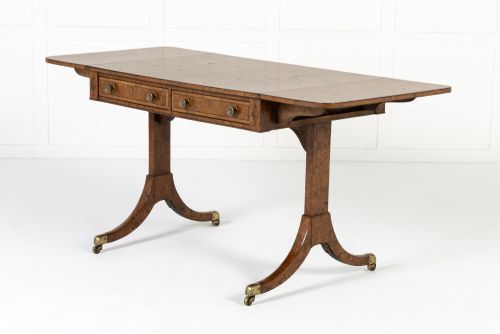
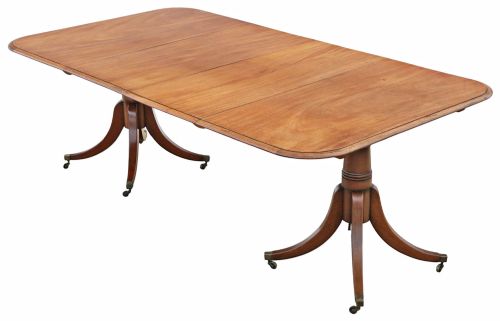
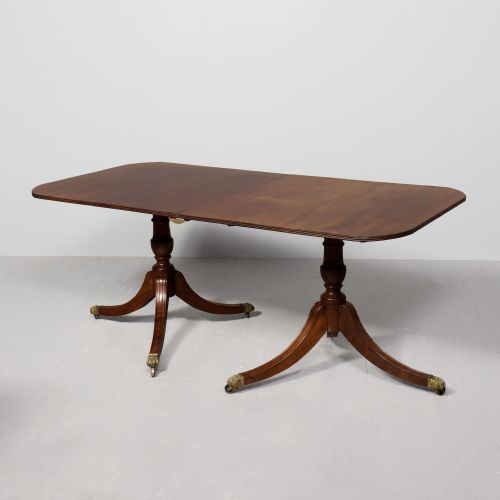
A twin pedestal leaf table is fundamentally a dining or occasional surface supported by two distinct central columns rather than four corner legs, allowing greater legroom for seated guests. When searching for a twin pedestal leaf table, buyers encounter formats primarily stemming from the Georgian, Regency, and nineteenth-century periods, alongside later twentieth-century interpretations.
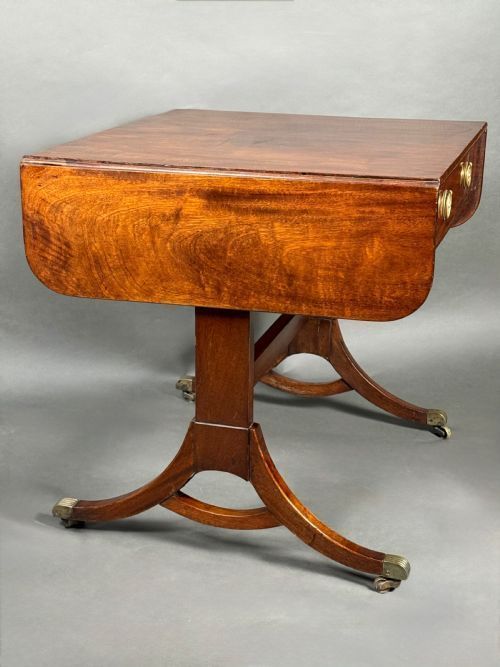
The evidence shows these tables frequently incorporate functional leaves, enabling the surface to expand or contract depending on seating requirements. Forms range from large dining tables with multiple extension leaves to smaller sofa tables and occasional tables featuring drop leaves or sliding mechanisms.
Originating predominantly from British cabinet-making traditions, these pieces exhibit styles spanning George III, George IV, and Regency aesthetics. Buyers will also find revival pieces from the nineteen-twenties and nineteen-thirties utilising similar architectural proportions and pillar arrangements.
Materials and construction methods
Cabinet makers relied heavily on dense tropical hardwoods, specifically mahogany, rosewood, and walnut veneer, selected for their structural stability and rich grain patterns. Flame mahogany and figured elm frequently appear on primary surfaces, offering deep visual movement.
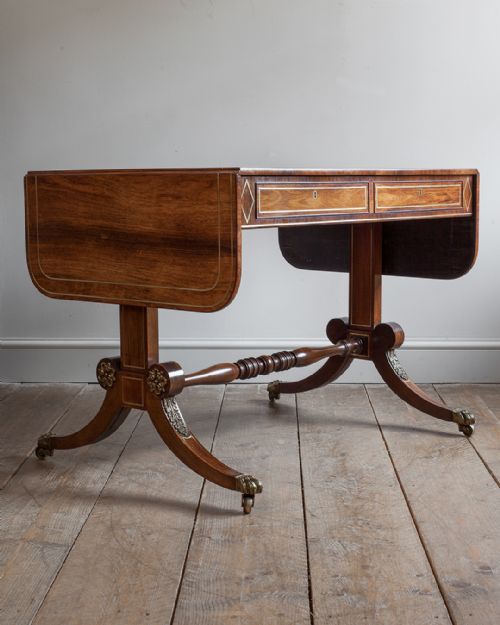
Inlay work and decorative banding added sophisticated detail, utilising contrasting timbers such as satinwood, boxwood, and even cut brass inlay set directly into the wood. Pedestal bases often incorporated turned wooden columns or lyre ends rising from splayed legs fitted with brass paw feet and castors.
Twin Pedestal Leaf Table Retail Price Guide 2026
Typical asking prices for twin pedestal leaf table among the pieces listed under this phrase on Sellingantiques today, from the lower quarter to the upper quarter. They describe what is for sale here now, not the wider market.
The inventory spans the eighteenth, nineteenth, and twentieth centuries, encompassing both original period dining tables and later revival pieces.
Distinctions in quality and execution
Quality in a twin pedestal leaf table is determined by the selection of timber figures and the precision of the cabinet work, particularly where the leaves join the main surface. Superior examples demonstrate continuous grain matching across extended sections and finely executed hand-cut joinery.
The refinement of secondary elements, such as drawer linings, brass mounts, and the stability of the pillar mechanisms, separates standard production from exceptional craftsmanship. Maker attribution, evidenced by stamps like those from Dublin workshops, also elevates the standing of a piece.
Gillington of Dublin
The Twin Pedestal Leaf Table Glossary
- Pedestal
- A structural central column supporting the tabletop, allowing freedom of movement around the perimeter. Twin versions use two such columns for balanced weight distribution.
- Leaf
- A removable or folding section of timber inserted into a table to increase its overall length. These allowed dining surfaces to expand for larger gatherings.
- Sofa Table
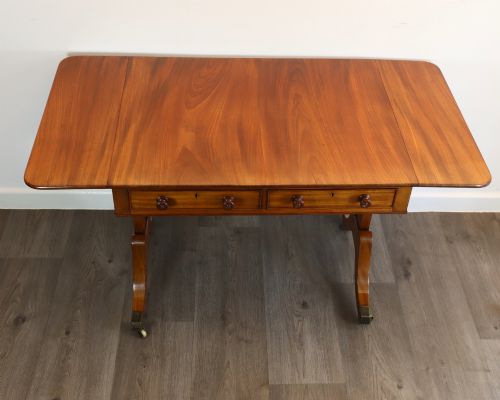
- A small, rectangular table historically placed in front of sofas, featuring drop leaves on either side and frequently twin drawers. They often share the dual-pillar or end-support configuration seen in dining tables.
- Crossbanded
- A decorative border technique where strips of veneer are laid perpendicular to the main grain of the tabletop. This frames the primary timber with a contrasting directional pattern.
Twin Pedestal Leaf Table: Frequently Asked Questions
How do I use a twin pedestal leaf table?
These tables function primarily as adaptable dining surfaces where removable or drop leaves extend the top to accommodate more people. The twin pillar design provides stability while keeping legroom clear of corner supports.
In smaller formats like sofa tables, the drop leaves allow the piece to sit compactly against a wall or behind furniture until extra surface area is required.
What periods do these tables come from?
The pieces span the eighteenth, nineteenth, and early twentieth centuries, with a heavy concentration of Georgian and Regency examples. Later twentieth-century revival pieces from the nineteen-twenties and thirties also replicate these classic forms.
Earlier items reflect the craftsmanship of the George III and George IV eras, utilising traditional hand-polishing and dense timber construction.
How do I care for mahogany and rosewood surfaces?
Maintain the finish by dusting regularly with a soft, dry cloth and avoiding placement near direct heat sources or strong sunlight, which can dry out the timber. Applying appropriate wax periodically nourishes the wood and protects the grain.
Protect the surface from moisture and heat by using coasters and placemats, ensuring the antique polish remains unblemished.
How do I tell an original period table from a later revival?
Examine the construction methods, interior drawer components, and timber ageing underneath the surface to determine the period. Original Georgian and Regency pieces show hand-cut joinery and period-specific secondary woods.
Revival pieces from the nineteen-twenties or thirties often exhibit machine-cut elements or twentieth-century hardware, even when built in the older style.