
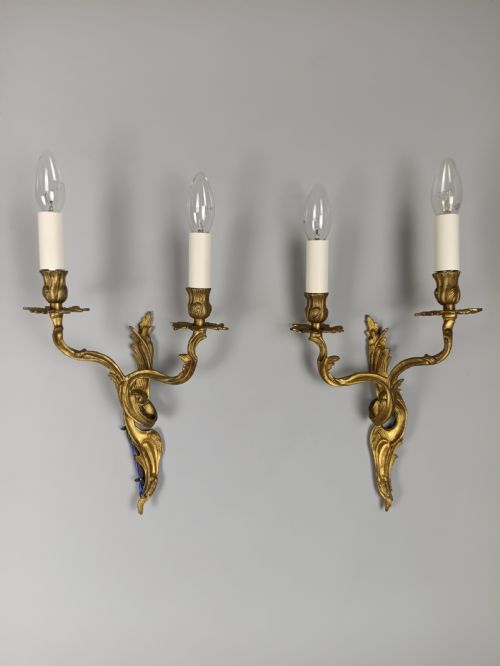
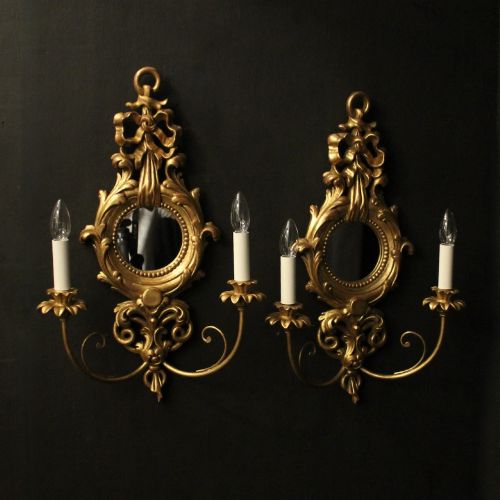

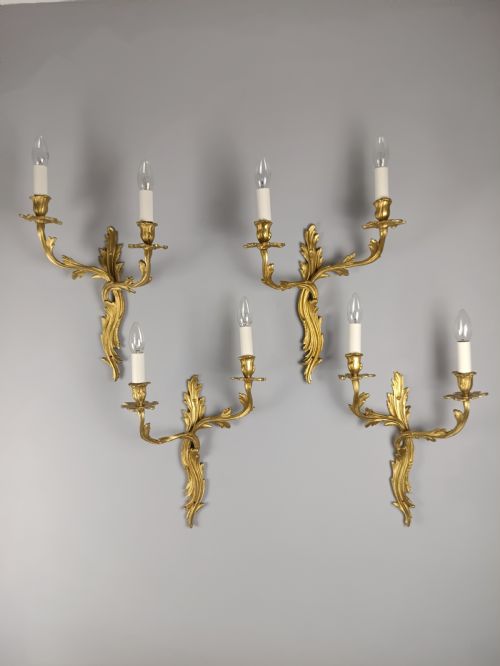
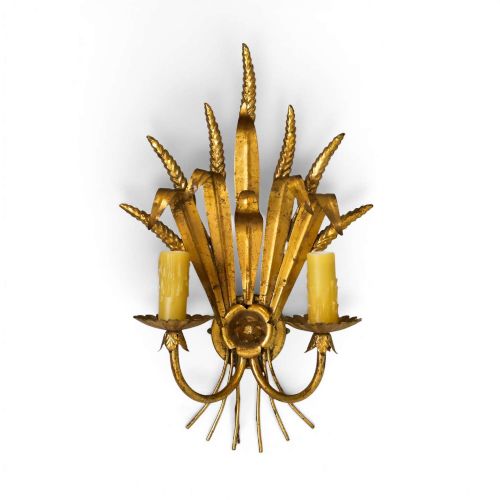


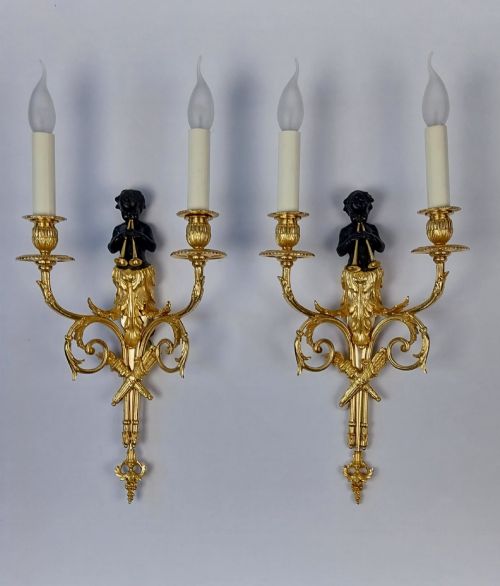
Twin Light Wall Brackets
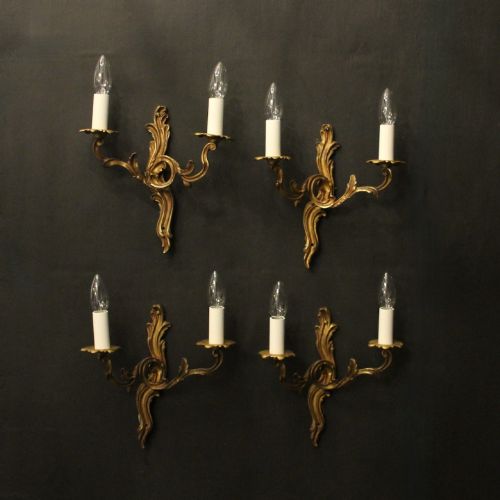
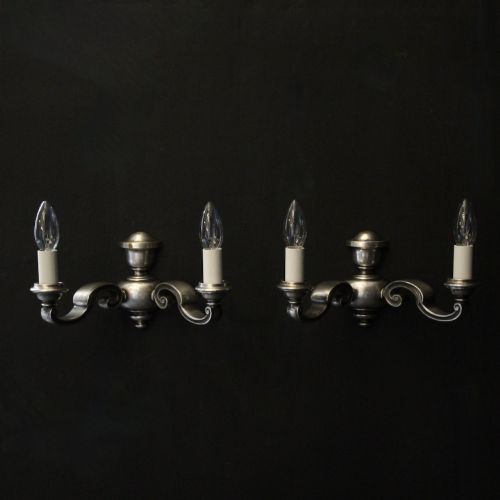
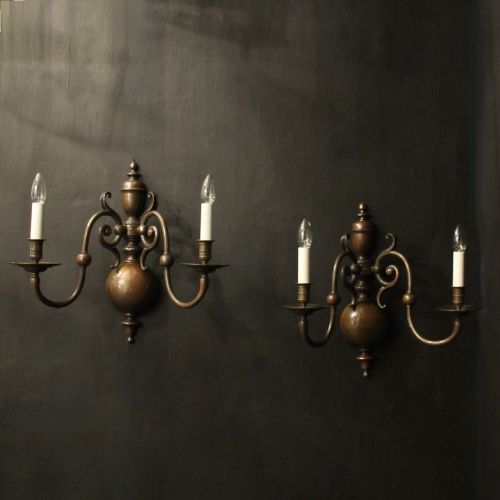
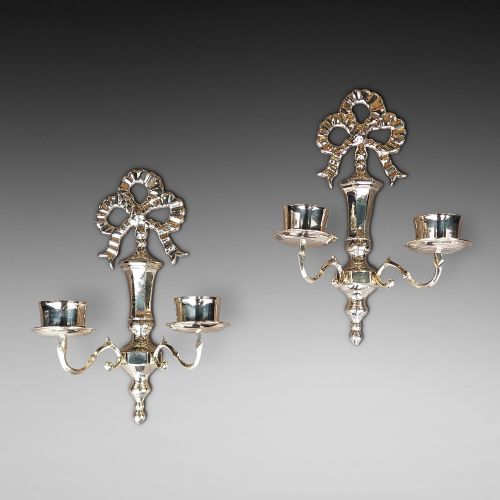
Twin light wall brackets bring illumination to panelled rooms through paired arms cast in brass and bronze.
Twin Light Wall Brackets
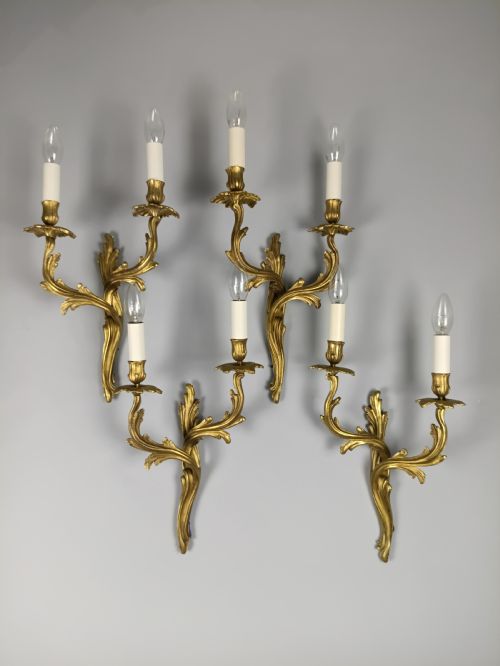
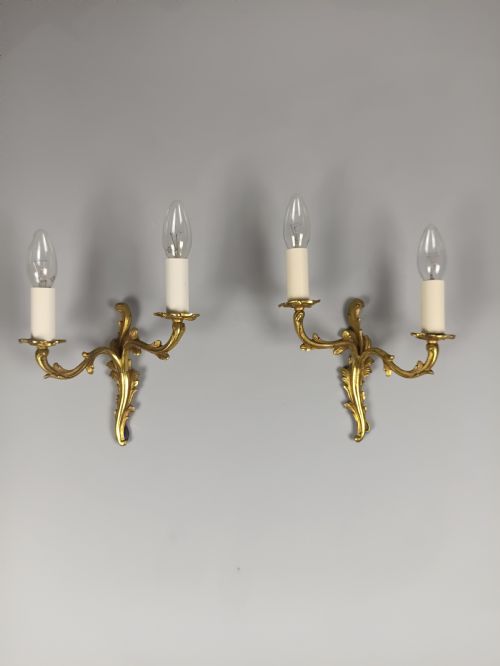
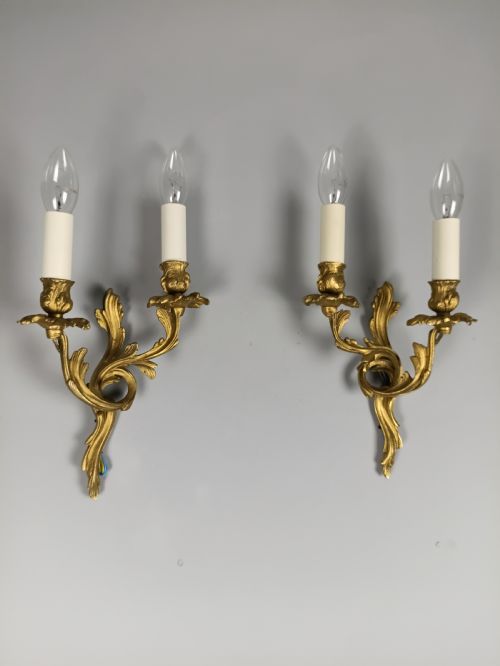
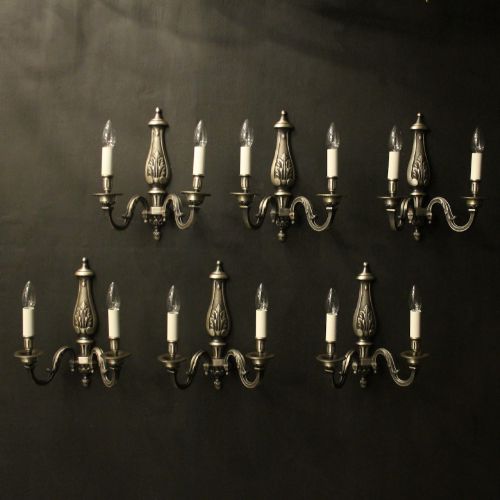
Twin light wall brackets distribute candlelight or electric illumination from vertical surfaces using paired arms. These fixtures range from compact pairs to sets of four or six pieces, often taking the form of wall sconces and girandoles.
The selections span English, French, and Italian origins, reaching back through the Victorian era and the Edwardian period into the early twentieth century. Designs lean heavily toward French Rococo, Neoclassical, and Louis XVI styles.
Pairs dominate the selection, though single fixtures and larger sets appear alongside them. Metalwork dominates the construction, accompanied by carved wood elements and gilded surfaces.
Materials and Construction
Foundry workers cast brass, bronze, and gilt bronze into ornate scrollwork and sculptural figures. Metal surfaces receive gilding, silver plating, or silver gilding to catch the surrounding light.
Carved giltwood and polychrome painted wood appear alongside metalwork, sometimes combined with toleware or crystal drops. Makers shaped these materials into symmetrical arms designed to mount directly onto interior walls.
Materials span brass, bronze, gilt bronze, ormolu, giltwood, and silvered brass across periods from the nineteenth century to 1930.
Quality Variations
The crispness of the cast ornamentation dictates the refinement of a piece, separating sharp, hand-chased bronze work from softer industrial casting. Surface treatments range from heavy fire gilding and deep silver plating to simpler painted finishes.
Structural integrity depends on the robustness of the arm joints and the backplates that bear the weight of the twin branches. Cohesion between the paired components determines whether a set maintains visual balance on the wall.
The Twin Light Wall Brackets Glossary
- Girandole
- A branched wall light, often incorporating a mirror or carved wooden backplate to reflect the illumination. These fixtures frequently use giltwood construction.
- Ormolu
- Gilded bronze, produced by applying an amalgam of gold and mercury to a bronze base before heating. This technique creates a durable golden finish seen on many French pieces.
- Toleware
- Lacquered or enamelled sheet metal used to form decorative components on lighting fixtures. It often appears in painted finishes alongside carved wood.
- Sconce
- A wall-mounted lighting fixture designed to hold candles or electric bulbs on projecting arms. The term encompasses the twin light wall brackets found across these periods.
Twin Light Wall Brackets: Frequently Asked Questions
How do I install these wall lights?
These fixtures mount directly to vertical wall surfaces using appropriate fixings suited to the weight of the metal or wood. Electric conversions require professional wiring to connect internal components safely to domestic supplies.
Heavier cast bronze sets need secure wall anchors to support the outward pull of the twin arms. Positioning should account for the height of surrounding furniture and architectural panelling.
Can these sconces take modern bulbs?
Many surviving examples have been rewired for modern electrical standards, allowing standard lamp holders to accept contemporary low-wattage bulbs. Candle-style tubes fit over modern lamp fittings to preserve the traditional appearance.
Original candle sconces retain their drip pans and prickets for wax candles where electrical conversion has not taken place. Checking the internal wiring status ensures compatibility with existing domestic circuits.
Are these fixtures sold in pairs?
The listings include true pairs, single pieces, and larger sets numbering three, four, or six items. Matching pairs suit symmetrical placement flanking a fireplace, mirror, or doorway.
Single brackets work well in narrower spaces where a twin arrangement overwhelms the available wall area. Larger sets provide uniform illumination across extended dining rooms or hallways.
What periods do these brackets represent?
The selection spans the nineteenth century through the Edwardian era up to the 1930s. Victorian and Edwardian examples sit alongside pieces from the 1900s, 1910s, 1920s, and 1930s.
Stylistic revivals heavily influence the dates, with French Rococo, Neoclassical, and Louis XVI designs produced well into the twentieth century. Craftsmanship reflects the decorative tastes of each specific decade.