




Twin Handled Loving Cup
A twin handled loving cup brings history directly to the table, offering a traditional vessel designed for shared drinking across the centuries.
Twin Handled Loving Cup
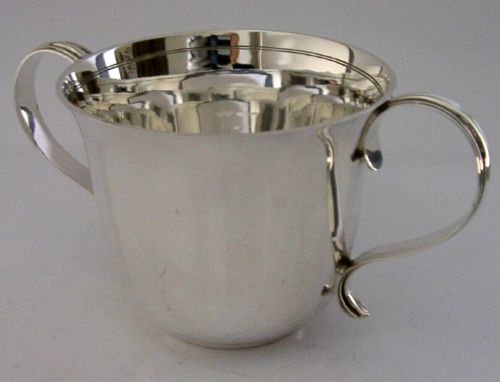
A twin handled loving cup is a drinking vessel featuring two opposing handles, designed for communal passing between guests during celebrations and toasts. The selection ranges from ceramic earthenware and porcelain forms to heavy sterling silver specimens.
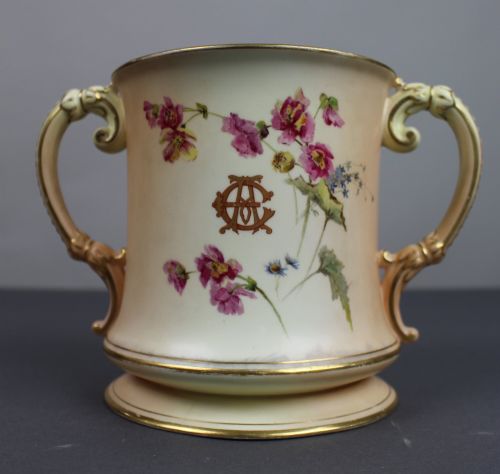
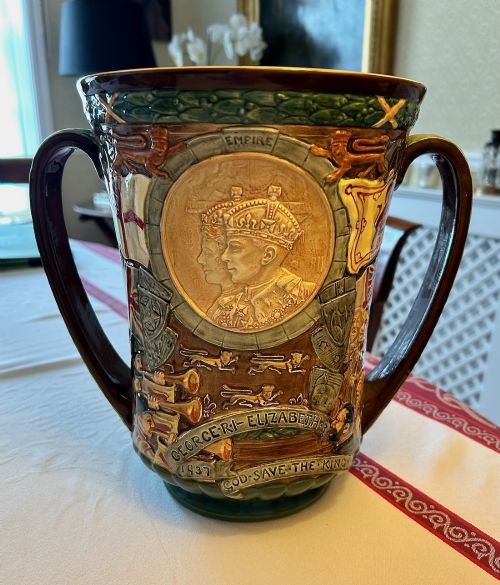
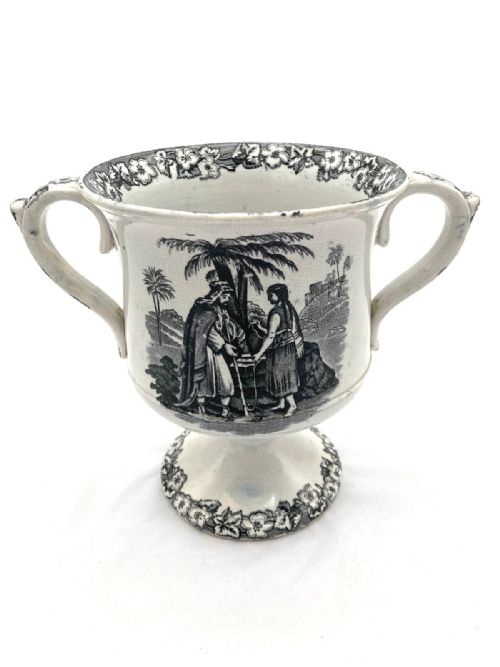
The pieces appearing on this page span several distinct periods including the eighteenth century, the Victorian era, and the nineteen-thirties. Buyers encounter diverse decorative treatments, from transfer-printed transfer scenes and polychromed glazes to blush ivory porcelain and polished silver.
Materials and construction
Silver vessels are shaped from sterling silver, often finished with gilt interiors and detailed with cast or applied handles. Ceramic examples utilise earthenware and porcelain bodies shaped on the potter's wheel or in moulds before firing.
Surface decoration relies on traditional techniques such as hand painting, enamel work, gold leaf application, and black transfer printing. Distinctive sculptural elements like applied frogs and newts appear on specific nineteenth-century earthenware examples.
Twin Handled Loving Cup Retail Price Guide 2026
Typical asking prices for twin handled loving cup among the pieces listed under this phrase on Sellingantiques today, from the lower quarter to the upper quarter. They describe what is for sale here now, not the wider market.
Listings incorporate sterling silver, earthenware, and porcelain materials spanning the eighteenth, nineteenth, and twentieth centuries.
Assessing quality and execution
The standard of a sterling silver cup rests on the heft of the metal, the crispness of any chased or engraved ornament, and the structural integrity of the handle joints. Maker marks and clear hallmarks also contribute significantly to the standing of a silver piece.
For ceramic vessels, quality reveals itself in the precision of the hand-painted details, the stability of the glaze, and the clarity of transfer-printed motifs. Finer pieces demonstrate careful control during the kiln firing and superior sculptural execution in modelled details.
Royal Doulton·Royal Worcester·Benjamin Cartwright I·Joseph Bell I
The Twin Handled Loving Cup Glossary
- Porringer
- A small bowl with one or two handles, used for porrit, broth, or other liquids. These shallow vessels often match the metalwork quality of larger drinking cups.
- Blush Ivory
- A cream-coloured porcelain body developed by Royal Worcester, featuring soft peach and gold tinted shading under a glaze. This technique creates a delicate matte appearance popular in the early twentieth century.
- Transfer Printing
- A method of applying pre-printed designs onto ceramic surfaces using paper or tissue from an engraved copper plate. It allowed for intricate pictorial scenes on nineteenth-century earthenware.
- Gilt
- A thin layer of gold applied to the surface of silver or ceramic objects. This finish frequently coats the interior bowl of drinking vessels.
Twin Handled Loving Cup: Frequently Asked Questions
What is a twin handled loving cup used for?
Historically, these vessels served communal drinking during weddings, banquets, and civic ceremonies where the cup passed from person to person. Two handles allowed each drinker to hold the vessel securely with both hands while turning it.
Today, collectors primarily display them as decorative art or preserve them as historical silver and ceramic milestones. They occasionally serve during formal family celebrations or ceremonial toasts.
How do I date an antique loving cup?
Silver examples carry hallmarks that indicate the assay office, the year of manufacture, and the silversmith's mark. These stamped letters and symbols provide precise chronological markers.
Ceramic and porcelain versions require stylistic analysis of the glaze, the body material, the hand-painted motifs, and any factory stamps on the base. Comparing these details with known production periods helps establish an approximate date.
How should I clean a silver loving cup?
Silver vessels benefit from gentle washing with warm water and mild, phosphate-free soap using a soft sponge. Thorough drying with a lint-free cloth prevents water spots.
Polishing should occur infrequently using a reputable silver cream applied with minimal pressure to preserve delicate hallmarks and chased details. Avoid harsh abrasive cloths entirely.
Are ceramic loving cups safe for drinks?
Antique ceramic and earthenware vessels often feature crazed glazes and porous bodies that can absorb liquids or harbour bacteria over time. Older decorative enamels may also contain trace elements that make modern consumption inadvisable.
Displaying these pieces visually rather than using them for beverages ensures their long-term preservation. Enjoying their historic craftsmanship remains entirely safe from the outside.