





Twin Drawer Side Table
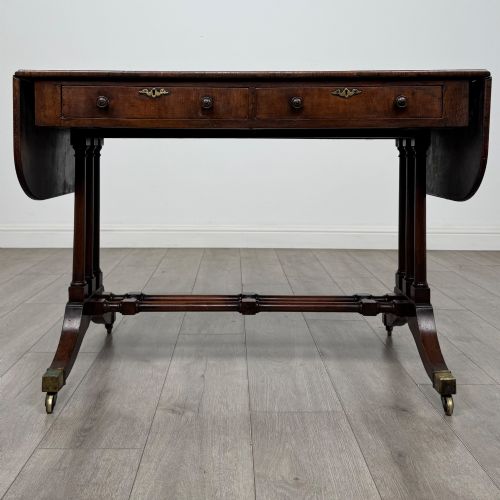
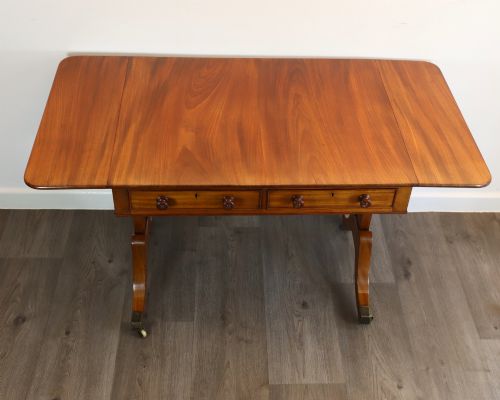
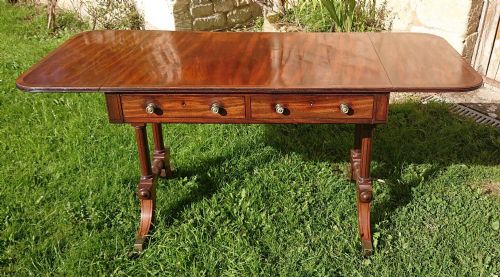
These twin drawer side table examples combine useful work surfaces with twin drawers, spanning periods from George III to the Edwardian era.
Twin Drawer Side Table
A twin drawer side table search typically surfaces sofa tables, writing tables, and occasional pieces equipped with two front drawers. The listings span periods from George III and Regency up through Victorian and Edwardian years.
Most examples appear in mahogany, alongside yew wood, elm, and oak variations. Drop-leaf sofa tables with twin frieze drawers dominate the selection on this page.
Forms range from small-proportion pedestal bases to free-standing library desks and writing tables. Both genuine period examples and later Regency style interpretations feature in the current stock.
How they were made
Cabinetmakers utilised dense timbers like mahogany and yew wood, frequently selecting figured grains for table tops and drawer fronts. Secondary woods and structural frames often incorporated oak and elm.
Many sofa tables incorporate drop leaves supported by hinged flaps alongside brass fittings and leather inserts on writing surfaces. Boxwood stringing and brass castors complete the construction of finer Regency and Georgian items.
Listings feature mahogany, yew wood, elm, and oak across Regency, Georgian, and Victorian periods.
What varies in quality
Quality rests upon the choice of timber figurations and the crispness of cabinetmaking details such as dovetails on the twin drawers. Finer examples display balanced proportions, select mahogany veneers, and restrained boxwood inlay rather than heavy, plain construction.
The integration of original brass hardware, stable drop-leaf mechanisms, and secondary woods matching the primary surfaces distinguish superior workshops from standard production.
The Twin Drawer Side Table Glossary
- Sofa table
- A rectangular table traditionally designed to stand in front of a sofa, featuring drop leaves on either side and twin drawers.
- Drop leaf
- A hinged table leaf that folds down when not in use and lifts to extend the surface area.
- Frieze drawer
- A drawer fitted into the horizontal band beneath the table top.
- Pedestal base
- A central column support resting on splayed legs rather than four corner posts.
- Stringing
- A narrow inlay of contrasting wood used to outline panels and drawer fronts.
Twin Drawer Side Table: Frequently Asked Questions
How do I date a mahogany table?
Dating relies on observing construction methods, timber selection, and hardware styles across periods like George III, Regency, and Victorian. Earlier pieces from the eighteenth century show precise dovetailing and subtle boxwood stringing.
Later Victorian and Edwardian interpretations often adopt heavier proportions or revival styles while retaining the core twin drawer format.
Where should I place a sofa table?
These tables adapt easily behind a sofa, against a hallway wall, or acting as a freestanding writing desk in a study. Their finished backs and drop leaves allow them to sit centrally in a room without cluttering the floor plan.
Left with leaves down, they occupy minimal space while keeping everyday items tucked inside the twin drawers.
Are drop leaves structurally stable?
Period drop leaves utilise hinged flaps supported by pivoting wooden brackets or swing arms built into the framework. When properly maintained, these mechanisms support weight securely for writing or dining.
Checking the movement of the hinges and leaves ensures the drop-down sections remain level with the main top.