






Twin Arm Wall Lamps
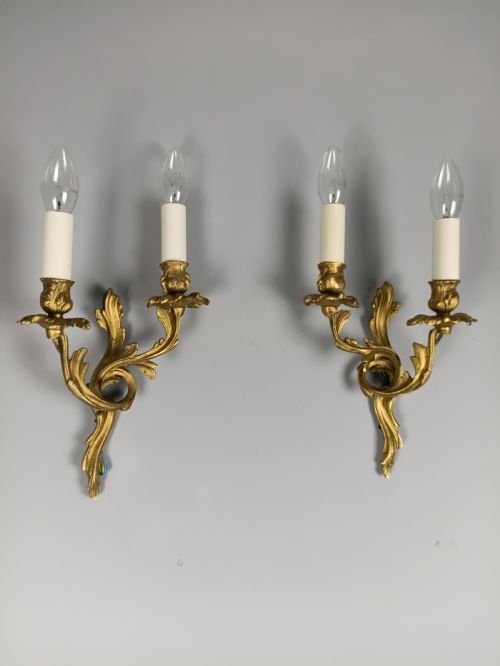
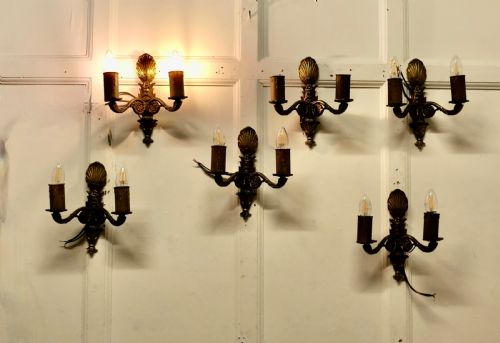
Twin arm wall lamps bring dual illumination and period character to a room, offering symmetric branching lights shaped in brass, giltwood, and wood.
Twin Arm Wall Lamps
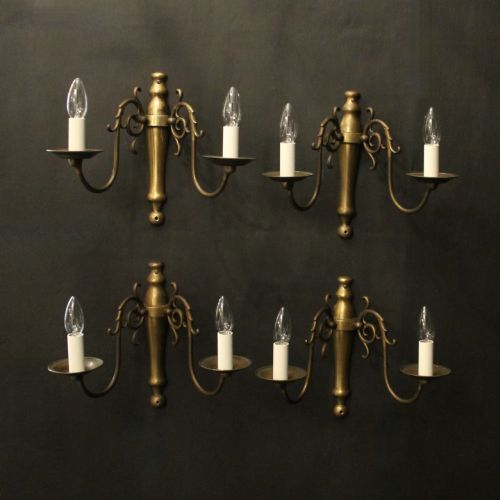
Twin arm wall lamps are dual-branched lighting fixtures designed to mount directly onto vertical surfaces, providing balanced illumination across a space. When searching for twin arm wall lamps, buyers encounter wall lights and wall sconces spanning the Victorian, Edwardian, 1900, 1910, 1920, 1930, and 19th-century periods. These fixtures appear primarily in pairs or larger sets, originating from English and French workshops.
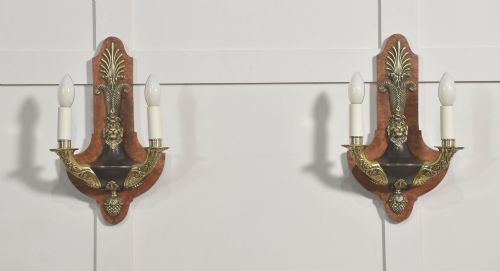
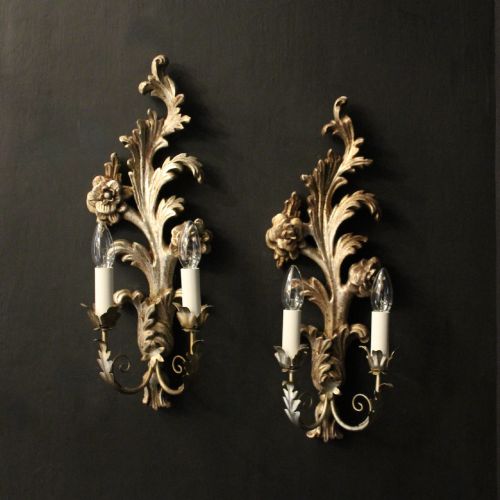
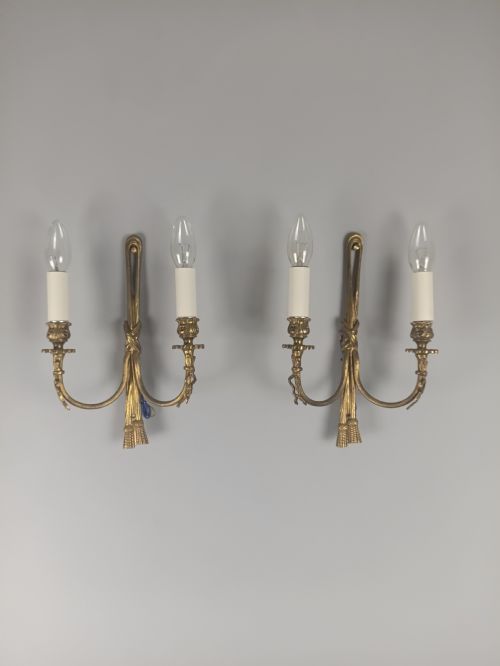
The aesthetic vocabulary encompasses French Rococo, French Classical, Florentine, Empire Style, French Louis XVI, Edwardian, and Grand Regency styles. French variants dominate the selection, frequently displaying gilt brass, ribbon motifs, or green toleware alongside plain or repolished brass. English examples lean towards traditional designs, silver plating, and substantial brass construction.
Materials and construction methods
Construction relies heavily on metals, with brass, gilded brass, gilt brass, and gilt metal forming the structural core of most pieces. Workshops shaped these metals through casting and pressing, often finishing them with gilding, silver leaf, or green toleware paint. Repolished surfaces appear where maintenance has restored the bright metallic sheen.
Wooden elements also support the designs, utilising burr walnut, giltwood, and polychrome wood. Carved wooden frames and giltwood backplates provide an alternative texture to the metal arms, frequently paired with carved ribbons or classical floral motifs.
Twin Arm Wall Lamps Retail Price Guide 2026
Typical asking prices for twin arm wall lamps among the pieces listed under this phrase on Sellingantiques today, from the lower quarter to the upper quarter. They describe what is for sale here now, not the wider market.
French origins account for a significant portion of the available wall lights, spanning toleware and ribbon designs.
Distinctions in quality
Quality differences stem from the crispness of the casting and the depth of the applied finishes such as gilding or silver leaf. Finer examples display sharp detail in ornamental ribbons, classical motifs, and wooden carvings, whereas simpler utilitarian pieces lack this sculptural definition.
The choice of primary material alters the character, with solid brass castings and intricate giltwood outlasting thinner plated metals. Sets that retain matching components and uniform patination demonstrate superior preservation compared to assembled groups.
F. & C. Osler
The Twin Arm Wall Lamps Glossary
- Toleware
- Painted or lacquered metalware, often associated with decorative domestic items in green or other colours.
- Giltwood
- Wood that has been treated with gold leaf or gold paint to simulate solid gold enrichment.
- Sconce
- A wall-mounted lighting fixture designed to carry candles or electric lamps.
- Empire Style
- A neoclassical design movement drawing inspiration from the art of the ancient Roman and Greek empires.
- Ribbon Wall Light
- A wall fixture featuring decorative carved or cast ribbon motifs tied into bows, popular in French designs.
Twin Arm Wall Lamps: Frequently Asked Questions
How do I install antique twin arm wall lamps?
Installation requires mounting the backplate securely to wall studs or using appropriate wall anchors to support the weight of the metal or wood structure. Wiring must be routed through the wall to connect with the internal fixtures safely.
Professional electrical installation is recommended for older brass and metal wall lights to ensure current safety standards are met without damaging original components.
Were these lamps originally electrified?
Many of the earlier pieces from the nineteenth and early twentieth centuries were originally designed for candles or gas before being converted to electricity later. Fixtures from the later periods were frequently manufactured with internal wiring channels from the outset.
Conversion methods vary, so examining the backplate and internal channels helps determine the original lighting method of each piece.
How do I clean brass wall lights?
Dusting with a soft, dry cloth prevents the accumulation of grime on the metal arms and wooden backplates. Avoid abrasive cleaners that strip original gilding or lacquer finishes from the brass.
If the metal has been repolished, appropriate non-abrasive metal cleaners maintain the brightness without harming delicate surface details.
Can I mix different styles in one room?
Pairing matching sets across a room creates visual symmetry, particularly with French Rococo or Empire Style fixtures. Mixing styles depends on the surrounding interior architecture and the unifying presence of brass or gilt finishes.
Matching materials such as polished brass or giltwood helps disparate period pieces sit comfortably within the same decorative scheme.