




Twentieth Century Maritime Art
Twentieth century maritime art brings together coastal scenes, naval vessels and harbour views captured in oil, watercolour and print across changing decades.
Twentieth Century Maritime Art
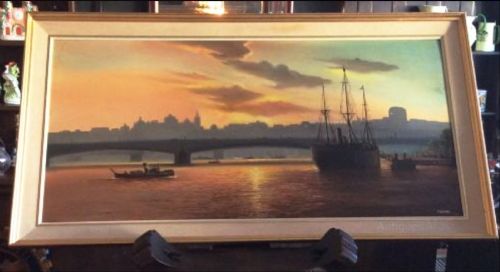
Twentieth century maritime art covers paintings, watercolours and prints depicting coastal life, marine views and naval vessels. Buyers searching for twentieth century maritime art encounter depictions of harbours, fishing boats and sea battles ranging from Edwardian scenes to works created in the nineteen sixties.
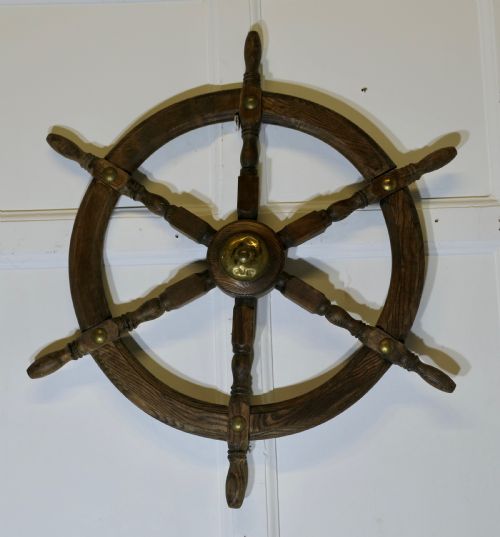
The selections on this page feature framed paintings, oil on canvas works and watercolours alongside occasional wooden items like ships wheels. Coastal locations such as St Ives, Runswick Bay and the London Thames appear frequently across the items.
Makers and artists represented include named painters working within British Impressionism, Post-Impressionism and Modern British traditions. Works vary from detailed port views to expansive seascapes and coastal genre scenes.
Distinctions in quality
Quality in twentieth century maritime art rests upon the artist's handling of light, water and atmospheric perspective. Works by established painters demonstrate a secure command of tone and composition when rendering complex coastal subjects.
The preservation of the original medium, whether oil paint, watercolour or print, influences the visual impact of the piece. Clear provenance and attribution to a recorded artist elevate the standing of an individual work.
A sturdy oak ships wheel stands ready to steer your hallway through any domestic gale.
Vincenzo D’Esposito·Donald McIntyre·Frank H. Mason·Dion Pears·Ernest F. Hill·William Lambert Bell·Frank Wood·Owen Bowen·Fred Mayor·Maurice Sijs·Rowland Henry Hill·Richard Hall·Harry John Pearson
The Twentieth Century Maritime Art Glossary
- Oil on Canvas
- A painting medium where pigments are suspended in drying oils and applied to a stretched canvas support. This technique allows for rich texture and depth in depicting marine scenes.
- Watercolour
- A paint consisting of colour pigments suspended in a water-soluble vehicle, typically applied to paper. It is frequently utilised for light, fluid coastal watercolours.
- Etching with Aquatint
- A printmaking process that combines line etching with tonal areas produced by acid-resisting resin. It creates subtle gradations of tone suitable for coastal prints.
- British Impressionism
- An art movement focusing on natural light and everyday subjects, represented in maritime works by loose brushwork and plein air observation. Practitioners sought to capture immediate visual impressions of the sea and coast.
- Ships Wheel
- A steering mechanism used aboard vessels, constructed from wood such as oak and encountered as a maritime decorative object.
Twentieth Century Maritime Art: Frequently Asked Questions
What subjects appear in twentieth century maritime art?
These works depict coastal harbours, fishing boats, naval vessels and sea battles. Locations range from Cornish ports to the London Thames and international waters.
Artists recorded daily maritime life, coastal topography and historical naval subjects across changing decades of the twentieth century.
How do watercolours differ from oil paintings here?
Watercolour works utilise pigment on paper to achieve translucent effects and delicate washes of light. They frequently capture coastal atmosphere with swift, transparent strokes.
Oil paintings on canvas offer heavier texture and deeper colour saturation, allowing artists to build up layered depictions of stormy seas and detailed vessel rigging.
How should I care for a framed marine watercolour?
Keep watercolours away from direct sunlight to prevent fading of the paper and pigments. Stable humidity levels protect both the paper support and the surrounding frame.
Displaying works behind glass with appropriate mounting prevents the paper surface from touching the glazing material.
What periods are represented in these maritime works?
The pieces span from the Edwardian era through the nineteen twenties, thirties, fifties and nineteen sixties. Each decade brings distinct artistic movements, including British Impressionism and Modern British styles.
Earlier works reflect traditional marine recording, whilst later pieces show shifts towards post-impressionist interpretations of coastal forms.