


Turquoise Pottery Vase
These turquoise pottery vase examples span centuries of ceramic artistry, offering rich glazes and striking forms that bring depth to any room.
Turquoise Pottery Vase
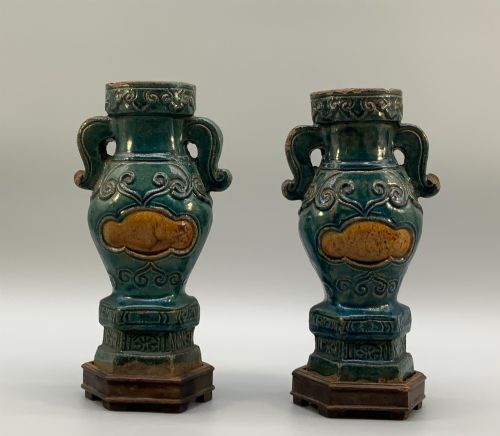
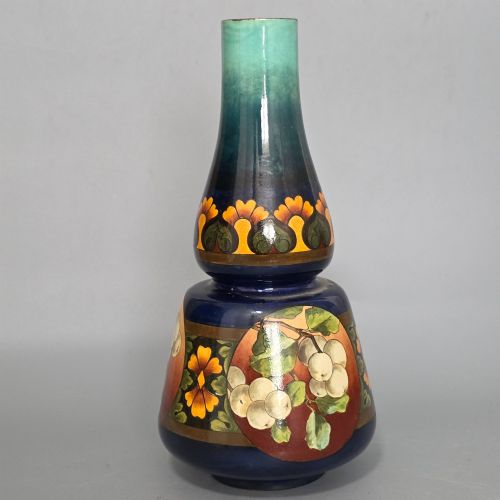
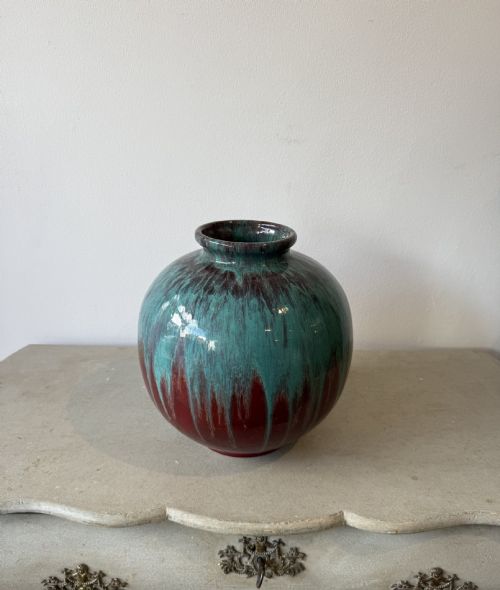
A turquoise pottery vase brings together vibrant glaze work and varied historical forms, ranging from early Chinese pieces to later British art pottery. When searching for a turquoise pottery vase, collectors encounter everything from monumental majolica and faience to delicate studio creations.
The selections on this page draw from periods such as the seventeenth century, Victorian eras, and twentieth-century revivals. Forms vary from decorative table vessels to umbrella stands and converted lamps, reflecting diverse global ceramic traditions.
How they were made
Potters utilised ceramic and earthenware bodies, shaping vessels by hand or on the wheel before applying specialised glazes. Lead glaze and enamel finishes created the distinct reflective surfaces seen across these examples.
Firing techniques allowed colours to settle into the clay bodies, producing the characteristic turquoise tones that define each piece. Workshops employed faience and majolica methods to achieve depth of colour and durable decorative finishes.
The inventory includes earthenware and ceramic pieces featuring lead glaze, spanning from the seventeenth century through to the mid-twentieth century.
What varies in quality
Quality rests in the precision of the form and the consistency of the glaze application across the ceramic body. Finer examples display an even distribution of colour without pooling or dryness in the finish.
The distinction between standard production and exceptional work lies in the sharpness of moulded or painted details. Pieces produced by established potteries often show superior balance and architectural integrity in their shape.
Alice Euphemia Thatcher·Doulton Lambeth·Royal Doulton·Minton·Burmantofts Faience
The Turquoise Pottery Vase Glossary
- Faience
- Earthenware decorated with opaque coloured glazes. This technique provides a smooth surface suitable for intricate painted designs.
- Majolica
- Pottery glazed with an opaque tin-lead enamel and painted with metallic oxide colours. It produces rich tones and high-relief decorative forms.
- Lead glaze
- A transparent silica and lead mixture applied to pottery before firing. It melts to form a glassy coating that seals the porous earthenware body.
- Intarsio
- A decorative ceramic technique involving inlaid coloured clays. It creates pattern effects similar to wood marquetry on pottery surfaces.
Turquoise Pottery Vase: Frequently Asked Questions
How do I date a turquoise pottery vase?
Dating relies on identifying the underlying ceramic body, the style of the glaze, and any maker marks stamped or painted on the base. Comparing the form to known period styles helps narrow the era of production.
Examining wear patterns on the base and the composition of the earthenware provides further clues to the age of the piece.
Are these vases waterproof?
Many older glazed earthenware vessels are porous despite their glassy surface. Using them to hold water directly can sometimes cause moisture to seep through hairline cracks in the glaze over time.
To protect the ceramic, placing a small glass or plastic liner inside the vessel is standard practice for holding fresh flowers.
What is the difference between faience and majolica?
Faience generally refers to tin-glazed earthenware developed in various European and Middle Eastern traditions. Majolica specifically denotes a Victorian style of brightly coloured lead-glazed earthenware with moulded relief decoration.
Both techniques achieve vibrant turquoise surfaces, but their firing methods and decorative textures differ significantly.
How should I clean my pottery vase?
Dusting gently with a dry, soft cloth prevents particle buildup on the glazed surface. Avoid harsh chemical cleaners or submersion in water, particularly if the piece has an older lead glaze or converted electrical parts.
Professional restoration advice should be sought if the ceramic shows deep staining or fragile surface crazing.