

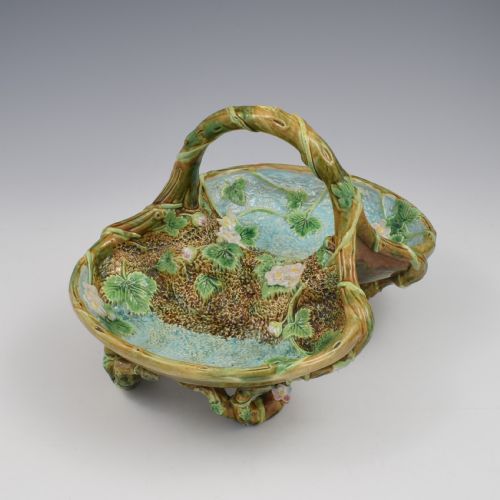


Turquoise Ceramic Bowl
A turquoise ceramic bowl brings a striking wash of colour to a table, combining vibrant glaze with functional form across centuries of making.
Turquoise Ceramic Bowl
A turquoise ceramic bowl encompasses a variety of forms including tazzas, fruit baskets, salad bowls, tea bowls and centrepieces spanning from the eighteenth century to the late nineteenth century. When searching for a turquoise ceramic bowl, buyers encounter pieces ranging from delicate eighteenth-century porcelain tea wares with guilloche borders to substantial Victorian majolica baskets and nineteenth-century Chinese porcelain.
The selection reflects diverse stylistic influences such as Victorian naturalism, rococo revival, and Qing dynasty aesthetics. Makers from European factories and Chinese kilns utilised distinct regional traditions to shape earthenware, bone china, and porcelain into decorative and serving vessels defined by their prominent blue-green glaze.
How they were made
Potters shaped these objects from earthenware, bone china, and porcelain, applying rich glaze and enamel to achieve the characteristic turquoise hue. Gilt highlights and copper alloy mounts occasionally accent the ceramic body, adding metallic contrast to the fired surfaces.
Techniques varied from the delicate fluting of eighteenth-century tea bowls to the moulded relief work seen in Victorian majolica baskets and French porcelain dishes. Artisans combined traditional throwing and moulding methods with careful kiln firing to set the vibrant colour across varied forms.
Turquoise Ceramic Bowl Retail Price Guide 2026
Typical asking prices for turquoise ceramic bowl among the pieces listed under this phrase on Sellingantiques today, from the lower quarter to the upper quarter. They describe what is for sale here now, not the wider market.
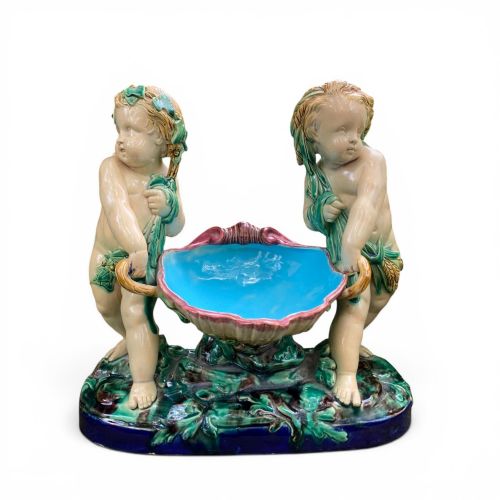
Victorian ceramic cherubs frequently find themselves pressed into the heavy lifting of supporting fruit baskets.
What varies in quality
Quality rests in the depth and evenness of the turquoise glaze, the crispness of moulded relief or painted borders, and the refinement of the ceramic body. Pieces that balance bold colour with balanced proportions and delicate detail stand apart from simpler utilitarian wares.
The execution of decorative elements, such as gilded accents, painted guilloche borders, or figural supports like cherubs, distinguishes ambitious factory production from standard output. The integrity of the material, whether translucent porcelain or dense majolica earthenware, dictates the overall character.
Coalport·George Jones·Minton·Worcester·Louis Pierre Malpass
The Turquoise Ceramic Bowl Glossary
- Majolica
- A type of colourful lead-glazed earthenware popular during the Victorian era, often featuring moulded plant or animal motifs. It provides a robust body for vibrant turquoise and green glazes.
- Guilloche
- An ornamental pattern of intersecting curved bands, frequently found painted or etched as a border. On eighteenth-century tea wares, it frames the central ceramic surface.
- Tazza
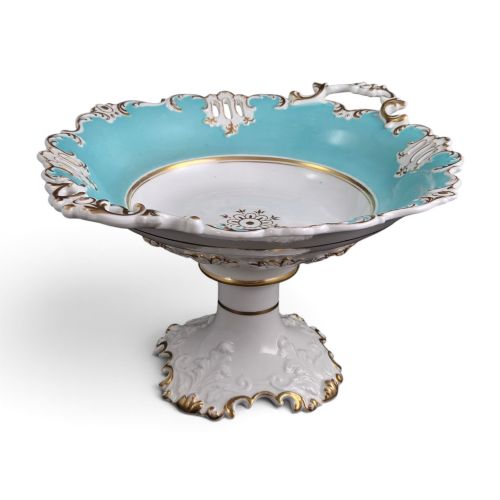
- A shallow bowl or cup mounted on a stem and foot, used for display or serving small portions. These pedestal vessels elevate the turquoise surface above the table.
- Cloisonné
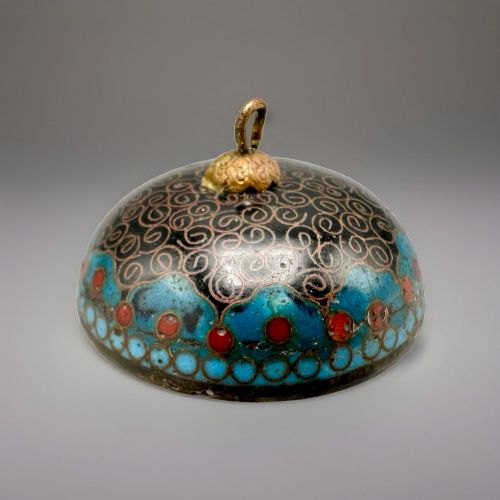
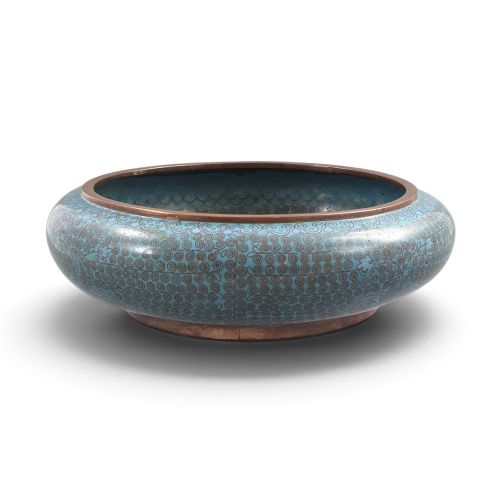
- A technique where enamel is applied within compartments created by soldered wires on a metal base. While distinct from ceramics, similar decorative detail appears on scholarly metal vessels.
- Bone china
- A type of porcelain incorporating bone ash, yielding a strong, white body suited to delicate forms. It allows for thin walls and crisp shaping under glossy glazes.
Turquoise Ceramic Bowl: Frequently Asked Questions
What periods do these bowls come from?
The selection spans from the eighteenth century through the nineteenth century, including Georgian, Victorian, and Qing dynasty examples.
Victorian majolica and eighteenth-century porcelain form a significant portion of the European offerings alongside nineteenth-century Asian wares.
How were majolica bowls used?
Majolica bowls served as fruit baskets, salad bowls, and decorative centrepieces for dining tables. Their robust earthenware bodies and vibrant glazes suited practical dining functions as well as display.
Larger baskets often accommodated fruit or floral arrangements, while smaller tazzas presented sweets.
How do I identify a Victorian piece?
Victorian pieces frequently utilise majolica glazes with moulded naturalistic motifs, such as leaves, fruit, or cherubs. Factories active during this reign produced heavy earthenware vessels with rich colour saturation.
Stylistic cues like rococo revival shaping also point firmly to the nineteenth century.
What is the difference between porcelain and earthenware?
Porcelain is fired at high temperatures to create a vitrified, non-porous body that is often semi-translucent. Bone china is a specific variety of porcelain strengthened with bone ash.
Earthenware, such as majolica, is a coarser clay body fired at lower temperatures, requiring a thick glaze to achieve impermeability.