
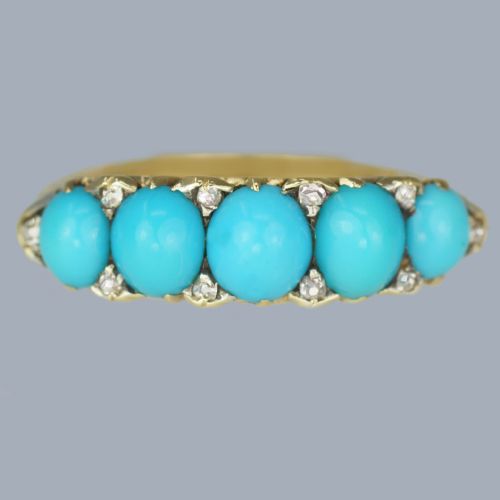


Turquoise Band Ring
A turquoise band ring brings together vibrant sky-blue stones and warm gold bands, offering a distinctive piece of antique jewellery to wear daily.
Turquoise Band Ring
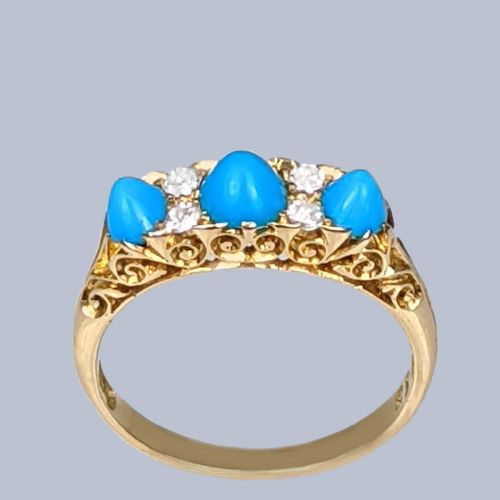
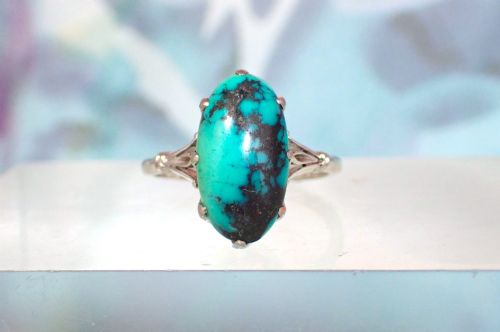
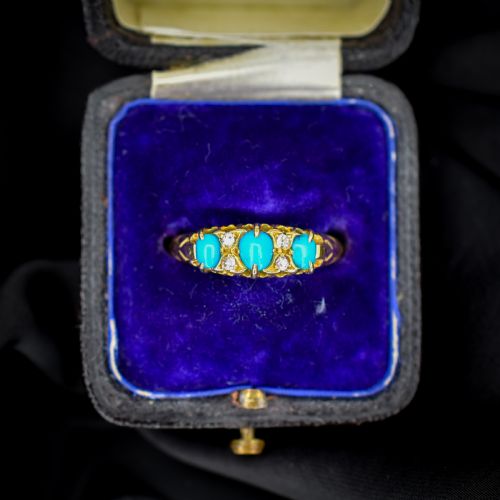
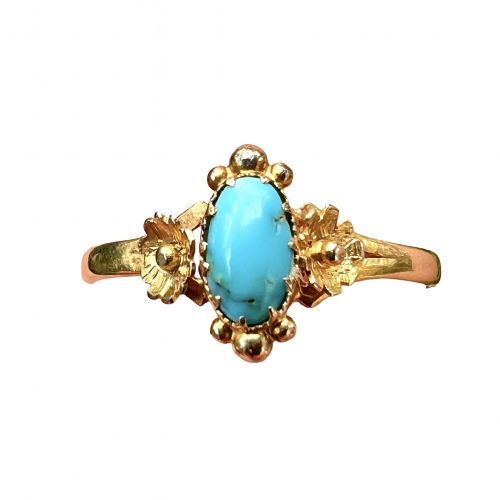
A turquoise band ring comprises a circular band set with turquoise stones, frequently accompanied by diamonds or pearls in Victorian and Edwardian examples. These rings range from simple multi-stone bands and buckle motifs to intricate flower and scroll boat settings.
Victorian pieces dominate the selection, appearing alongside Edwardian, Art Deco, and mid-century modern iterations. Buyers commonly encounter 18ct gold, 15ct gold, and occasionally 9ct rose gold foundations supporting the bright blue stones.
How they were made
Goldsmiths shaped high-carat yellow, rose, and white gold into robust bands, incorporating secure settings for turquoise cabochons alongside diamonds and split pearls. Hallmarks stamped into the metal often record assay offices like Chester and Birmingham during the late nineteenth and early twentieth centuries.
Stone arrangements vary from flush-set eternity designs and multi-stone rows to raised star and buckle motifs. Craftsmen utilised claw and flush settings to anchor the softer turquoise stones firmly within the gold framework.
Current listings span the Victorian, Edwardian, Art Deco, and mid-century periods, utilising 18ct gold, 15ct gold, and 9ct rose gold.
What varies in quality
The intensity and uniformity of the turquoise colour dictate much of the visual appeal, alongside the presence of well-matched diamonds or natural pearls. Stones with stable, bright blue hues and minimal matrix disruption command greater attention from collectors.
Structural integrity of the gold band and the crispness of engraved details, such as buckle straps or floral petals, separate standard production from finer goldsmith work. Marks of age remain acceptable provided the setting securely retains every stone.
The Turquoise Band Ring Glossary
- Cabochon
- A gem polished with a smooth, rounded top rather than faceted edges. This shape highlights the natural colour and opaque qualities of turquoise.
- Trilogy
- A ring featuring three primary stones set in a row. In these pieces, turquoise frequently flanks a central diamond.
- Buckle ring
- A design sculpted to resemble a fastened belt or buckle symbolising loyalty and attachment. Victorian makers frequently cast these in yellow or rose gold.
- Eternity ring
- A band set continuously with gemstones around the entire circumference. Examples range from single-stone turquoise rows to mixed pearl formations.
- Split pearl
- A small pearl halved and flattened on the back to sit flush within a bezel or cluster. These pearls frequently accompany turquoise in Victorian flower and star settings.
Turquoise Band Ring: Frequently Asked Questions
How do I care for a turquoise ring?
Turquoise is a relatively soft gemstone that absorbs oils and chemicals easily. Remove the ring before washing hands, applying cosmetics, or undertaking heavy physical work.
Clean the metal and stones gently with a soft, dry cloth rather than liquid jewellery dips or ultrasonic cleaners.
Can I wear a turquoise band daily?
Daily wear is possible with sensible precautions, given the softer nature of turquoise compared to diamond or sapphire. Selecting a secure setting style helps protect the stones from knocks.
Rotating the ring with other pieces preserves the gold band and keeps the turquoise secure within its mount over time.
How do I date a gold ring?
Hallmarks stamped inside the band provide the most reliable guide to a ring's origin, indicating the assay office, metal purity, and year of testing. Maker's marks often accompany these official stamps.
Stylistic clues such as buckle motifs, flower clusters, or geometric Art Deco lines also point towards specific decades like the Victorian or Edwardian eras.
What is a split shank?
A split shank divides the solid gold band into two separate strands as it approaches the central stone setting. This technique lightens the visual weight of the mounting.
Victorian goldsmiths frequently employed this method on multi-stone and diamond cluster rings to enhance the overall symmetry.