

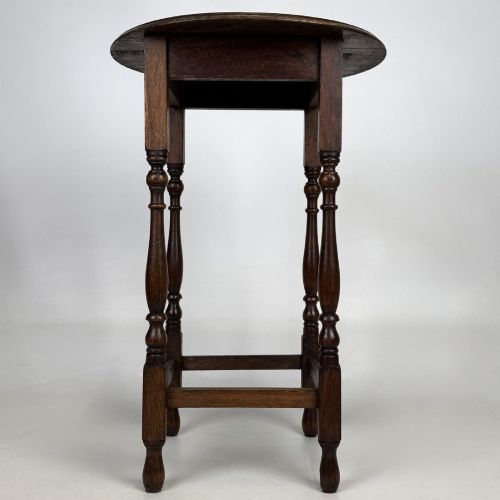
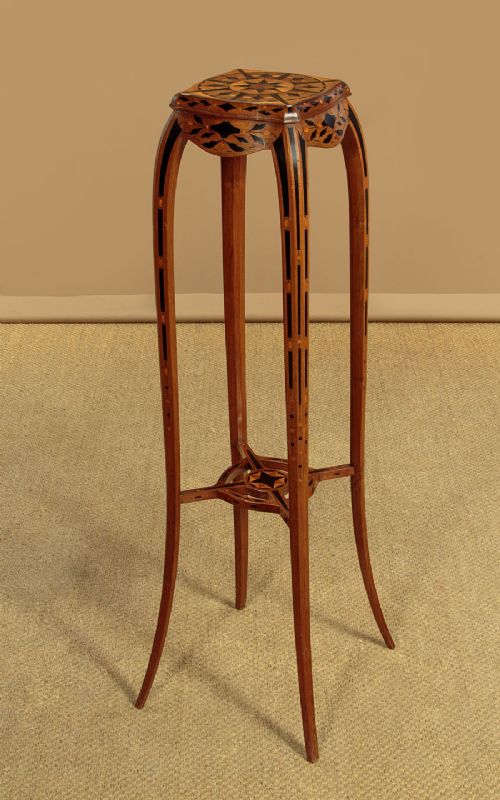
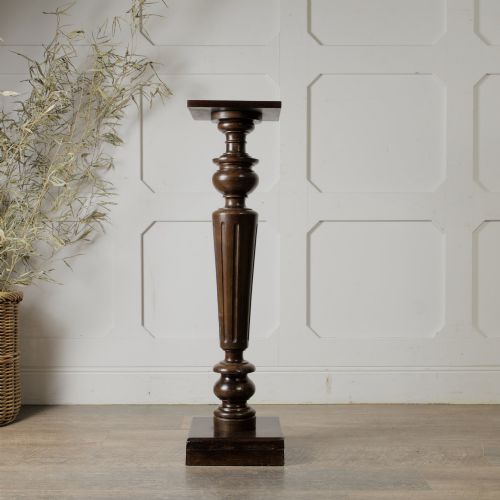
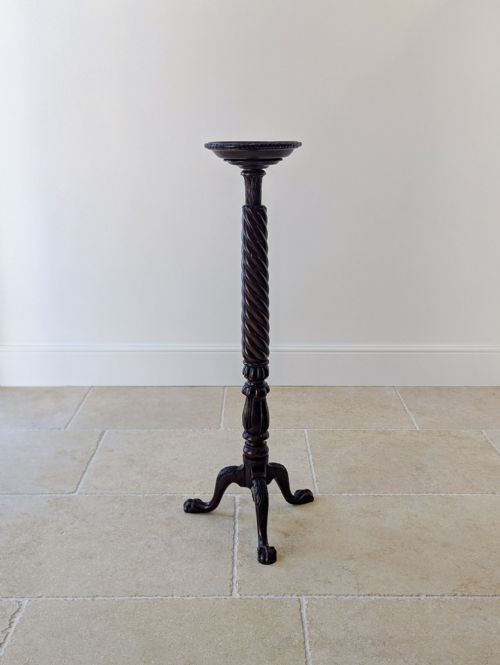
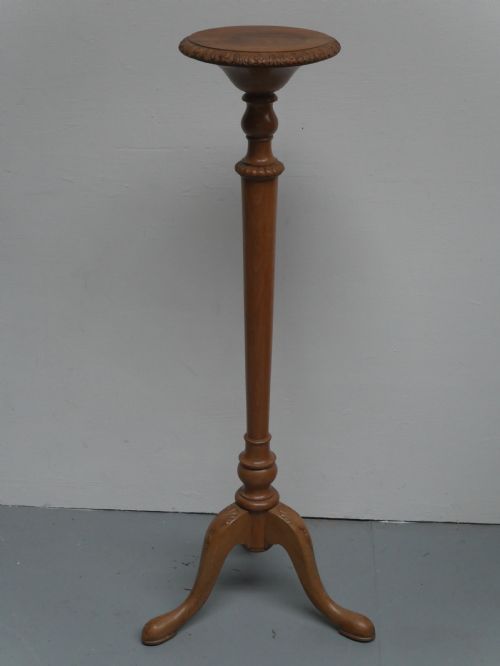


Turned Wood Torchere
These turned wood torchere stands are slender display furniture designed to elevate candles, plants, or decorative objects.
Turned Wood Torchere
A turned wood torchere functions primarily as an elevated platform for display, originating as a stand for a torch or candle before evolving into a support for plants and decorative vessels. When searching for a turned wood torchere, a buyer encounters tall, slender stands designed to draw the eye upward in a room.
The selections span multiple eras, including the eighteenth century, the Victorian period, and the early twentieth century. Common forms encompass tall pedestals, plant stands, and candle stands.
Mahogany and walnut appear frequently amongst the items, alongside oak, specimen wood, ebony, and pinewood. Styles range from Georgian and Victorian to Edwardian, along with various revivals such as Chippendale, Georgian, Italian Baroque, and Regency.
How they were made
The construction of these pieces relies heavily on lathe-turning techniques to shape central columns into columns, balusters, and reeded profiles. Joinery connects these vertical shafts to stable bases and upper display tops.
Makers utilised dense timbers such as mahogany and walnut to ensure stability despite the narrow footprint of the stands. Secondary woods and occasional brass elements appear within the construction and detailing of specific periods.
Turned Wood Torchere Retail Price Guide 2026
Typical asking prices for turned wood torchere among the pieces listed under this phrase on Sellingantiques today, from the lower quarter to the upper quarter. They describe what is for sale here now, not the wider market.
The listings show pieces spanning the eighteenth century through to the nineteen-twenties, incorporating mahogany, walnut, oak, and specimen wood.
What varies in quality
Quality in these pieces rests upon the crispness of the wood-turning and the structural integrity of the joint between shaft, base, and platform. Finer examples display balanced proportions and sophisticated timber selection, such as figured mahogany or varied specimen woods.
The stability of the base dictates much of the utility, as slender stands require precise weight distribution to prevent tipping. Carved ornament, where present, distinguishes standard production from more ambitious workshop output.
The Turned Wood Torchere Glossary
- Torchere
- A tall stand designed to support a light source, plant, or decorative object. Originally built for candles, later examples served varied display purposes.
- Plinth
- A heavy base or lower block supporting a column or pedestal. It provides essential balance to tall, slender furniture forms.
- Baluster
- A vertical, moulded shaft with a swelling contour, commonly seen on turned furniture supports. This shape adds visual weight and stability to the centre of the stand.
- Specimen wood
- Furniture constructed from a variety of distinct timber species, often arranged to display contrasting natural grains and colours. It indicates decorative ambition in the maker.
- Ebonised
- Timber treated with a dark finish to imitate ebony. This technique provides sharp contrast against lighter woods.
Turned Wood Torchere: Frequently Asked Questions
What is a turned wood torchere used for?
These tall stands support items like potted plants, small sculptures, or decorative bowls within a room. Their slender profile allows them to fit into corners or between furniture without occupying excessive floor space.
Historically, similar stands held candles or oil lamps to illuminate dark corners. Today, they function primarily as display pedestals to add height and architectural interest to interior spaces.
How do I identify an eighteenth century torchere?
Eighteenth-century examples often feature dense mahogany or oak construction with hand-turned shafts reflecting Georgian design canons. The joinery and timber patination provide physical evidence of their age.
Later Victorian and Edwardian pieces frequently repeat these earlier styles through revival movements. Examining the interior construction and timber ageing helps distinguish original pieces from later interpretations.
Are plant stands and torcheres the same thing?
While the terms frequently overlap in modern listings, plant stands and torcheres share similar tall, columnar forms. Both serve to elevate objects above floor level.
Some plant stands feature zinc or metal liners within the top tray to catch water. Traditional torcheres generally feature flat wooden tops intended for decorative objects or candles.
Where should I place a torchere in a room?
Tall stands work effectively in empty corners, beside fireplaces, or framing doorways and large windows. Their vertical emphasis draws the eye upward and breaks up horizontal lines of furniture.
Because these pieces have narrow footprints and elevated centres of gravity, placement should avoid high-traffic zones where they might be easily knocked over.