

Turned Wood Leg Sofa
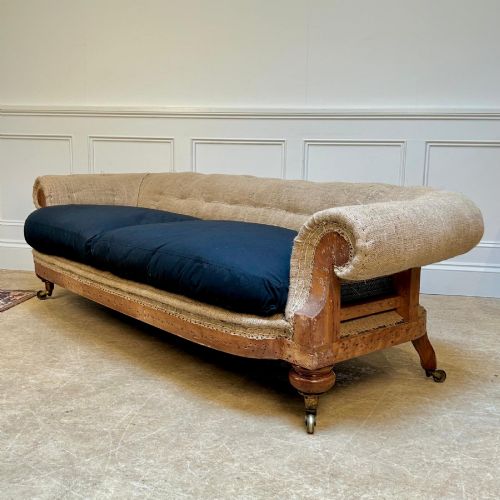
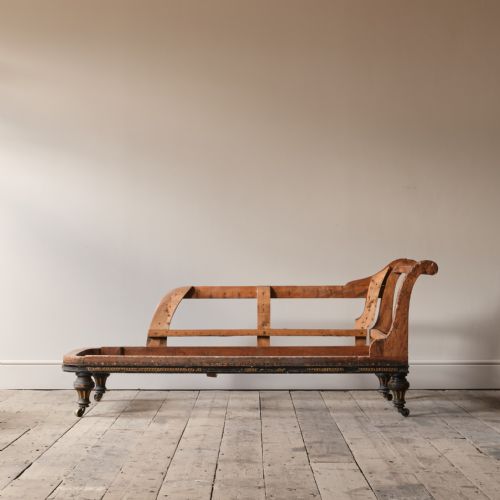
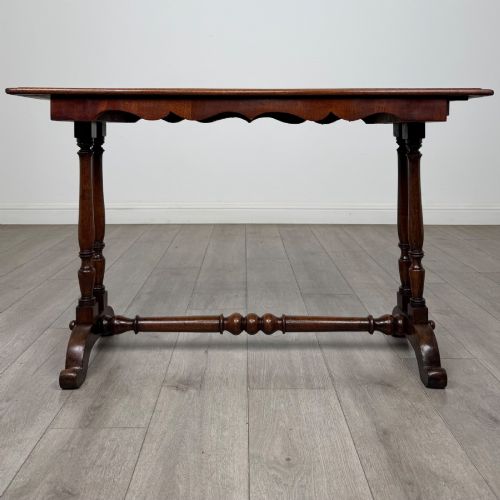
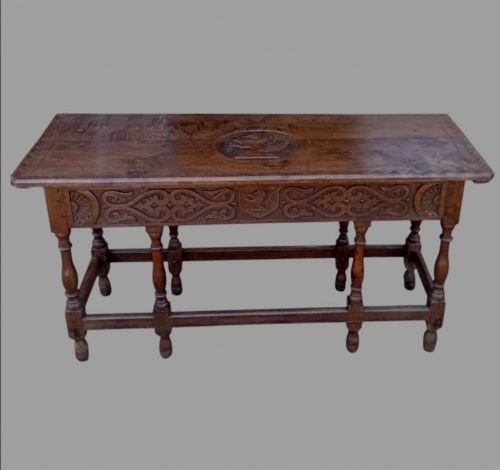
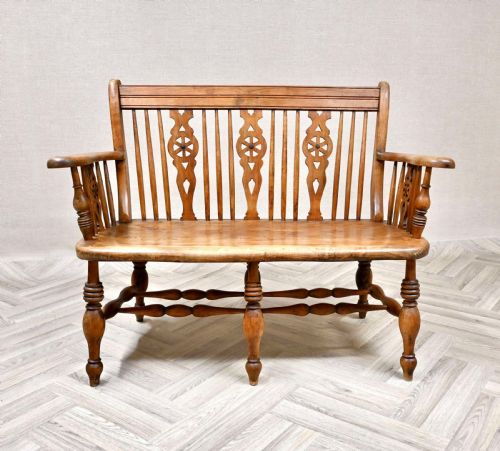
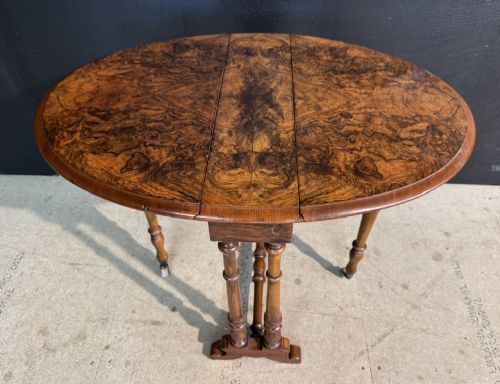
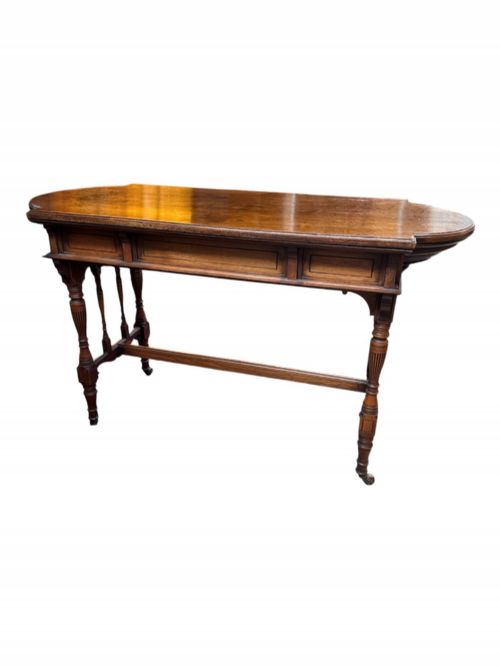
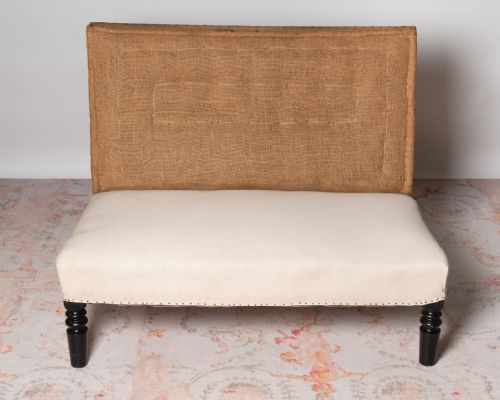
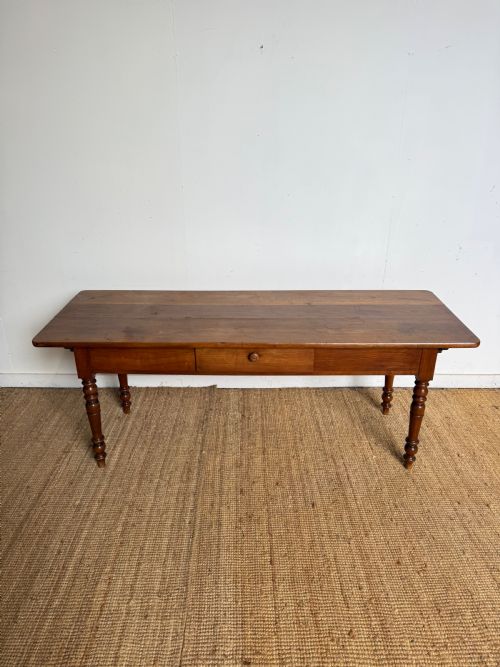
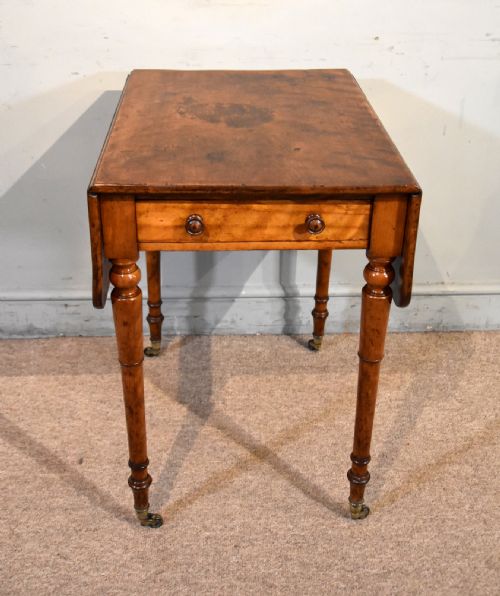
These pieces for a turned wood leg sofa encompass seating and tables from the Regency, Victorian, and Edwardian eras, valued for their warm timber frames and turned supports.
Turned Wood Leg Sofa
When searching for a turned wood leg sofa, buyers encounter nineteenth-century seating and tables that share similar structural turned supports. The evidence shows pieces spanning the Regency, Victorian, and Edwardian periods, including chaise longues, settees, and benches alongside related tables with turned components.
The version most likely to meet a buyer on this page is a nineteenth-century example featuring mahogany, rosewood, or walnut timber. These items bring period character to a room through their handcrafted frames and traditional joinery.
Materials and construction methods
Cabinetmakers utilised dense hardwoods such as mahogany, rosewood, walnut, and satin birch to build the frames and table structures. These timbers were selected for their durability and rich grain patterns, often polished to a high finish.
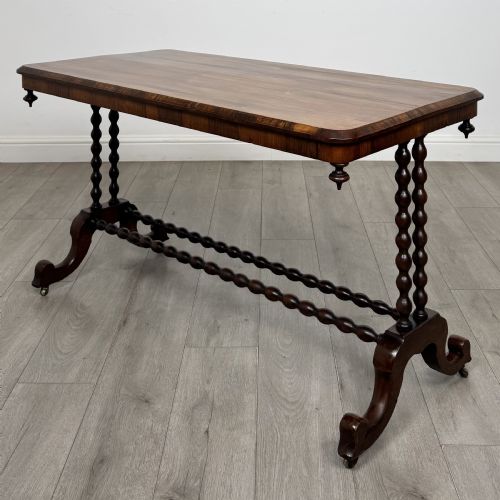
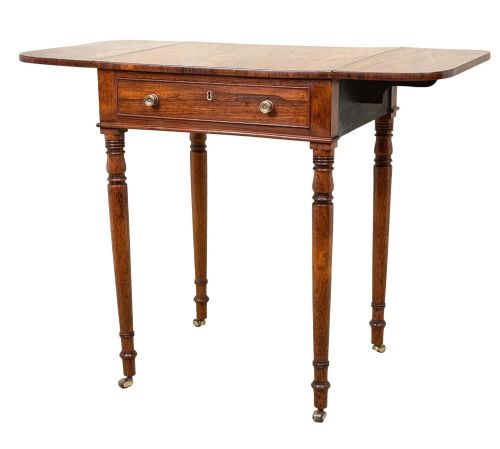
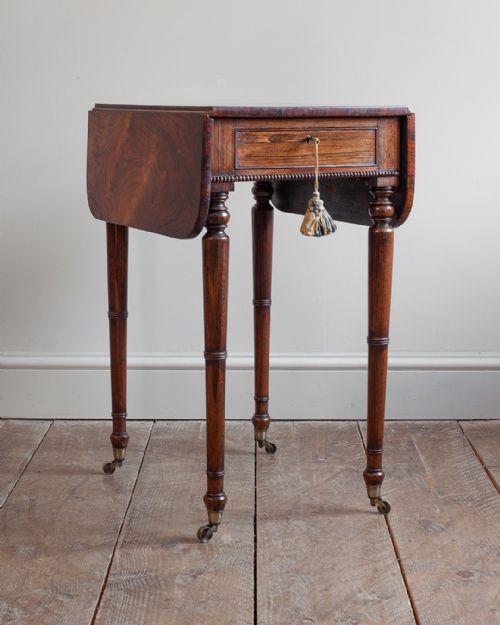
Turning lathes shaped the wooden legs, producing cylindrical profiles that range from simple lines to more decorative bamboo-turned or bobbin-turned styles. Secondary materials like brass castors, ceramic elements, and hessian webbing frequently appear in the construction of these items.
The listings show pieces constructed from mahogany, rosewood, walnut, and cherrywood across the Regency, Victorian, and Edwardian periods.
Distinctions in quality
Quality across these pieces rests upon the selection of timber and the precision of the turning work. Finer examples display carefully matched veneer grains, substantial solid timber sections, and crisp, well-defined turning on the legs.
The reputation of the maker and the integrity of the original construction significantly influence the standing of a piece. Items retaining their uncompromised structural frames and original hardware command greater appreciation.
Holland and Sons·Johnstone and Jeanes·Hampton and Sons·George Oakley
The Turned Wood Leg Sofa Glossary
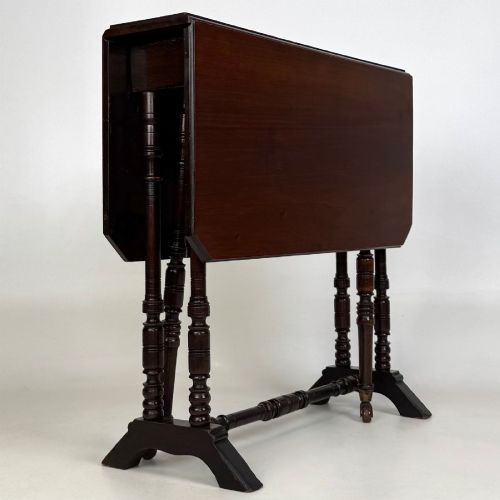
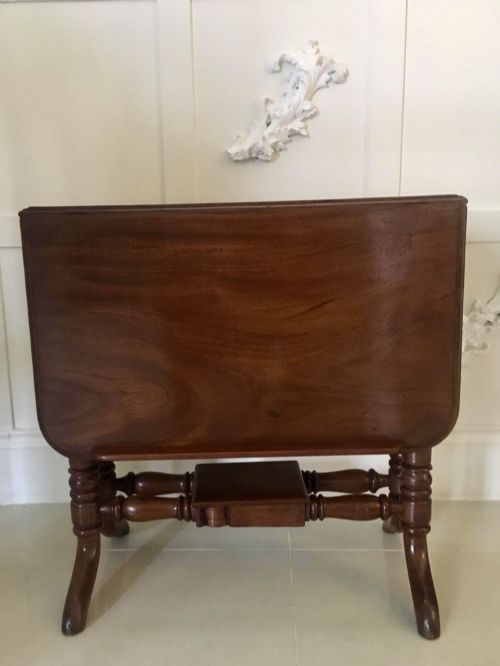
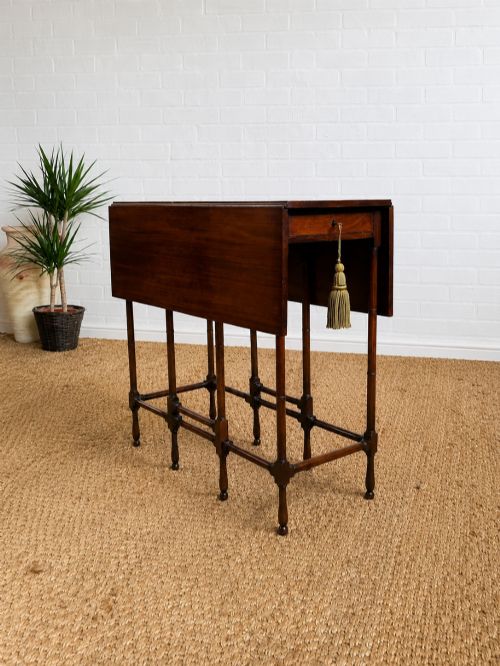
- Sutherland table
- A narrow drop-leaf table where the leaves fold down almost vertically. It rests on a turned gateleg base.
- Chaise longue
- An upholstered sofa in the manner of a chair combined with a long seat for reclining. Nineteenth-century examples often incorporate turned wooden legs.
- Bobbin-turned
- A style of wood turning characterised by a series of rounded spheres or discs resembling bobbins along the length of the leg.
Turned Wood Leg Sofa: Frequently Asked Questions
What periods do these pieces date from?
The selection spans from the eighteenth century through the Regency, Victorian, and Edwardian eras. Most examples originate from the nineteenth century.
Specific dates within listings indicate the prevailing design style and manufacturing period of each item.
What woods are used in these items?
Makers utilised a variety of timbers including mahogany, rosewood, walnut, burr walnut, amboyna, oak, and cherrywood.
These woods were chosen for their durability and decorative grain, frequently complemented by brass fittings.
How do I identify a turned wood leg?
Turned legs are shaped on a lathe to create symmetrical, rounded profiles. They range from simple cylindrical forms to decorative patterns like bamboo-turning or bobbin-turning.
This technique appears on both seating frames and supporting tables.