


Turned Timber Lamp
A turned timber lamp brings warmth and a tactile grain to a room, offering a sculptural silhouette shaped on the lathe.
Turned Timber Lamp
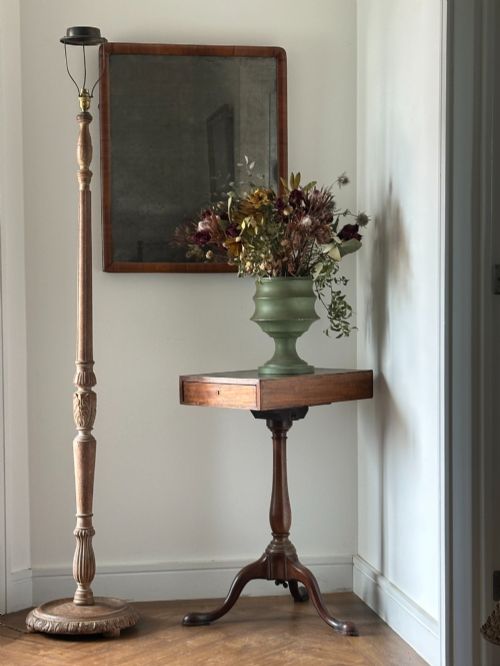
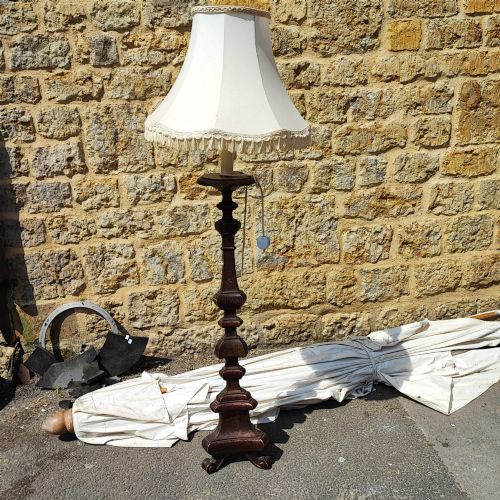
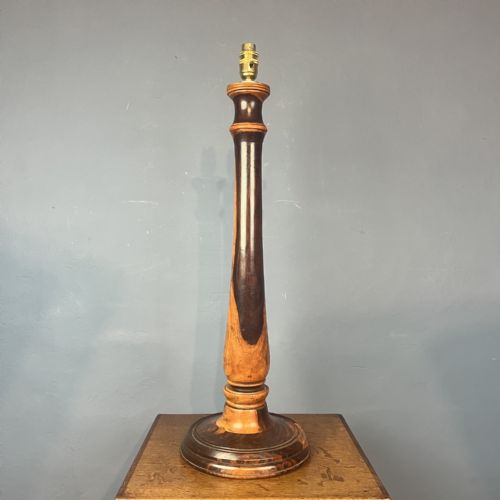
A turned timber lamp is an upright lighting fixture shaped from wood on a lathe, appearing on this page in floor and table formats across Victorian, Georgian, and twentieth-century periods. These pieces span standard lamps, lamp tables, and occasional tables adapted to hold light fittings, reflecting domestic utility over the centuries.
The most common examples you will encounter combine traditional woods like oak, mahogany, and elm with turned columns and standard lamp configurations. Makers utilised native timbers and exotic varieties alike, creating sturdy shafts designed to support fabric shades in both formal and rustic settings.
How they were made
Turning timber on a lathe formed the primary method of shaping these vertical shafts and columns, requiring steady hand-chiselling to achieve balanced proportions. Artisans selected dense hardwoods such as mahogany, oak, walnut, and lignum vitae to ensure the turned sections held crisp mouldings and supported heavy weights.
Construction frequently united turned central pillars with tripod bases or circular platforms, sometimes augmented by hand-painted finishes, carved details, or metal mounts in brass. Joinery relied on traditional turning techniques where components slotted together or screwed firmly to maintain vertical stability.
Some nineteenth-century pieces utilise lignum vitae, a wood so dense it sinks immediately in water like a stone.
What varies in quality
Quality rests upon the selection of the timber and the precision of the lathe work, where crisply defined reeding and balanced proportions distinguish finer examples. Heavier, denser woods such as lignum vitae and well-figured mahogany indicate a higher grade of manufacture than softer, plain utility timbers.
The articulation of the turning itself dictates the character of the piece, separating standard workshop production from finely sculpted standards with harmonious vase-turned or spiral columns. Original surfaces, whether polished mahogany, painted finishes, or waxed oak, preserve the integrity of the material far better than modern refinishing.
The Turned Timber Lamp Glossary
- Lathe
- A woodworking machine that rotates timber on an axis while a cutting tool shapes it into symmetrical columns and bases. This tool creates the characteristic cylindrical and swelling profiles seen on standard lamp shafts.
- Standard lamp
- A tall, free-standing floor lamp designed to illuminate a room from a vertical timber post. These fixtures usually feature a heavy weighted base or tripod feet to prevent tipping.
- Lignum vitae
- An extremely dense and heavy tropical hardwood known for its dark oily grain and durability. It was frequently utilised for turned objects that required exceptional weight and strength.
- Specimen wood
- An assemblage of various native and exotic timbers arranged in decorative patterns, often seen on tabletop surfaces. This technique displays the natural colour variations of different woods.
- Tripod base
- A three-legged support system commonly found beneath lamp tables and standard lamps. It provides stable footing on uneven floors through three points of contact.
Turned Timber Lamp: Frequently Asked Questions
How do I date a turned timber lamp?
Dating relies on examining the turning style, timber species, and construction methods used in the central column and base. Georgian and Victorian pieces often display hand-turned mouldings and dense native hardwoods like oak or mahogany, whereas interwar examples show different proportions and finish types.
Secondary elements such as original wiring, metal fittings, or base weights also help establish the era of manufacture. Comparing the turning profile to dated tables and furniture from the same period provides the firmest chronology.
What is the difference between a lamp table and a standard lamp?
A standard lamp is a tall floor-standing upright post designed solely to hold a light fitting at eye level. A lamp table incorporates a flat surface, such as a wine table or occasional table, combined with a lamp stand or designed to support a table lamp.
Floor models focus on general room illumination while occupying minimal floor space with a weighted base or tripod. Table versions combine furniture utility with lighting, offering a small surface for drinks or books beside seating.
Are these lamps heavy?
Many turned timber lamps possess substantial weight, particularly those fashioned from dense hardwoods like mahogany, walnut, or lignum vitae. Floor models require sufficient heft in the base to support the vertical height and fabric shade safely without toppling.
Table-height versions and smaller occasional stands vary according to the timber used and the thickness of the top. Solid wood construction ensures they remain stable during everyday domestic use.
How should I care for antique timber?
Maintain antique timber by dusting regularly with a soft, dry cloth and avoiding placement near direct heat sources or strong sunlight. Excessive temperature fluctuations can cause the wood to dry out and split along the grain.
Apply a microcrystalline wax sparingly when the surface appears dry to nourish the finish and protect the grain. Avoid silicone-based polishes, which build up over time and attract dust to carved or turned details.