


Turned Leg Piano Seat
A turned leg piano seat brings the functional grace of the Victorian and Edwardian parlour right to a modern upright or grand.
Turned Leg Piano Seat
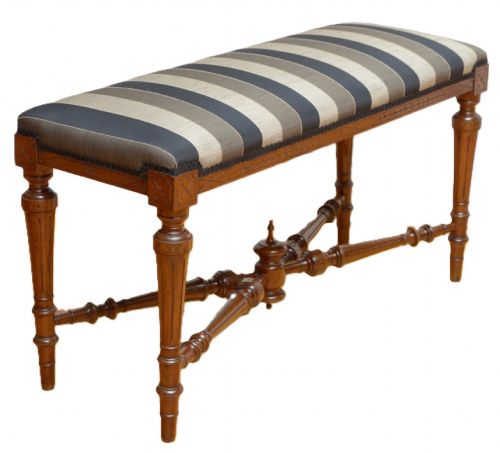
A turned leg piano seat is a sturdy domestic seating form designed primarily for musicians, appearing across the Victorian, Edwardian, and Regency eras. These pieces function as swivel stools, adjustable height seats, duet benches, and window seats, often moving effortlessly between the music room and the drawing room.
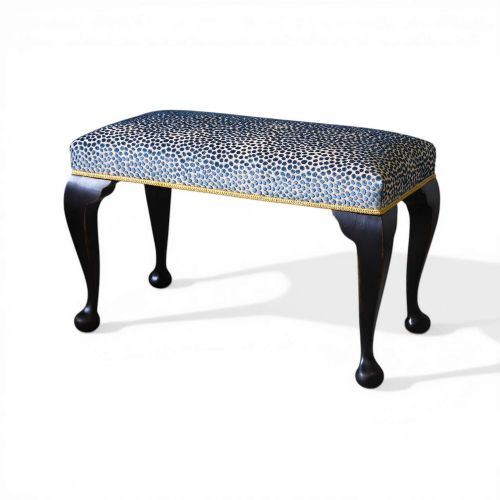
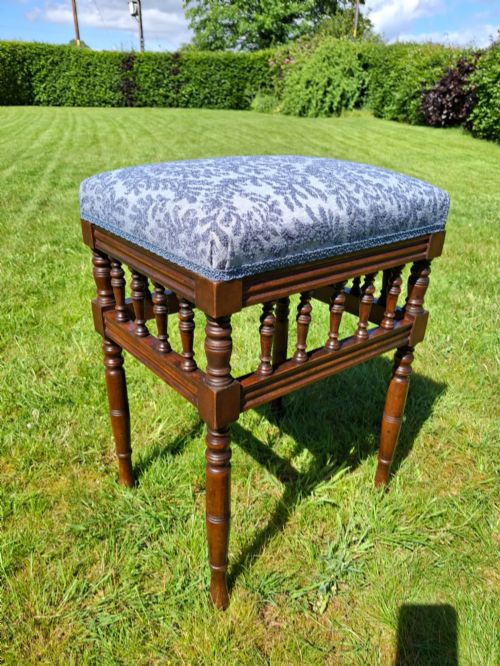
The most common examples on this page date from the later nineteenth century and the early twentieth century, utilising solid timbers like mahogany and walnut alongside ebonised finishes. Their defining characteristic is the turned wooden leg, which ranges from simple columnar shaping to more elaborate reeded or spiralled forms.
How they were made
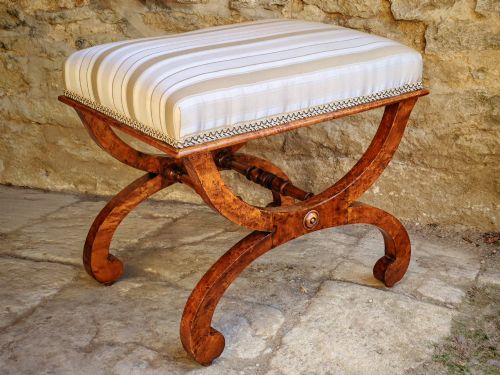
Cabinetmakers constructed these seats using dense hardwoods such as mahogany, walnut, rosewood, and oak, often turning the legs on a lathe to create symmetrical rings and baluster profiles. Ebonised wood and burr maple also appear, showing how makers selected timbers both for structural strength and visual depth.
Upholstery formed an essential part of the construction, with drop-in pads or fixed seats covered in fabric, velvet, textile, and tweed linen. Brass hardware frequently featured in the adjustable swivel mechanisms, allowing the top to revolve or raise via a threaded wooden screw.
Listings span the Regency, Victorian, and Edwardian periods, utilising mahogany, walnut, rosewood, oak, and ebonised wood alongside brass hardware.
What varies in quality
Quality rests in the crispness of the wood turning and the selection of timber grain, where finely figured mahogany or burr maple elevates a standard form into a cabinetmaker's display piece. Maker attribution also separates standard workshop output from documented examples bearing stamps or signatures.
The robustness of the mechanical turning mechanism dictates durability, distinguishing smooth-operating swivel tops from loose or wobbly joints. Well-executed upholstery framing and substantial hardwood thickness ensure the piece remains stable under daily use.
Gillows·H Brooks and Co·James Shoolbred
The Turned Leg Piano Seat Glossary
- Turned leg
- A wooden support shaped by rotating it on a lathe while a cutting tool applies profile details. This technique creates uniform curves, rings, and fluting along the vertical axis.
- Ebonised wood
- Timber treated with a dark finish to imitate expensive ebony. This method gained immense popularity during the Victorian and Aesthetic Movement periods.
- Swivel base
- A revolving mechanism placed beneath the seat top. It allows the seated musician to turn freely without moving the base or legs.
- Duet stool
- An elongated bench designed to accommodate two players simultaneously. These pieces often feature additional legs for central support.
- Window seat
- A long, low bench traditionally placed in a bay window. Many share identical construction methods and turned supports with standard piano stools.
Turned Leg Piano Seat: Frequently Asked Questions
How do you adjust the height?
Many of these seats feature a revolving top mounted on a central wooden screw thread. Turning the seat clockwise or anticlockwise raises and lowers the top.
Other variants use fixed heights, so checking whether the mechanism moves freely is essential before placing the stool at a piano.
Where should I place a piano stool?
While originally built for keyboard instruments, their compact proportions make them useful as dressing table seats or hallway benches. Their sturdy turned legs suit traditional and eclectic interiors alike.
Avoid placing them in direct sunlight to protect the polished wood surfaces and delicate textile upholstery from fading.
How do I date these pieces?
Stylistic clues like ebonised finishes point toward the late Victorian or Aesthetic Movement eras. Regency examples display leaner proportions and specific mahogany grain.
Edwardian pieces often show lighter timber tones and simpler turned profiles compared to their heavier 19th-century predecessors.
Are these seats comfortable?
Most feature padded upholstered tops covered in fabric, velvet, or tweed linen, offering a firm seat suitable for playing music. The cushioning varies depending on whether the padding is original or recently restored.
Swivel models provide easy movement, while duet benches offer generous width for extended seating.