
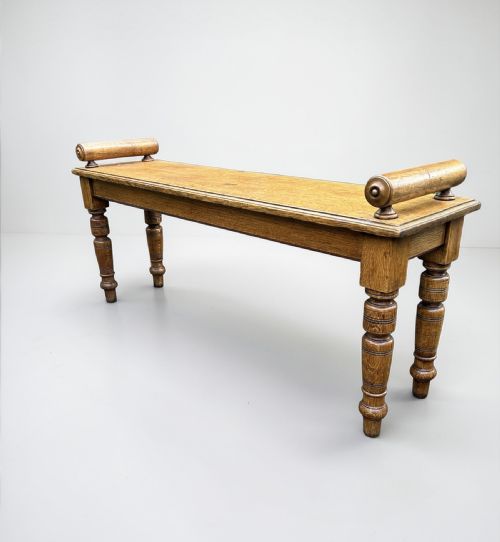


Turned Leg Oak Bench
These turned leg oak bench pieces are sturdy seating options designed for halls and dining spaces, bringing solid timber construction to traditional interiors.
Turned Leg Oak Bench
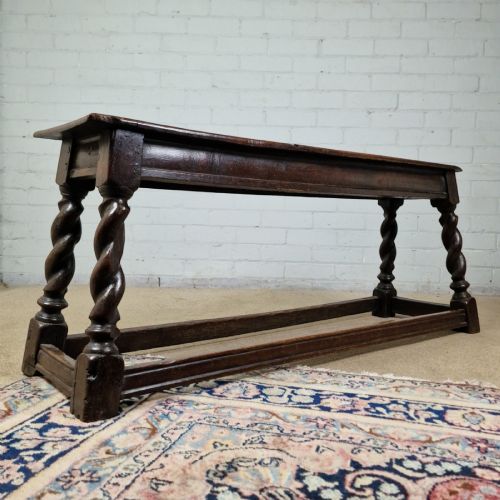
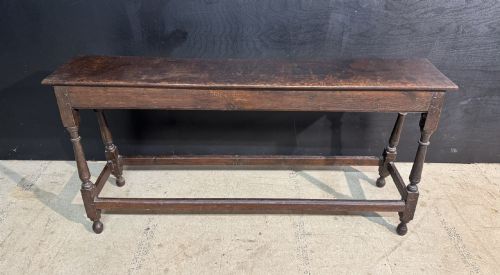
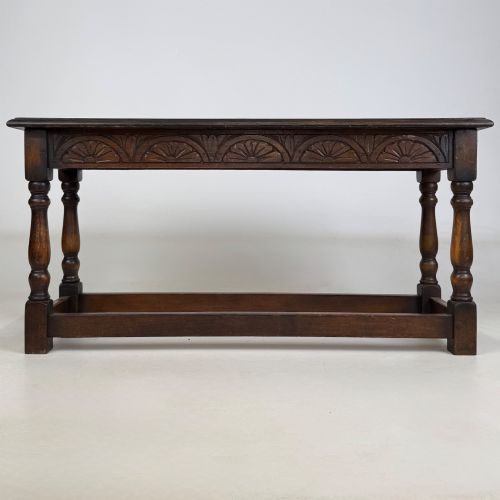
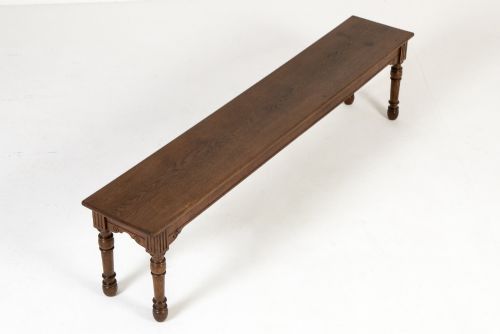
When you search for turned leg oak bench options, you encounter a variety of forms including long joint stools, hall seats, and window benches dating from the Georgian period through to the 20th century. These pieces serve functional seating roles in hallways and dining rooms, often displaying the characteristics of English country and revival styles.
The selection on this page leans heavily toward 19th-century and Edwardian examples, alongside older 18th-century forms and items from around 1900. You will find benches paired with materials like cane, leather, and fabric, alongside plain timber surfaces shaped from elm, ash, and chestnut.
Forms range from compact prayer stools and small joint stools to expansive eight-foot farmhouse seats and refectory styles. Each variation reflects the domestic requirements of its era, whether intended for a grand hallway or a modest country kitchen.
Materials and construction techniques
Construction relies primarily on solid oak frames, frequently joined using traditional methods that ensure long-term stability and strength. Secondary timbers such as elm, ash, and chestnut also appear in the framework and seats of these pieces.
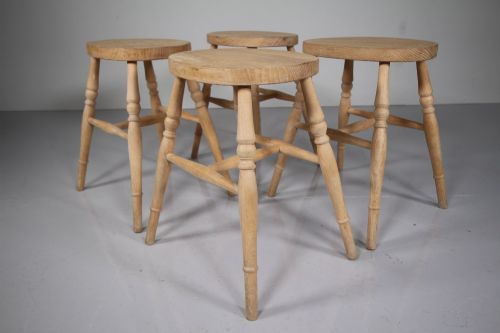
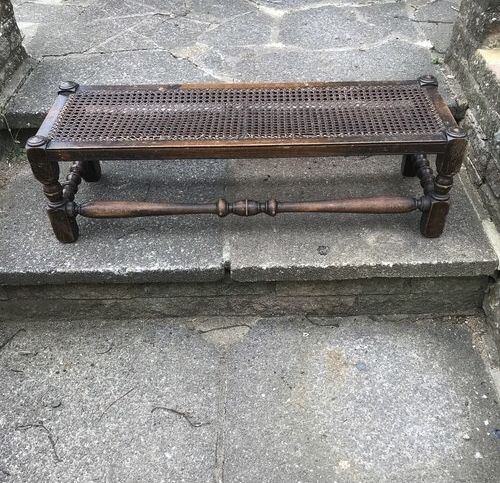
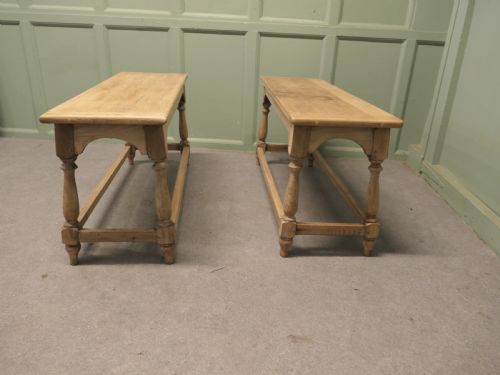
Surface treatments vary from untreated timber and pale bleached finishes to carved details and bobbin leg turnings. Additional elements like cane work, leather upholstery, and fabric pads are integrated into the designs of footstools and window seats.
Some sturdy oak prayer stools were clearly built to endure decades of heavy kneeling without a single wobble.
Distinguishing quality in traditional seating
Quality rests in the weight of the timber and the precision of the joinery used to anchor the turned legs to the seat frame. Pieces exhibiting substantial oak construction and well-defined turnings stand apart from lighter or more heavily restored examples.
The integrity of secondary materials, such as tight cane work or durable leather and fabric upholstery, dictates the refinement of the finished piece. Original surface patination and minimal structural intervention further elevate the standing of an individual bench.
The Turned Leg Oak Bench Glossary
- Joint stool
- A sturdy wooden stool constructed with mortise and tenon joints rather than turned and glued spindles. These early seats often provided firm seating at the dining table before chairs became common.
- Bobbin leg
- A furniture leg turned on a lathe to resemble a series of rounded bobbins or spools strung together. This decorative turning style appears frequently on Victorian and revival seating.
- Bleached oak
- Oak timber that has been treated to lighten its natural dark tone, producing a pale finish. This aesthetic gained popularity in later periods for brightening interior spaces.
- Settle
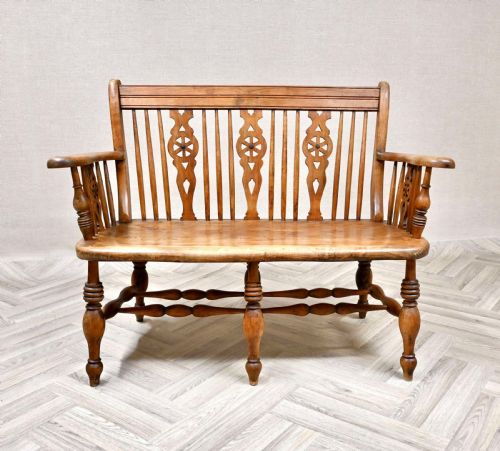
- A wooden bench featuring a high back to block drafts, often with solid arms and a storage box beneath the seat. They served as practical communal seating near hearths.
Turned Leg Oak Bench: Frequently Asked Questions
Where should I place a long hall bench?
These benches fit well in entrance hallways, corridors, or placed beneath windows as low seating options. Their narrow profiles allow them to occupy circulation spaces without blocking pathways.
In dining areas, longer farmhouse variants work alongside large tables to provide communal seating for guests.
How do I care for bleached oak furniture?
Maintain the pale finish by dusting regularly with a dry cloth and avoiding excessive moisture. Keep timber surfaces away from direct heat sources to prevent the wood from drying out or splitting.
Apply suitable wax polish sparingly if the wood appears dull, following the grain of the oak.
What is the difference between a joint stool and a bench?
Joint stools are compact, single-seat furniture items built with heavy timber frames and pegged mortise and tenon joints. Benches extend this construction method across a longer span to seat multiple people.
Both forms utilise sturdy turned legs to support heavy oak tops.
How do I identify a Victorian oak bench?
Victorian examples often display revival styles such as Jacobean or Gothic influences through carved panels and heavy turnings. Examine the timber colour and construction methods to distinguish these mid to late 19th-century pieces from earlier Georgian work.
Bobbin legs and darker wax finishes are also common indicators of Victorian manufacture.