




Turned Feet Pine Drawers
Turned feet pine drawers bring honest country utility and warm timber grain into a modern bedroom.
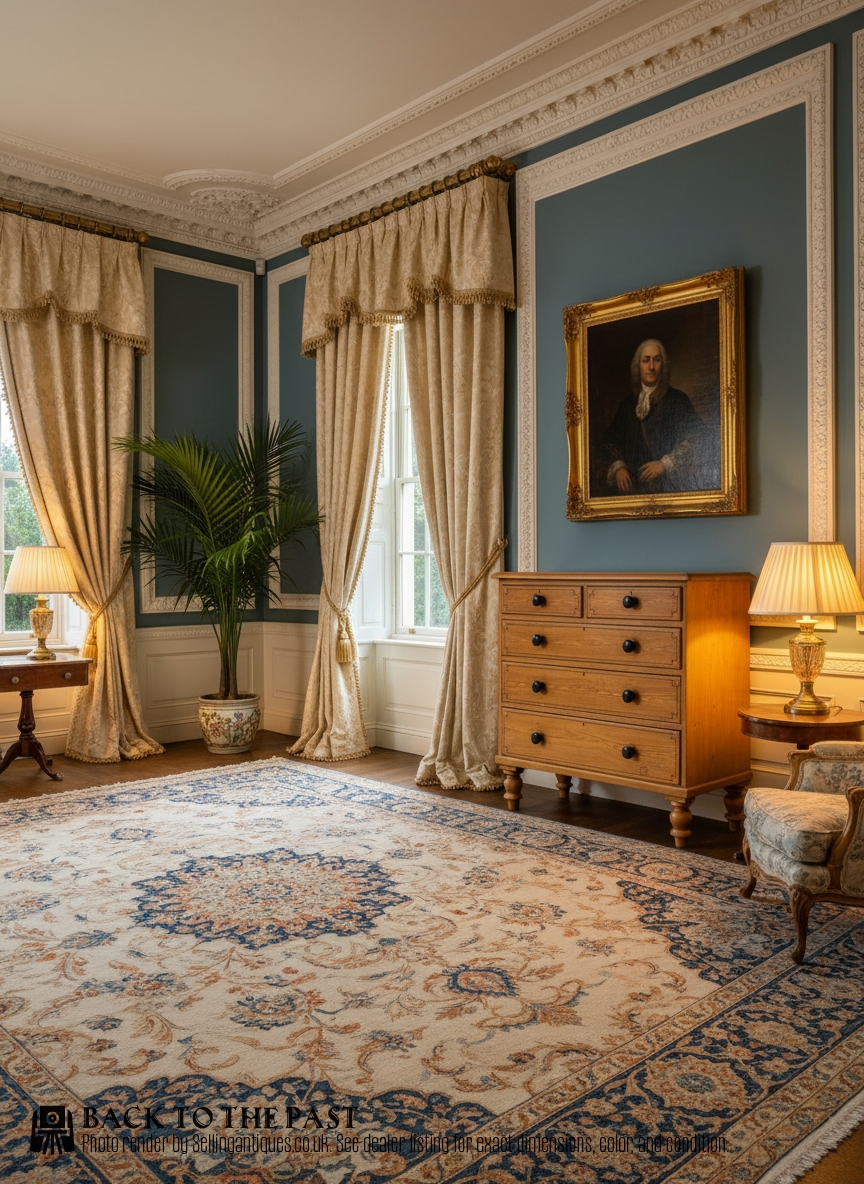
Turned Feet Pine Drawers
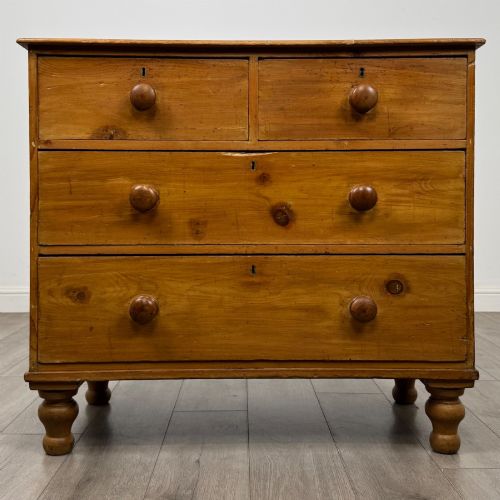
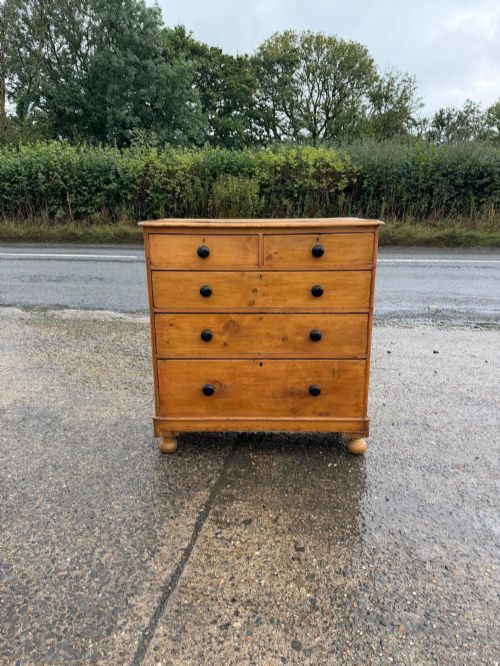
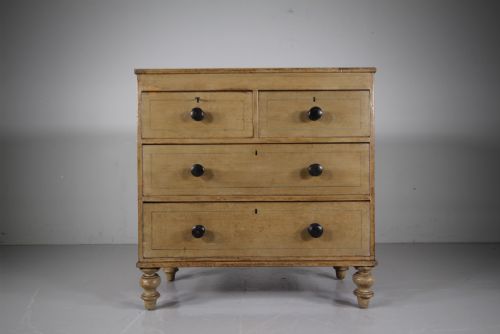
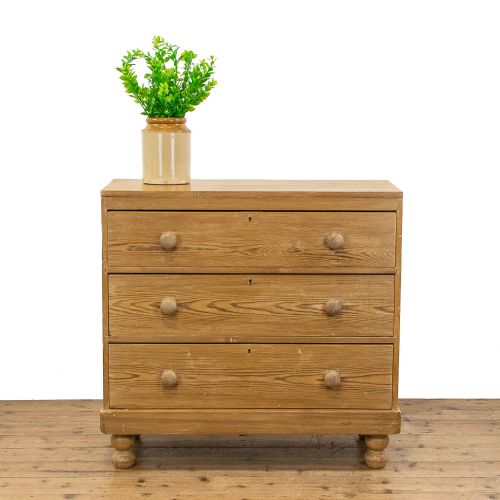
When you search for turned feet pine drawers, you find practical storage furniture built primarily from pine and painted timber during the Victorian and Regency periods. The forms include chests of drawers arranged in two over three configurations, along with painted pine chests and occasional cupboards.
Most examples you meet on this page hail from the Victorian era, spanning specific years like 1860 and 1870, alongside a smaller number from the Regency period. They serve as sturdy domestic utility pieces that combine straightforward wood construction with characteristic turned wooden feet and knobs.
How they were made
Cabinet makers built these pieces using solid pine and painted timber, often finished with iron and brass hardware or original turned wooden knobs. Surfaces frequently retain their original paint or appear dry scraped back to the underlying timber colour.
Construction relies on traditional woodwork techniques suited to domestic timber furniture, supported by turned feet and knobs that anchor the base and drawer fronts. Iron and brass elements provide functional metal fixings for handles and internal fittings.
Every turned foot carries the quiet rhythm of a nineteenth-century lathe operator working late in a dusty workshop.
What varies in quality
The standard of these chests depends heavily on the survival of original surface treatments, such as untouched paint layers or dry scraped finishes that reveal the grain. Pieces retaining their original turned knobs and feet command greater interest than those altered over time.
Proportion and period integrity separate the better examples from standard utility items, with Regency and Victorian country pieces showing distinct regional character. The crispness of the turned woodwork and the overall balance of the drawer arrangement dictate the visual appeal.
The Turned Feet Pine Drawers Glossary
- Pine
- A softwood commonly used for traditional furniture construction because it is accessible and easy to work. It takes paint and clear finishes readily.
- Regency
- An architectural and decorative style period dating from the early nineteenth century. Pieces from this era often display refined proportions.
- Victorian
- A nineteenth-century period spanning the reign of Queen Victoria, characterised by diverse domestic furniture styles. Much of the country pine found today originates from these decades.
- Dry scraped
- A conservation technique used to remove later coats of paint and reveal the original historic colour underneath. This process exposes the earliest finish applied by the maker.
Turned Feet Pine Drawers: Frequently Asked Questions
How do I date a pine chest?
Dating relies on construction methods, timber preparation, and stylistic cues specific to the nineteenth century. Victorian and Regency pieces exhibit distinct proportions and hardware choices.
Examining the drawer linings, backboards, and fastener types helps confirm the period of manufacture. Original painted surfaces can also point to the decade in which the piece was made.
Are original painted finishes common?
Original painted surfaces survive on selected pieces, showing the historic colours applied by past owners or makers. Some examples have been dry scraped back to reveal these early layers.
Finding untouched paint adds significant character and historical value to a chest. It distinguishes factory-refinished items from those preserved in their working state.
How do I care for antique pine?
Antique pine requires stable indoor humidity and protection from direct sunlight to prevent timber movement. Dusting with a dry cloth keeps the surface clean without damaging historic finishes.
Avoid harsh chemical cleaners, especially on pieces with original paint or dry scraped surfaces. Regular gentle care preserves the soft patina developed over generations.