
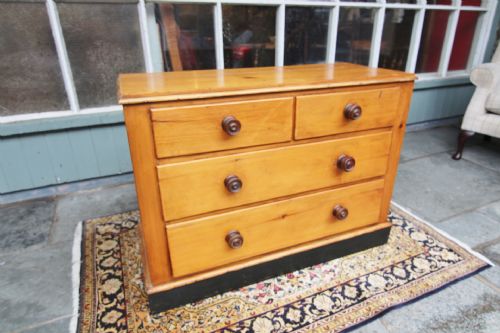


Country Farmhouse Chest
A country farmhouse chest brings practical utility and honest warmth into a room, offering robust storage built from honest woods.
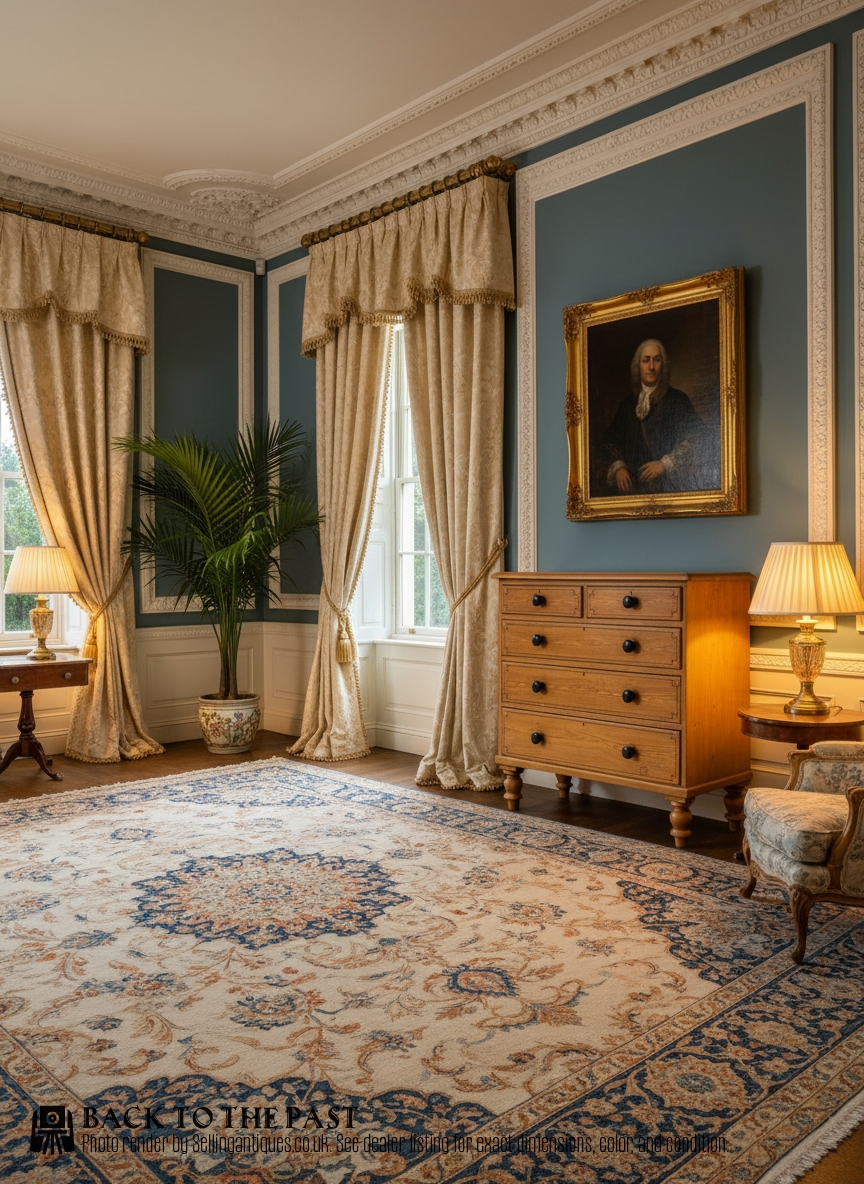
Country Farmhouse Chest
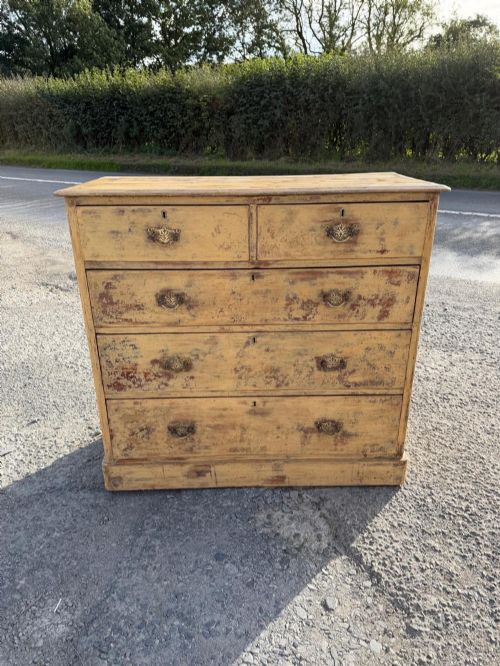
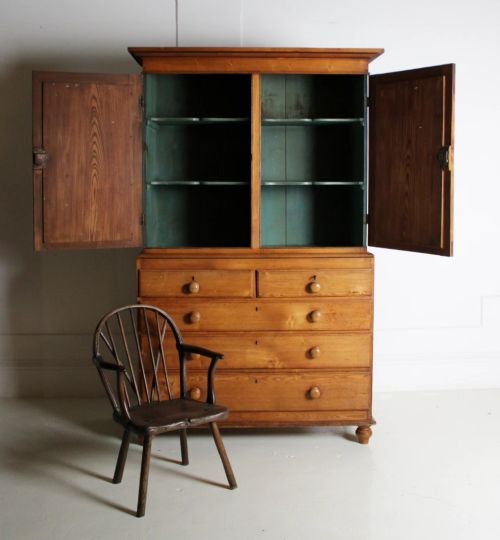
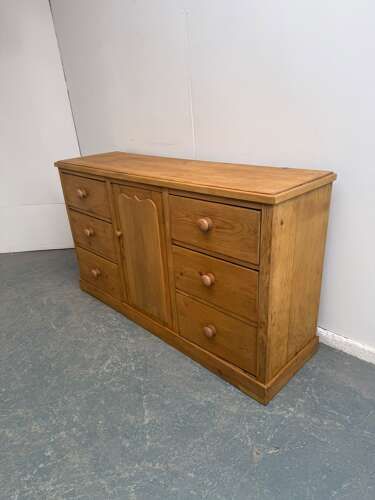
A country farmhouse chest represents the utilitarian storage furniture of domestic domestic interiors, encompassing pieces designed for hard daily service rather than formal display. When searching for a country farmhouse chest, buyers encounter practical drawer units and press cupboards built to hold household linens, provisions or clothing.
The examples gathered here span the nineteenth century and the Victorian era, showing vernacular forms rooted in regional British cabinet-making traditions. These pieces rely on solid timbers and straightforward construction, prioritizing capacity and stability above ornament.
How they were made
Carpenters constructed these items primarily from solid pine and elm, utilising local timber suited to heavy domestic work. Drawer fronts and frames often display straightforward joinery designed to withstand decades of regular pulling and loading.
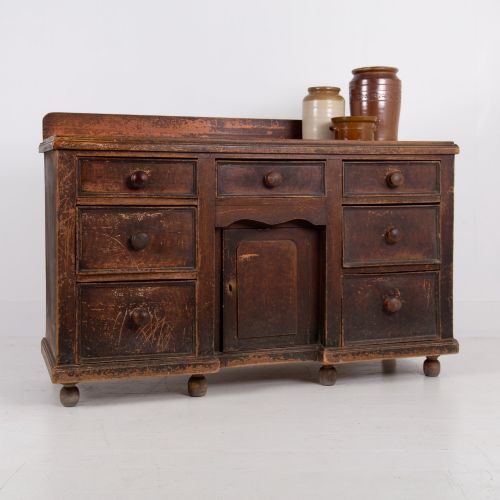
Surfaces frequently carry their original paint finishes or scumbled decoration, alongside waxed pine treatments that highlight the grain. Brass handles and ceramic elements appear as functional hardware, securing doors and drawers without excessive embellishment.
The listings on this page span the nineteenth century, featuring pieces constructed from solid pine, elm, and ash.
What varies in quality
Quality in these vernacular items rests upon the integrity of the timber and the preservation of original surfaces. Pieces retaining untouched paint or authentic scumbling hold greater character than those stripped down or heavily restored in later decades.
Structural proportion and the retention of original brass or ceramic hardware also distinguish finer examples. A well-balanced gallery back or cleanly fitted drawers indicate a higher standard of regional craftsmanship.
The Country Farmhouse Chest Glossary
- Scumble
- A decorative painting technique involving a translucent top layer dragged or combed over a base coat to simulate wood grain or texture. It appears frequently on nineteenth-century vernacular furniture.
- Gallery back
- A raised wooden upstand attached to the rear edge of a top surface to prevent items from sliding off. This feature is common on kitchen dressers and storage chests.
- Linen press
- A tall storage piece combining upper cupboard doors with lower drawers, originally intended for storing household textiles flat. They utilise deep proportions to accommodate bulky fabrics.
- Dough bin
- A specialised wooden container with a sloped or flat lid, historically used for resting and kneading bread dough. These utility items often feature solid elm construction.
- Waxed finish
- A protective surface treatment applied using natural wax and buffed to a soft sheen. This method feeds the timber while maintaining a matte appearance.
Country Farmhouse Chest: Frequently Asked Questions
What is a country farmhouse chest?
A country farmhouse chest is a utilitarian storage piece built from domestic timbers like pine or elm during the nineteenth century. These items were made for everyday use in kitchens, sculleries, and bedrooms.
They range from simple four-drawer chests to larger press cupboards and dough bins. Their design focuses on capacity and sturdy construction rather than formal stylistic trends.
How do I date a pine chest?
Dating a pine chest involves examining the construction methods, nail types, and overall wear patterns visible across the timber. Nineteenth-century examples often display hand-cut joints and native softwood planks.
Surface treatments also provide clues, as original paint or early wax finishes differ significantly from modern chemical stripping. Hardware styles, such as brass pulls or ceramic knobs, further help narrow down the period.
Where should I place one?
These chests fit naturally into hallways, bedrooms, and kitchens where robust storage is required for linens or daily items. Their straightforward proportions allow them to anchor a wall without dominating the floor space.
The warm tones of aged pine and elm complement both traditional interiors and modern rustic rooms. Keeping them away from direct heat sources protects the solid timber from drying out.
Are painted finishes original?
Many nineteenth-century pieces retain their early or original paint layers, which were applied to protect the soft pine and brighten dark rooms. Scumbled surfaces imitate finer woods through layered brushwork.
Distinguishing original paint from later decoration requires looking for natural wear around handles and edges. Untouched painted surfaces show a depth that modern repainting rarely replicates.