





Turned Column Tea Table
A turned column tea table brings solid timber standards and compact proportions to any room.
Turned Column Tea Table
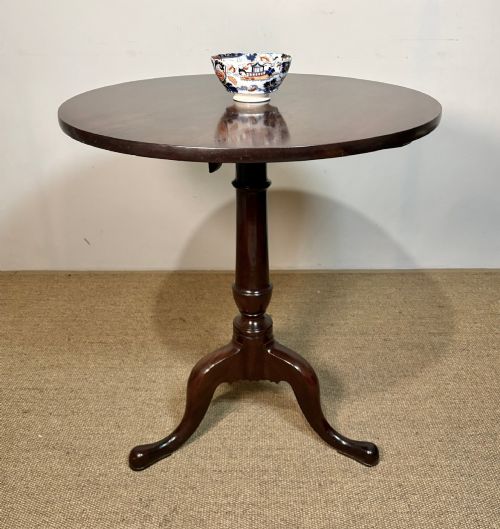
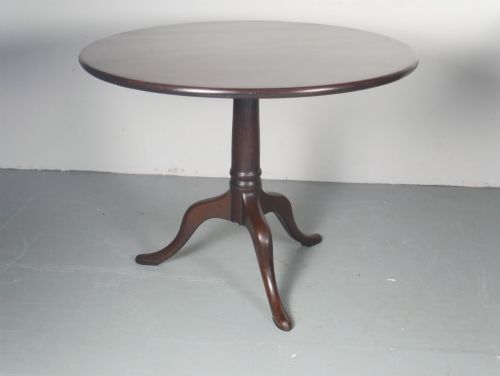
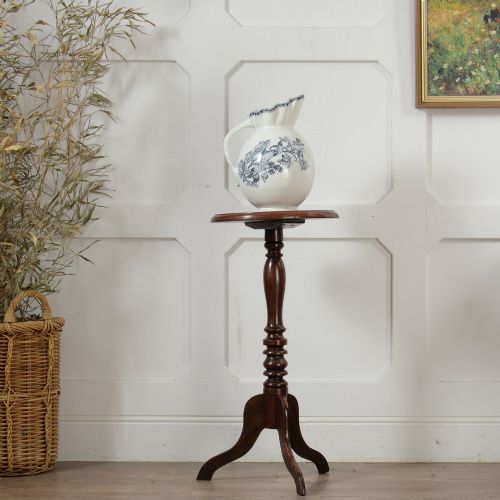
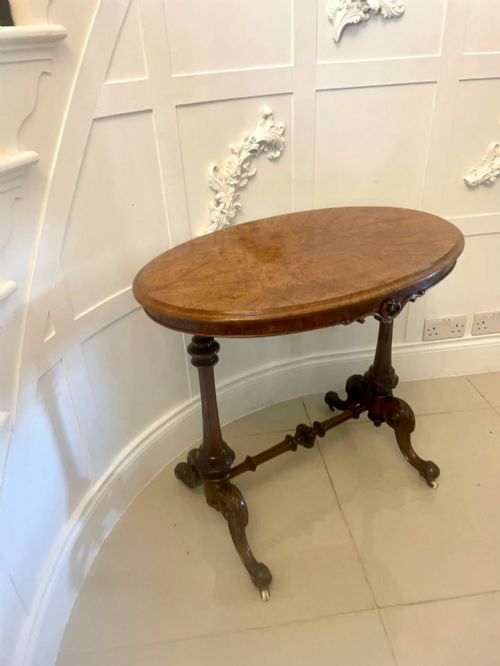
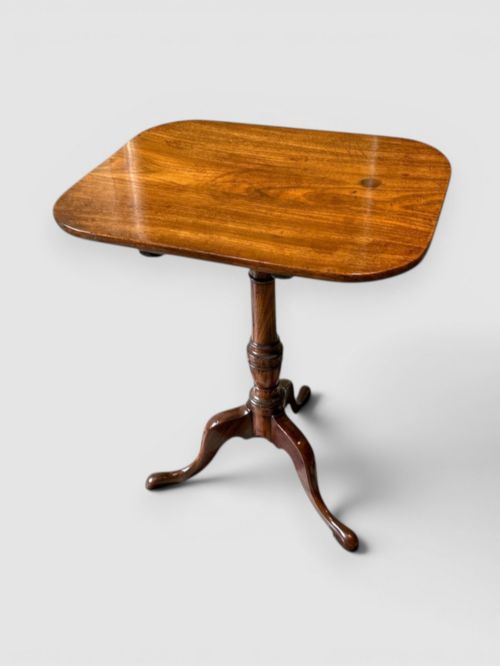
When you search for a turned column tea table, you encounter a compact pedestal piece designed for holding cups or serving refreshments in domestic interiors. These examples span the Georgian, Regency and Victorian periods, demonstrating how craftsmen adapted small circular or rectangular surfaces for everyday social use.
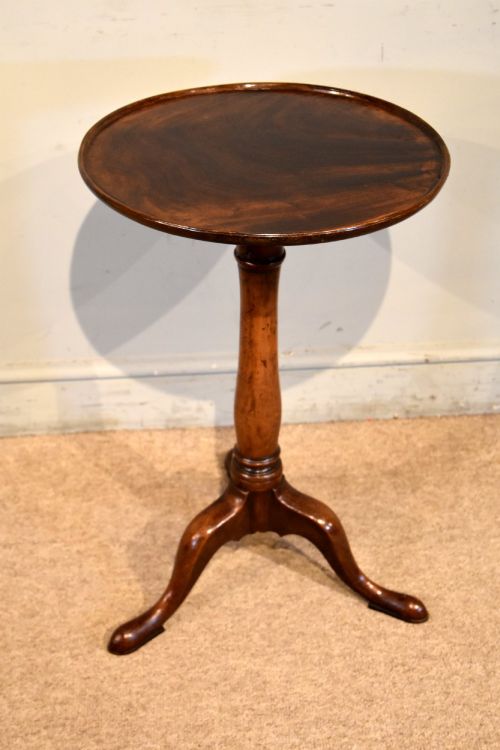
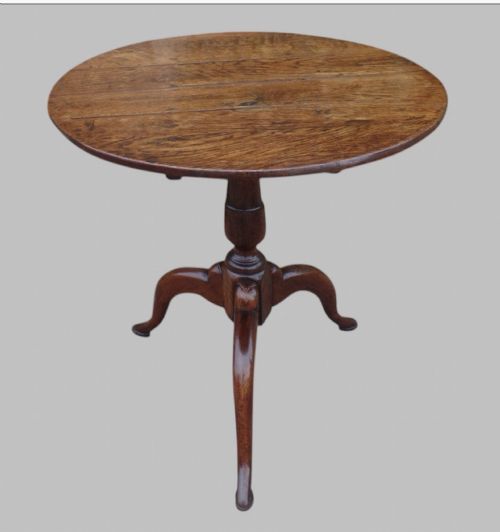
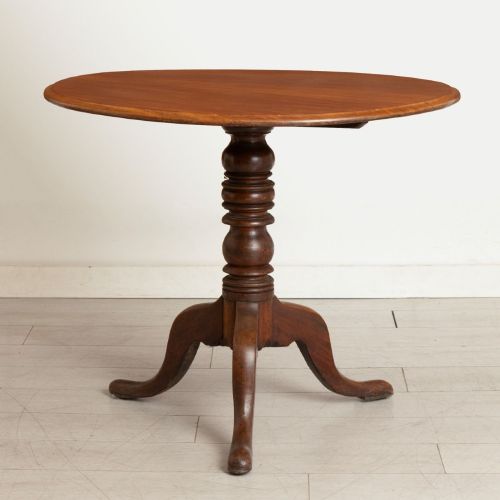
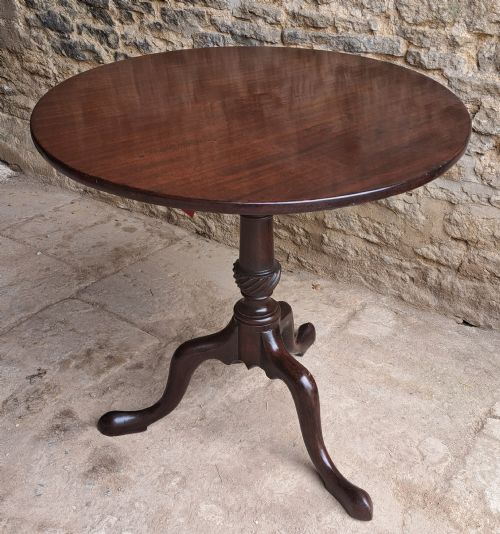
The most common form on this page pairs a circular top with a central turned column and three spreading legs. Many incorporate a tilt-top mechanism, allowing the surface to fold vertically when not in use.
Materials range from figured mahogany and burr walnut to vernacular oak and yew wood, reflecting the various workshops of the eighteenth and nineteenth centuries. Alongside standard tripod tea tables, the listings include related occasional furniture such as wine tables, lamp stands and supper tables.
Assessing quality and proportion
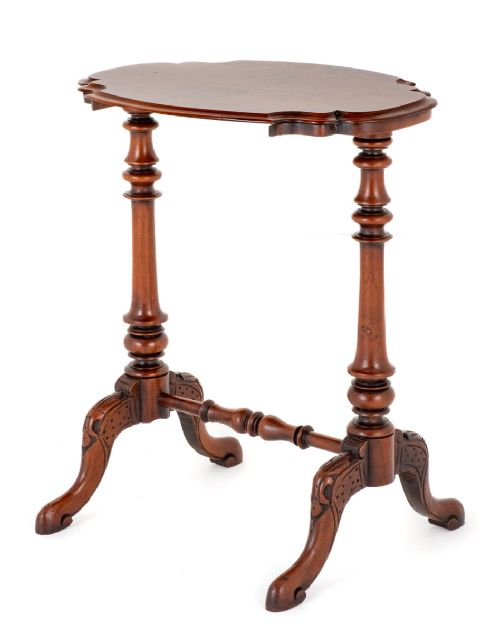
Quality rests primarily in the choice of timber and the crispness of the turning on the central column. Superior examples display rich figuring in the mahogany or burr walnut, alongside well-proportioned legs that balance the weight of the top.
Construction details also dictate the standard of the piece, from the tightness of the tilt mechanism to the stability of the central block. Pieces with refined dish tops or elegant cabriole legs show a higher degree of joinery skill than plain utility items.
Turned Column Tea Table Retail Price Guide 2026
Typical asking prices for turned column tea table among the pieces listed under this phrase on Sellingantiques today, from the lower quarter to the upper quarter. They describe what is for sale here now, not the wider market.
Tilt mechanisms let these tables fold flat against the wall, serving as early space-saving furniture for busy rooms.
The Turned Column Tea Table Glossary
- Tilt top
- A table mechanism allowing the surface to pivot upright on its base for convenient storage against a wall.
- Tripod table
- A small freestanding table supported by a central pillar resting on three individual legs.
- Veneer
- A thin layer of figured wood applied over a secondary timber base to create a decorative surface pattern.
- Vernacular
- An unpretentious object made by regional craftsmen using local materials without high-style urban refinement.
Turned Column Tea Table: Frequently Asked Questions
What is a turned column tea table used for?
These tables served primarily for holding porcelain tea service equipment during eighteenth and nineteenth century social gatherings.
Today they function effectively as occasional lamp tables, display stands or compact side surfaces in smaller rooms.
How do I spot a tilt top table?
Look beneath the surface for a pivoting block and catch mechanism that allows the timber top to lock flat or swing vertically.
This practical feature let households stow the furniture against the perimeter when the room needed to clear floor space.
What woods were used for these tables?
Makers predominantly worked in mahogany, oak and walnut, occasionally incorporating burr figuring or contrasting yew wood.
The choice of timber typically reflects the period of manufacture and whether the piece emerged from an urban workshop or a regional maker.
How do I tell Georgian from Victorian examples?
Georgian pieces often feature restrained lines in solid mahogany or oak, frequently with classic tripod bases and dish tops.
Victorian interpretations tend to introduce heavier proportions, burr walnut veneers, elaborate inlays or alternative forms like trolleys and games tables.