


Turned Brass Table Lamp
Turned brass table lamps bring a bright, heavy warmth to a room, catching the light in a way cast or spun metal simply cannot.
Turned Brass Table Lamp
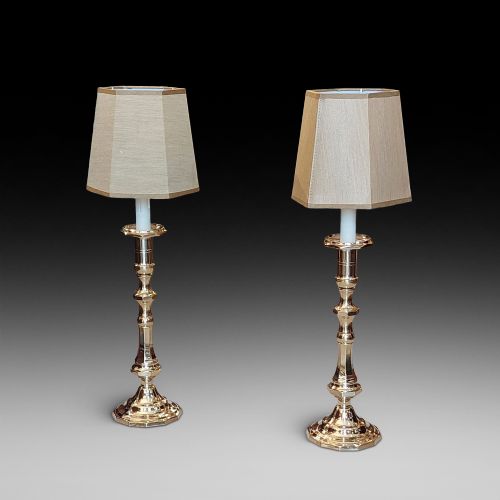
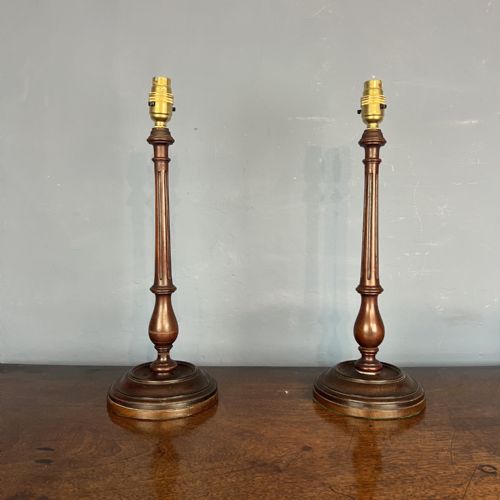
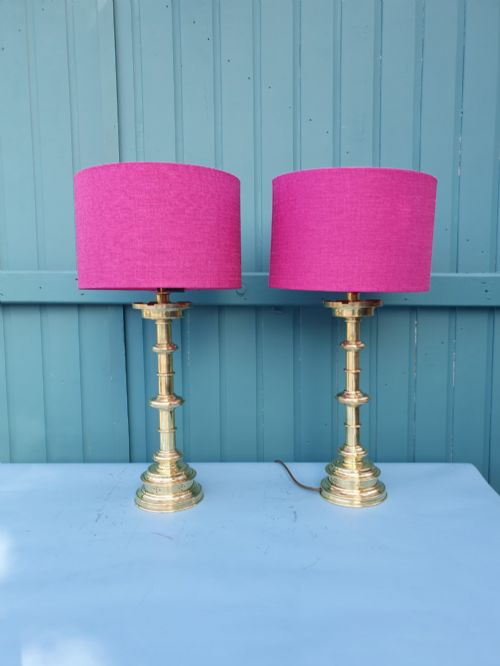
A turned brass table lamp is a weighted lighting fixture shaped on a lathe from solid metal, bringing a bright, tactile presence to a desk or sideboard. When you search for turned brass table lamps, you will find pieces ranging from utilitarian Victorian workshop lighting to decorative Edwardian designs.
The selection on this page draws heavily from the nineteenth and twentieth centuries, incorporating Victorian and Edwardian examples alongside revival styles. Many pieces show the influence of specific historical movements, including Benson and secessionist designs, as well as simpler country house interpretations.
While some lamps began life as oil lamps or candlesticks before conversion, others were manufactured specifically for electricity as domestic wiring became common. This variety in origin means you encounter everything from austere column lights to elaborate multi-part constructions.
What varies in quality
The primary distinction in quality lies in the heft and gauge of the brass itself, as heavier solid castings provide superior stability and a richer depth of polish. Thinner spun metal lacks the substantial feel and crisp lathe-turned detail found on better examples.
Proportion and execution define the finer pieces, where the joints between sections align seamlessly and the turned profiles display a considered balance. Simpler production pieces often reveal repetitive factory shaping and less careful finishing at the seams.
Several lamps on this page started life holding candles before electricity claimed them.
Holland and Sons
The Turned Brass Table Lamp Glossary
- Lathe turning
- A manufacturing process where metal is rotated against a cutting tool to create symmetrical cylindrical profiles. This technique produces the characteristic rings and columns seen on the shafts of these lamps.
- Benson style
- A design aesthetic associated with late Victorian metalwork, known for clean, functional lines and adjustable arms. These pieces often reflect an arts and crafts sensibility.
- Secessionist
- A decorative style emerging around nineteen hundred that favoured geometric forms and stylised floral motifs over traditional historicism. It represents a break from heavy Victorian ornamentation.
- Pricket lamp
- A lighting form that uses an upward-pointing spike to secure a candle or a corresponding socket component. In electric conversions, this distinctive central spike is often retained as a decorative feature.
- Opaline
- A milky, translucent glass often incorporated into the body or shade of nineteenth and early twentieth century lighting. It diffuses light with a soft, even glow.
Turned Brass Table Lamp: Frequently Asked Questions
Are these lamps safe to use today?
Most antique and vintage lamps have been rewired or adapted for modern electrical standards during their lifetime.
It remains wise to have a qualified electrician inspect any older wiring or vintage plug before daily use in your home.
How do I choose the right shade?
Consider the height and weight of the brass base when balancing an appropriately sized fabric or parchment shade.
Heavier turned columns can support larger, more voluminous shades without tipping, whereas slender sticks require a more restrained proportion.
Can I polish the brass body?
Polishing depends entirely on whether the metal retains its original factory lacquer or has developed a natural, unsealed oxidation over the decades.
Applying harsh metal cleaner to a lacquered or patinated surface can strip away the historical finish, so gentle dusting is usually safest.
How do I date a brass lamp?
Dating relies on observing the assembly methods, the style of the switch, the weight of the casting, and any accompanying maker marks.
Victorian and Edwardian examples often display distinct design cues, such as heavy stepped bases or specific burner conversions, that place them in a particular era.