

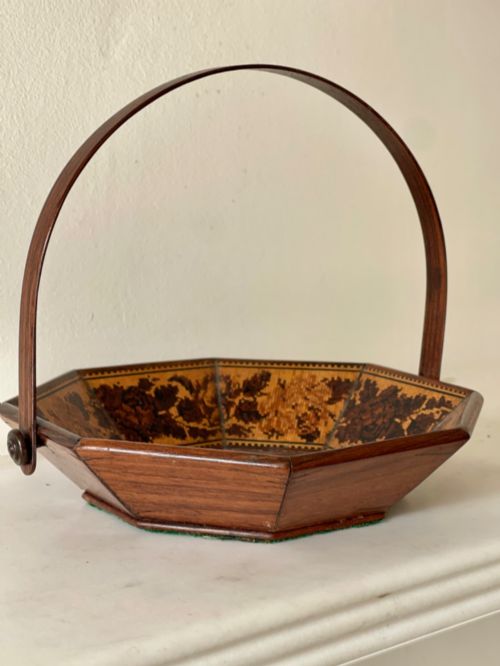
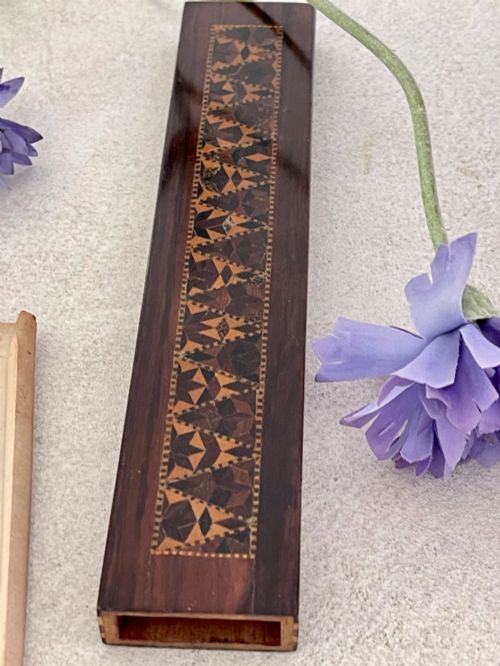
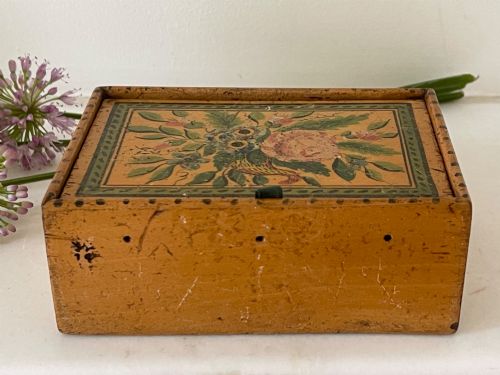


Tunbridge Ware Sewing
Tunbridge Ware sewing pieces are intricate wooden containers and accessories decorated with mosaic inlay, offering tactile historic charm to any collector.
Tunbridge Ware Sewing
When you search for Tunbridge Ware sewing, you are looking at specialised boxes, baskets and holders designed for needlework and domestic crafts. These items span periods from the Georgian and Regency eras through the Victorian age, reflecting changing tastes in decorative woodenware.
The most common forms you will meet on this page are sewing boxes, work boxes and decorative caskets alongside smaller accessories like reel boxes and silk skein holders. They combine practical utility with remarkable surface decoration.
Makers produced these works using varied timber foundations, often employing walnut or rosewood carcasses as the base for elaborate mosaic decoration. Each object demonstrates a distinct approach to the organisation of sewing equipment.
How they were made
The characteristic surface decoration relies upon mixed wood inlay, where thousands of tiny tinted wooden blocks are assembled into pictorial or geometric mosaics. Craftsmen sliced these assembled blocks crosswise to produce multiple identical mosaic bands for application to the box surfaces.
Foundations are constructed from mixed hardwoods, rosewood, and walnut, providing stable carcasses for the delicate surface veneers. Silk linings and brass fittings complete the interiors of fitted boxes and needlework caskets.
Tunbridge Ware Sewing Retail Price Guide 2026
Typical asking prices for tunbridge ware sewing among the pieces listed under this phrase on Sellingantiques today, from the lower quarter to the upper quarter. They describe what is for sale here now, not the wider market.
Listings feature items spanning the Georgian, Regency, and Victorian periods, constructed from rosewood, walnut, and mixed hardwoods.
What varies in quality
Quality rests upon the complexity and fineness of the mosaic inlay, with pictorial or highly detailed geometric motifs representing the higher tiers of workmanship. Simpler geometric banding indicates standard production pieces.
The choice of primary timber also dictates the grade of the piece, with figured walnut and rosewood carcasses generally housing more elaborate internal fittings than plain wooden boxes.
Faudels Of London
The Tunbridge Ware Sewing Glossary
- Tunbridge Ware
- A type of decorative woodwork characteristic of Kent, famous for mosaic veneer pictures made from naturally coloured woods. It gained great popularity during the nineteenth century.
- Work box
- A portable container fitted with compartments for holding sewing implements, threads and needlework tools. These boxes often include removable trays.
- Silk skein holder
- A specialised accessory designed to keep silk threads organised and untangled during needlework. These smaller items display the same mosaic techniques as larger boxes.
- Mosaic inlay
- A decorative technique using tiny geometric pieces of wood arranged to form pictures or patterns. Craftsmen glued these blocks together before slicing them into thin veneers.
Tunbridge Ware Sewing: Frequently Asked Questions
What is Tunbridge Ware sewing?
Tunbridge Ware sewing items are wooden boxes and accessories decorated with intricate mosaic wood inlay designed for needlework.
They reflect the domestic crafts and decorative arts of the nineteenth century.
How were these boxes used?
These boxes stored threads, needles, and sewing tools for ladies undertaking domestic needlework and embroidery.
Fitted interiors kept delicate accessories organised and protected when not in use.
How do I date Tunbridge Ware?
Dating relies upon timber choice, construction style, and the specific motifs used in the mosaic inlay across different periods.
Georgian and Regency pieces often feature simpler designs, while Victorian examples show greater elaboration.
How do I care for my box?
Keep wooden boxes away from direct sunlight and fluctuating humidity to protect the delicate mosaic veneers and timber.
Gentle dusting with a dry cloth maintains the polished surface without harming the antique finish.