

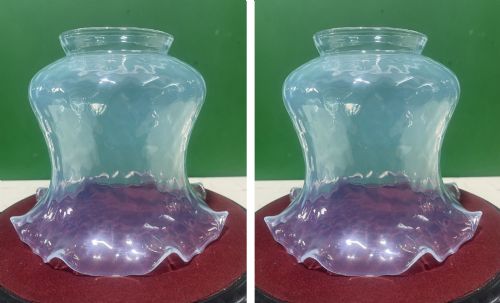
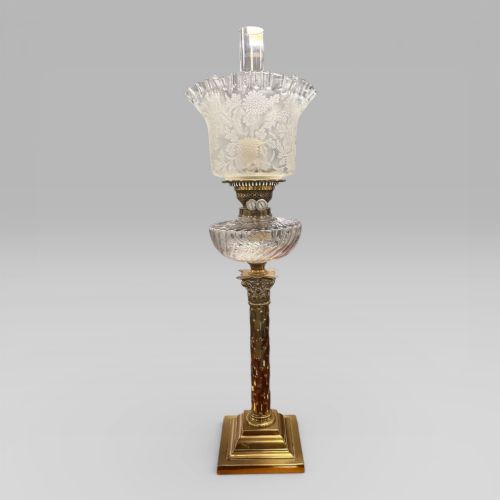
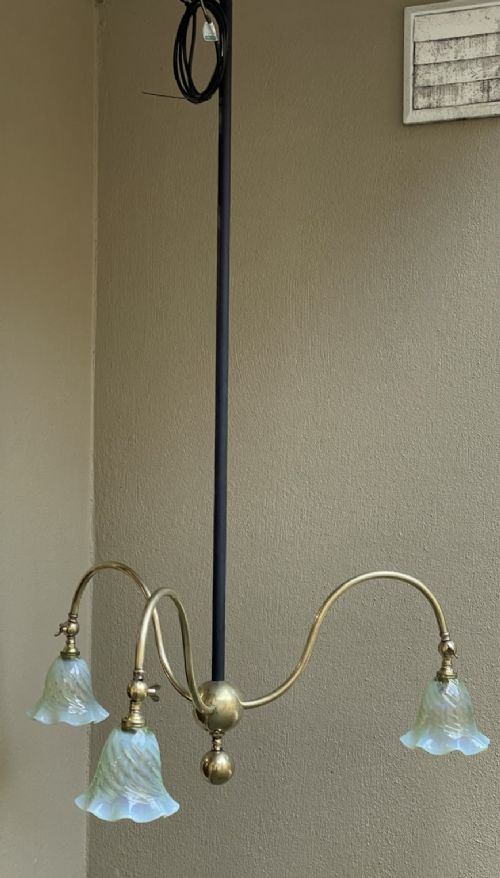


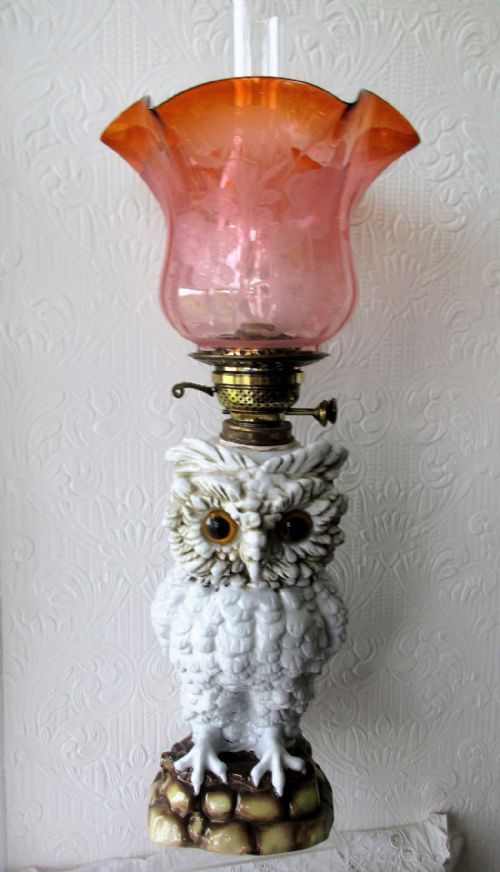

Tulip Glass Shade Light
These tulip glass shade light pieces bring period warmth to a room, uniting brass, metal and delicate glass.
Tulip Glass Shade Light
When you search for a tulip glass shade light, you encounter a distinct group of lighting fixtures spanning the Victorian, Edwardian and 1930 periods. The selection encompasses oil lamps, chandeliers, desk lamps, ceiling lights, pendant lights, floor lamps, lamp shades and light shades.
You are most likely to meet brass fittings paired with glass, frosted glass, opaline glass or enamel elements. Styles range across Victorian, Edwardian, Art Nouveau, Arts and Crafts, French Rococo Revival and French Country.
The form often echoes botanical tulip profiles in the glass work, supported by metal columns, swan necks or multi-armed brass structures.
Materials and construction methods
Maker construction relies heavily on brass and metal frameworks cast or shaped into chandeliers, standard lamps and desk fittings. These metal structures hold the weight of glass shades, which take the form of frosted glass, opaline glass, enamel and green glass.
Techniques combine metalworking with glass blowing and moulding to achieve the frilly edges, etched details and opal finishes seen across Victorian and Edwardian examples. Gilding and gold leaf occasionally accent the bronze and brass components.
Tulip Glass Shade Light Retail Price Guide 2026
Typical asking prices for tulip glass shade light among the pieces listed under this phrase on Sellingantiques today, from the lower quarter to the upper quarter. They describe what is for sale here now, not the wider market.
Distinctions in quality and execution
The fineness of the glasswork dictates the upper tier of these pieces, where delicate etching, consistent frosting and uniform opaline colour set the standard. Lower grades display heavier, simpler glass moulding without the nuance of period hand-finishing.
Metal fabrication marks the distinction between standard production and superior craftsmanship, visible in the weight of the brass, the articulation of adjustable standard lamps, and the crisp casting of decorative elements like cherub arms or swan necks.
Sitzendorf
The Tulip Glass Shade Light Glossary
- Opaline glass
- A pale, translucent glass type developed to diffuse light softly while retaining a milky appearance. It appears frequently in Edwardian and Victorian light shades.
- Duplex burner
- A double-wick mechanism used on period oil lamps to increase illumination before conversion or preservation as electrical fittings. This hardware often accompanies brass columns.
- Swan neck
- A curved metal arm supporting a lamp or shade, designed to direct light downward over a desk or workspace. It is characteristic of early 20th century desk lamps.
- Frosted glass
- Glass treated by acid-etching or sandblasting to create a textured, opaque surface that softens bulb glare. This finish is typical of 1900 notary lamps and Victorian globes.
Tulip Glass Shade Light: Frequently Asked Questions
What is a tulip glass shade light?
These fixtures combine metal fittings like brass and bronze with glass shades formed into distinct tulip profiles. They span oil lamps, chandeliers, desk lamps and pendant lights from the 19th and early 20th centuries.
Designs reflect Victorian, Edwardian and Art Nouveau aesthetics, utilising frosted, opaline, green or etched glass to diffuse illumination.
How do I date a brass and glass light?
Dating relies on combining the material evidence with stylistic cues from periods such as the Victorian era, Edwardian period or 1930s. Heavy cast brass columns and etched oil lamp globes point to the 19th century.
Later pieces from the early 20th century often feature adjustable swan necks, multi-arm configurations or simpler opaline shades associated with Pullman and notary designs.
Were these fixtures originally electric?
Many surviving examples began life as oil lamps or gaseliers before later conversion to electricity. Oil lamp iterations retain brass columns, burners and reservoirs intended for paraffin.
Ceiling lights, chandeliers and desk lamps from the Edwardian period onward were frequently manufactured specifically for electrical wiring, utilising brass and metal frames.
How should I clean opaline and frosted glass?
Cleaning requires gentle handling using lukewarm water and mild soap to protect the delicate surfaces of opaline, frosted or etched glass shades. Abrasive cleaners must be avoided to preserve the matte or milky finish.
Metal components like brass and gilt bronze respond best to dry dusting or specialised non-abrasive metal care suited to period finishes.