


Tufted Upholstery Chairs
Tufted upholstery chairs are traditional seats defined by deep buttoning, offering profound comfort and distinct period character for your interior.
Tufted Upholstery Chairs
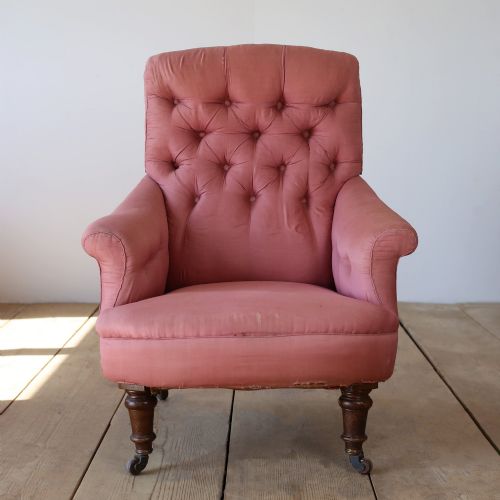
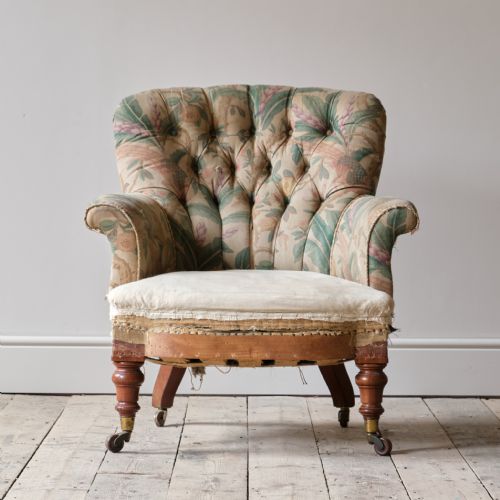
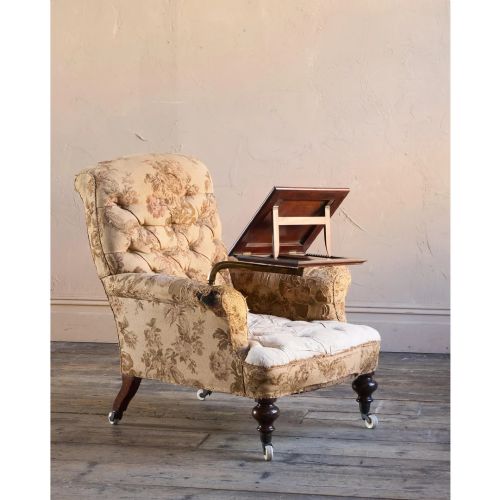
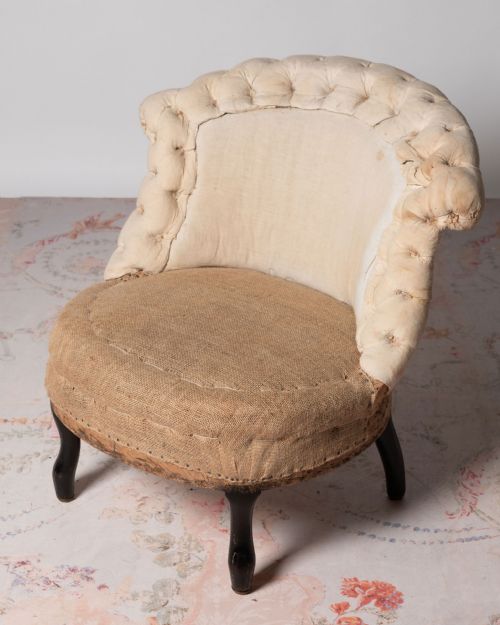
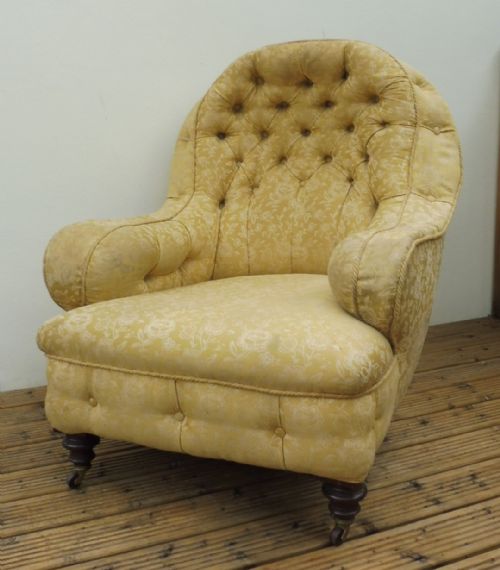
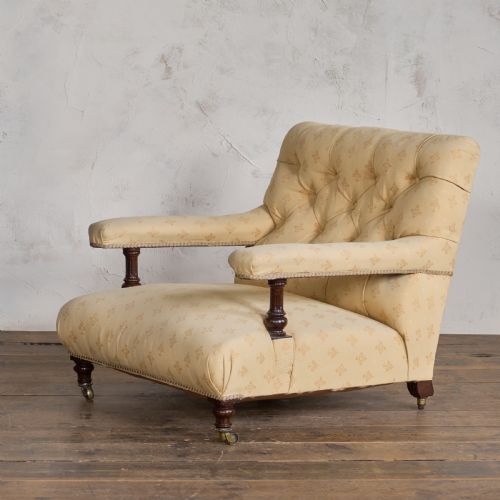
Tufted upholstery chairs encompass a wide array of period forms designed for comfort and parlour use, drawing heavily from nineteenth-century aesthetics. You will encounter various iterations on this page, including library armchairs, nursing chairs, and curvaceous slipper chairs.
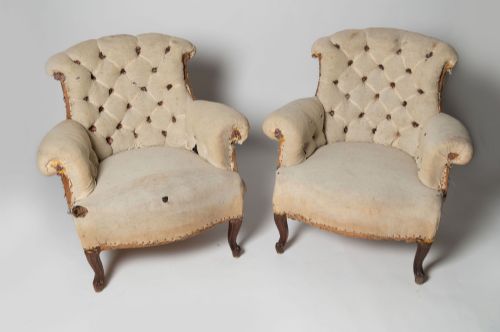
The form ranges from compact child chairs and pairs of occasional seating to substantial country house armchairs. Each piece brings a specific domestic utility from the past into a modern setting, maintaining traditional seating postures.
Materials and construction methods
Makers constructed the structural frames of these seats using hardwoods such as mahogany, walnut, beech, and rosewood. Some examples incorporate iron frames or brass components to ensure structural rigidity beneath the upholstery.
Upholstery techniques involved securing deep buttoning through textile, velvet, or ticking materials to create the characteristic tufted surface. Wood carving and turned elements frequently adorn the exposed frames of Victorian and William IV pieces.
Periods represented include the Victorian era, Edwardian period, and Regency styles.
Markers of distinction and build
Quality reveals itself in the execution of the frame timber and the precision of the carved walnut or mahogany details. Superior examples exhibit refined proportions, such as gracefully curved chair backs and robust joinery.
The integrity of the buttoning work and the selection of covering materials, whether fine velvet or heavy ticking, dictate the overall refinement. Attribution to notable makers further elevates an example above standard production.
Howard and Sons·Cornelius V Smith·Gillows
The Tufted Upholstery Chairs Glossary
- Button back
- A traditional upholstery method where buttons are pulled deep into the padding at regular intervals to form diamond patterns. This technique secures the internal stuffing while creating a textured surface.
- Slipper chair
- A low-seated upholstered chair originally designed for a lady's bedroom for dressing. These seats typically lack arms and sit close to the floor.
- Nursing chair
- A low armchair designed in the nineteenth century for comfort while feeding or tending to infants. They often feature generous upholstery and an absence of obstructive arms.
- Library armchair
- A substantial seat created for reading rooms, frequently incorporating reading stands or padded arms. These pieces prioritise extended physical comfort.
- Open armchair
- A seat featuring exposed wooden arms rather than fully upholstered ones. The structural frame remains visible along the sides.
Tufted Upholstery Chairs: Frequently Asked Questions
What is a tufted upholstery chair?
These are traditional seats featuring deep buttoning across the backrest and upholstery. They serve as functional armchairs, nursing seats, or occasional furniture.
Originating largely in the nineteenth century, they combine exposed timber frames with deeply padded textile surfaces for comfort.
How do I identify a Victorian tufted chair?
Look for characteristic walnut or mahogany frames paired with buttoned velvet or fabric. Victorian examples often display carved wooden details and robust proportions.
They frequently take the form of library armchairs, nursing chairs, or matching pairs for the parlour.
Where should I place a slipper chair?
A slipper chair works well in bedrooms, dressing rooms, or smaller sitting areas due to its low profile. Its compact nature allows it to fit comfortably without overwhelming a room.
Position it beside a dressing table or in an unused corner to add period charm.
How do I care for antique velvet upholstery?
Protect antique velvet and textiles by keeping them out of direct sunlight to prevent fading. Gentle brushing helps maintain the nap of the fabric over time.
Avoid harsh chemical cleaners and consult a professional restorer for deep maintenance.