

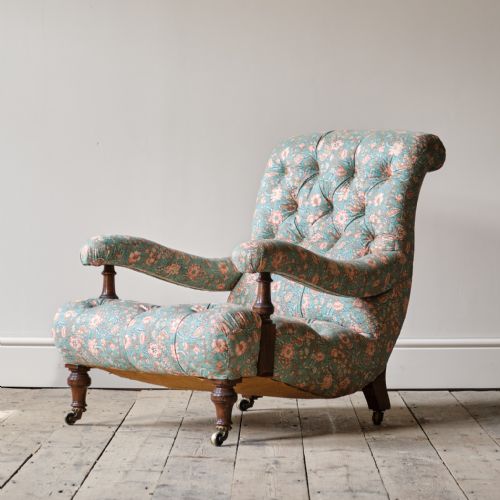
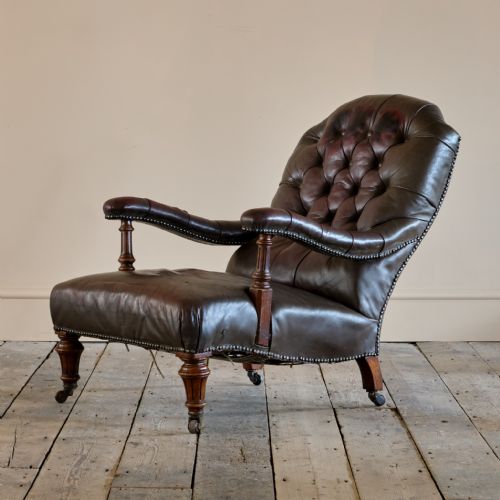


Tufted Open Armchair
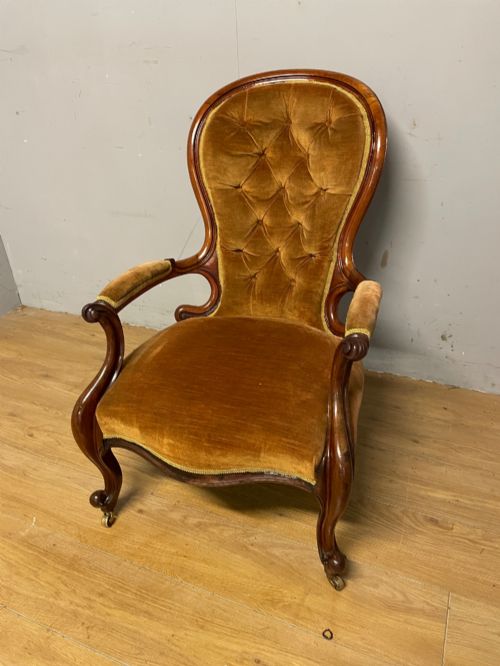
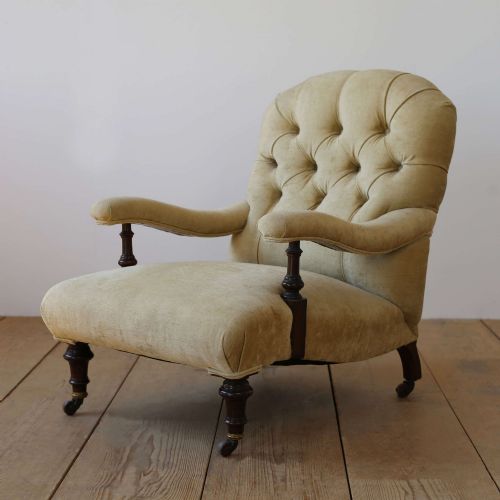
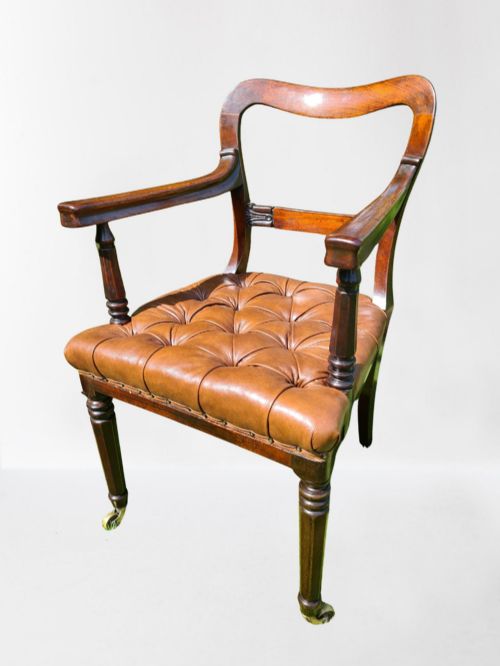
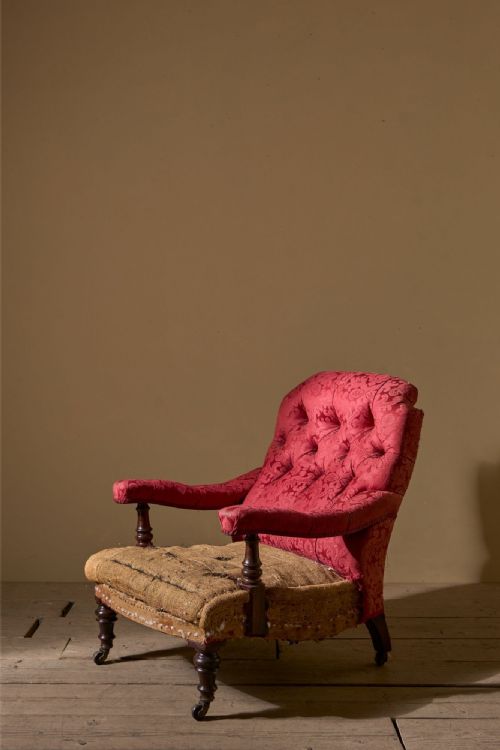
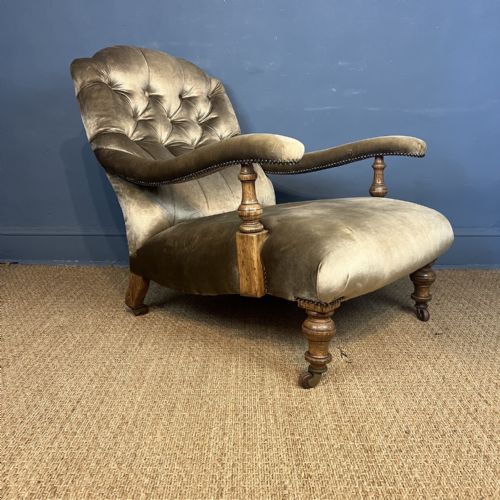
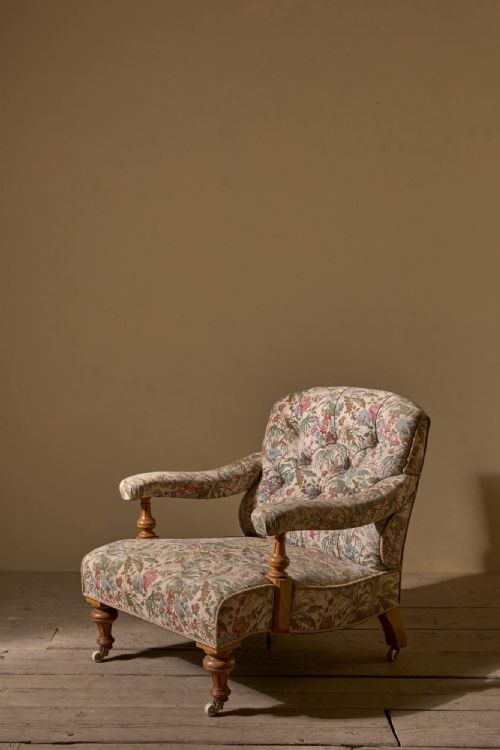
A tufted open armchair is a generously padded seat designed for comfort, prized for deep buttoning and exposed timber frames that anchor traditional rooms.
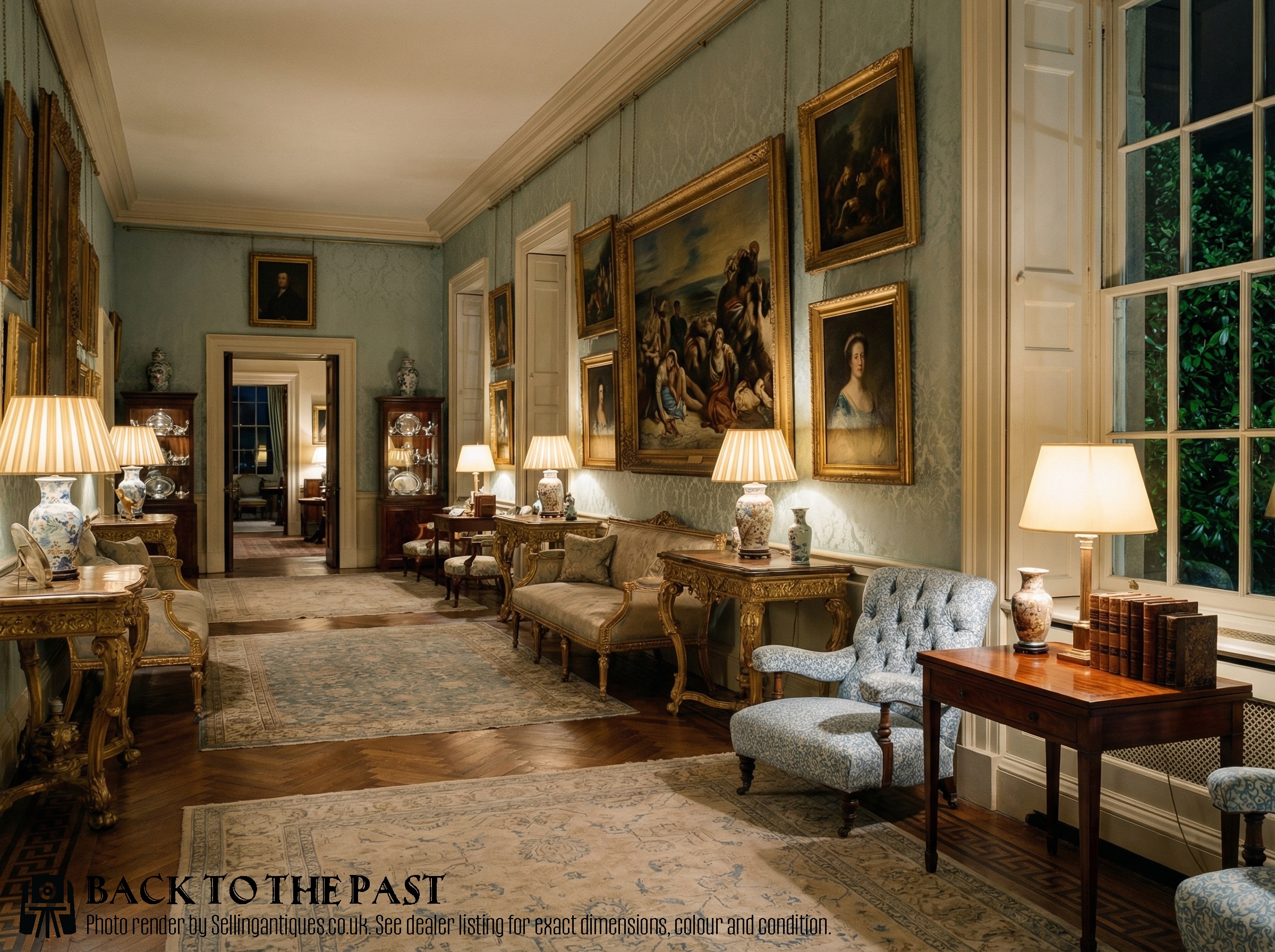
Tufted Open Armchair
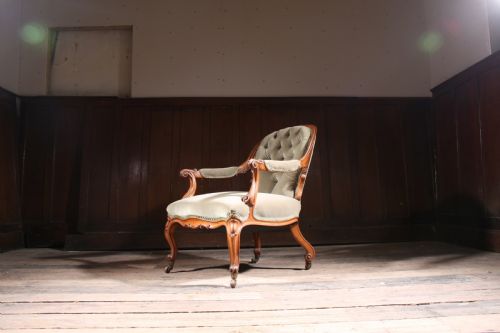
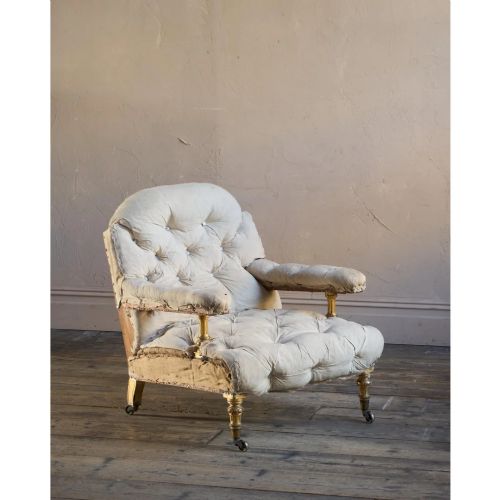
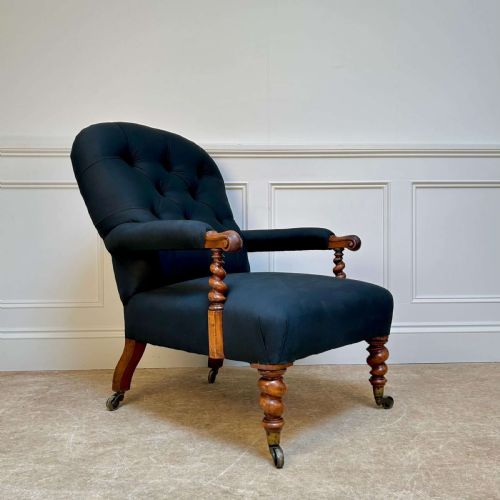
When you search for a tufted open armchair, you encounter seating built for formal reception rooms, libraries, and country house studies. These pieces combine exposed wooden frames with fully upholstered seating, often featuring low profiles and scrolled arms that invite relaxed sitting.
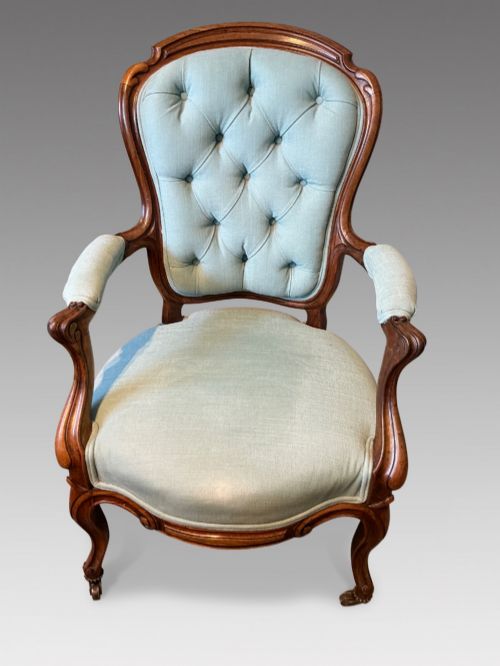
The most common examples on this page date from the nineteenth century, spanning Victorian walnut and mahogany frames alongside earlier Georgian and Regency designs. Makers from this era favoured sturdy timbers combined with sumptuous coverings like velvet, leather, and linen.
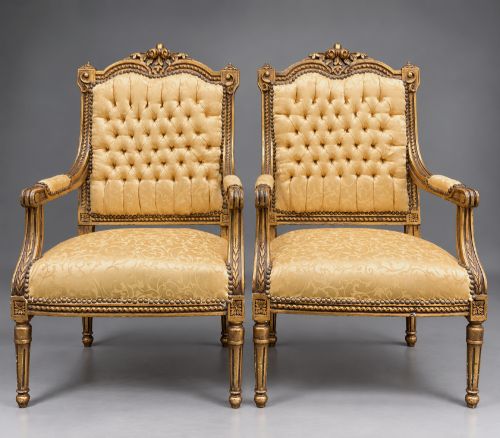
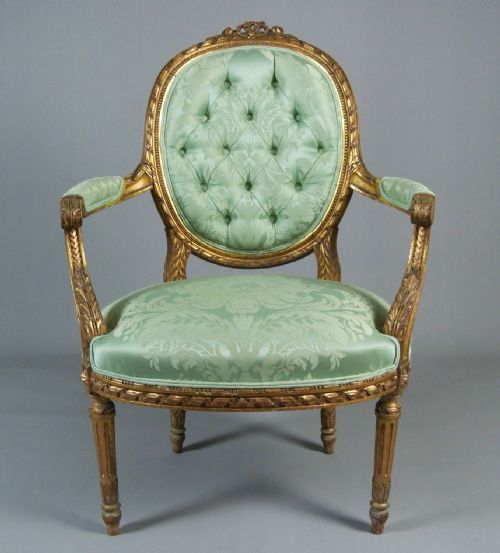
Variations in form range from heavy show-frame walnut Victorian gentleman's chairs to lighter English and Scottish country house armchairs. Some examples display distinct stylistic revivals such as Rococo, Louis XVI, and Napoleon III influences.
How they were made
Makers constructed the structural frames of a tufted open armchair from dense hardwoods including mahogany, walnut, oak, rosewood, and giltwood. Craftsmen shaped these timbers to form open arms and exposed legs, sometimes utilising ebonised finishes or brass castors for mobility.
Upholstery techniques defined the comfort of these seats, employing heavy webbing, springs, and horsehair stuffing beneath top layers of velvet, leather, linen, or patterned fabric. Deep buttoning secured the padding into distinctive geometric patterns across the backrests.
Tufted Open Armchair Retail Price Guide 2026
Typical asking prices for tufted open armchair among the pieces listed under this phrase on Sellingantiques today, from the lower quarter to the upper quarter. They describe what is for sale here now, not the wider market.
Listings feature nineteenth-century walnut, mahogany, and rosewood frames upholstered in velvet, leather, and linen.
What varies in quality
The distinction between ordinary and exceptional examples rests upon the integrity of the timber frame and the refinement of its carving. Superior frames exhibit crisp hand-carved details, substantial gauge timbers, and robust joinery that withstands decades of daily use.
Quality also reveals itself in the fidelity of the upholstery work and the pedigree of the maker. Pieces bearing authentic stamps from esteemed workshops command attention through harmonious proportions and meticulous finishing that ordinary cabinetmakers did not replicate.
Howard and Sons·Holland and Sons·Hindley and Sons·Thomas Chippendale
The Tufted Open Armchair Glossary
- Tufted
- Upholstery secured with deep buttons arranged in a grid or diamond pattern, creating padded recesses across the backrest. This technique ensures internal stuffing remains evenly distributed.
- Open armchair
- A seat featuring un-upholstered wooden arms that expose the structural frame to view. These contrast with fully upholstered armchairs where fabric covers the entire arm.
- Show frame
- A wooden structural skeleton left deliberately exposed around the upholstered elements of the back and seat. Cabinetmakers used this device to display fine walnut or mahogany craftsmanship.
- Giltwood
- Timber coated with a thin layer of gold leaf or metallic powder for decorative splendour. This finish appears frequently on revival and neoclassical frames.
- Button back
- A style of upholstery where recessed buttons pull the fabric tight against the internal padding. It provides firm lumbar support while creating a textured surface.
Tufted Open Armchair: Frequently Asked Questions
How do I identify a Howard and Sons armchair?
Look for stamped maker marks on the castors or wooden legs, alongside low proportions and specific ticking fabric underlinings. These chairs are traditionally built on sturdy beech frames with disciplined springing.
Examine the upholstery line and label details carefully, as authentic pieces frequently carry manufacturer signatures or numbered stamps on the rear leg tops.
Where were open armchairs used originally?
These seats belonged in libraries, drawing rooms, and gentleman studies where occupants read or conversed for hours. Their open arm design permitted voluminous Victorian garments to fit comfortably.
Country houses often utilised them beside fireplaces or writing desks, combining domestic utility with formal reception room display.
Are buttoned backs always Victorian?
Buttoned upholstery gained immense popularity during the Victorian and Napoleon III periods, appearing across walnut and mahogany show frames. However, earlier padded chairs utilised diverse fastening methods.
While deep tufting is a hallmark of nineteenth-century seating, revival pieces continued replicating these comfortable configurations well into the twentieth century.
How do I care for leather upholstery?
Maintain antique leather by applying suitable nourishing waxes periodically to prevent the hide from drying and cracking. Avoid positioning these chairs near direct heat sources or strong sunlight.
Gentle dusting with a soft dry cloth preserves the patina built up over decades of domestic use.