




Tufted Office Chair
A tufted office chair brings character and working comfort to a room, built from mahogany or oak with deep buttoning and sturdy timber frames.
Tufted Office Chair
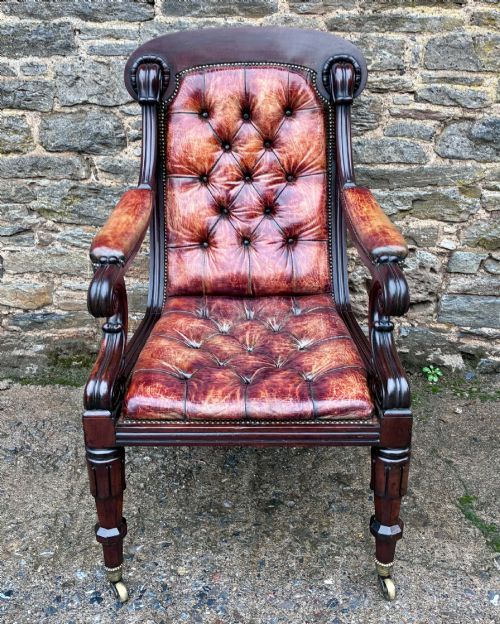
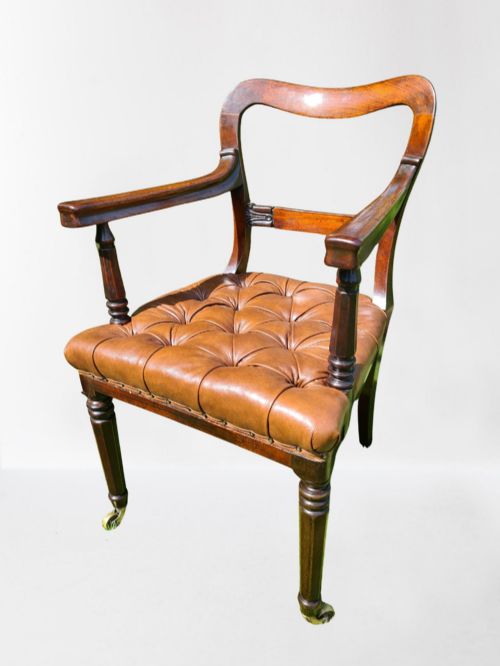
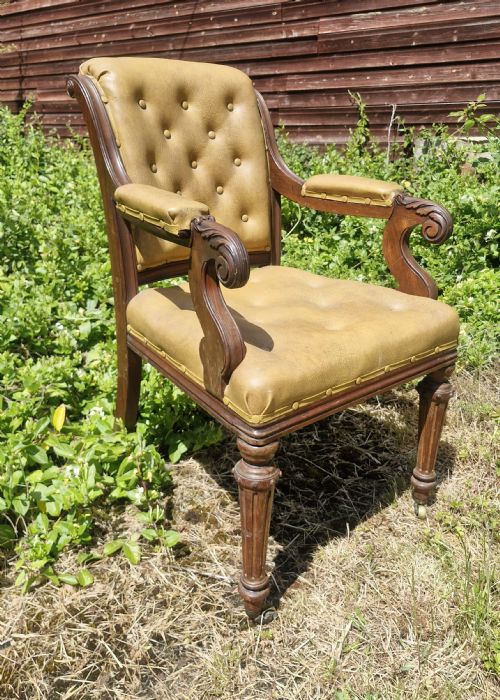
When you search for a tufted office chair, you are looking at practical seating designed for working at a desk, featuring buttoned upholstery and robust frames. These pieces span centuries of design, with versions ranging from early oak models to later revolving iterations.
The most common examples you will encounter on this page date from the Victorian period onwards, typically constructed from mahogany or oak and upholstered in leather. They combine traditional craftsmanship with the functional requirements of a study or library workspace.
How they were made
Makers built these chairs using durable timbers like mahogany and oak, often incorporating brass detailing and iron mechanisms for revolving functions. The frames rely on traditional joinery to support daily use in studies and offices.
Upholstery forms a defining feature of the construction, utilising leather or velvet stretched tightly over padding and secured with deep buttoning. This technique provides both structural firmness and a distinct tactile finish.
Tufted Office Chair Retail Price Guide 2026
Typical asking prices for tufted office chair among the pieces listed under this phrase on Sellingantiques today, from the lower quarter to the upper quarter. They describe what is for sale here now, not the wider market.
Listings feature timbers such as mahogany and oak, alongside materials like leather, velvet, brass, and iron across various periods.
What varies in quality
The distinction between standard and superior pieces rests on the selection of timber and the precision of the frame construction. Finer examples display carefully chosen mahogany or oak grain and robust joinery that withstands centuries of movement.
Upholstery work also dictates the overall grade, where neatly executed buttoning and high-grade leather indicate superior craftsmanship. The sophistication of any revolving mechanism further separates utilitarian seating from finer library furniture.
The Tufted Office Chair Glossary
- Tufted
- Upholstery finished with deep buttons arranged in a grid pattern. This technique secures the padding and creates a characteristic padded texture.
- Revolving
- A seating design that incorporates a swivel mechanism allowing the chair to turn. This feature appears on later desk chairs intended for active workspaces.
- Cromwellian
- A style associated with the mid seventeenth century, characterised by austere lines and sturdy construction. Pieces from this era utilise plain oak and leather.
- Gainsborough
- An armchair style with an upholstered back and seat, open padded arms, and square legs. This form gained popularity during the Georgian period for library use.
- Tub chair
- A seating form featuring a continuous curved back and arms that form a single enclosing shape. These are typically upholstered in leather and supported on timber frames.
Tufted Office Chair: Frequently Asked Questions
Are these chairs comfortable for daily work?
Many of these pieces were built for studies and libraries, offering supportive high backs and padded seats. Their traditional construction provides firm support suitable for contemporary desk use.
Some models include revolving functions that add convenience for modern working environments. The proportions generally match standard desk heights quite well.
How do I identify a Victorian example?
Victorian pieces often feature rich mahogany or oak frames combined with deep leather buttoning. They frequently incorporate revolving mechanisms or sturdy elbow supports characteristic of nineteenth-century office furniture.
Turned wooden legs and brass castors also help distinguish pieces from this era. The upholstery techniques from this period tend to show dense padding and secure buttoning.
What is the difference between an armchair and a desk chair?
Desk chairs are typically designed with mobility in mind, often featuring swivelling bases or compact frames to fit beneath a writing table. Armchairs generally offer wider proportions and fixed frames intended for general seating.
Many examples on this page bridge both categories by offering desk-height comfort with supportive arms. The primary distinction lies in how the underframe is constructed for movement.
How should I care for the leather upholstery?
Leather upholstery benefits from regular dusting and occasional treatment with suitable conditioning balms to maintain its flexibility. Keeping the material away from direct heat sources prevents the surface from drying out over time.
Gentle cleaning preserves the natural finish and character of the hide. Proper maintenance ensures the buttoning and seams remain secure through regular use.