

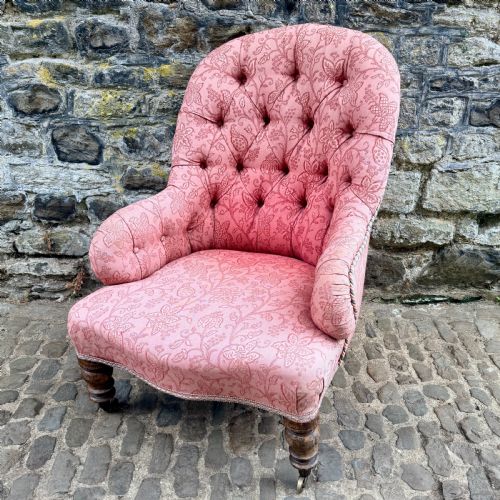
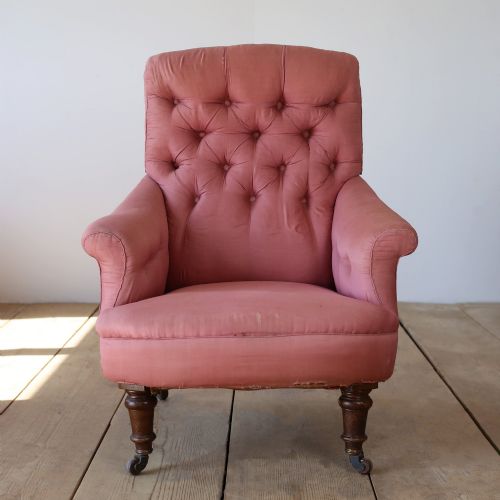
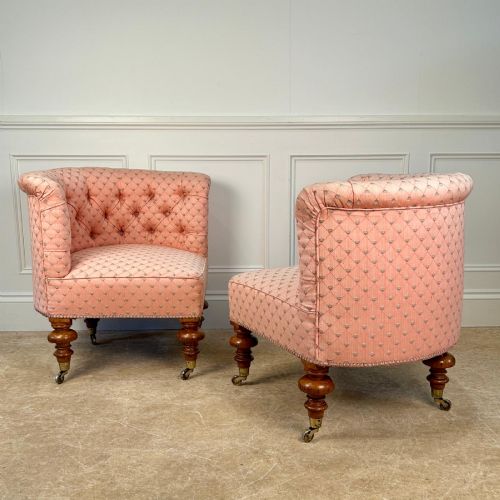
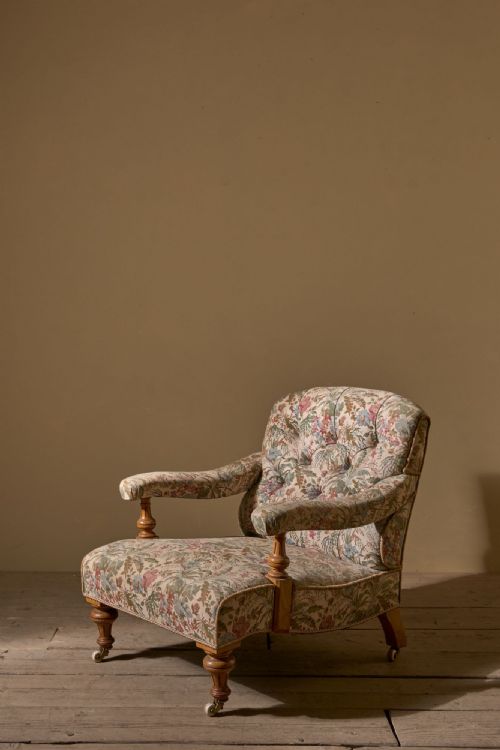
Tufted Low Chairs
Tufted low chairs bring intimate scale and deep buttoning to a room, offering low-slung comfort rooted in nineteenth-century domestic life.
Tufted Low Chairs
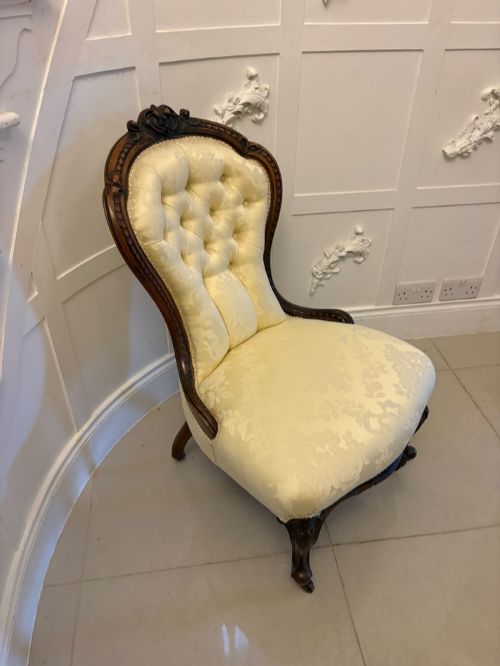
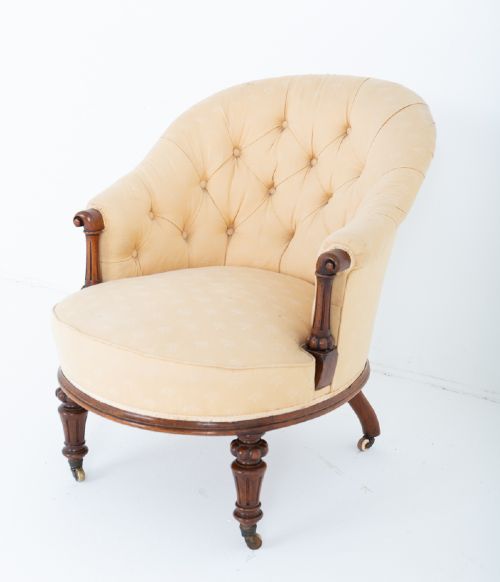
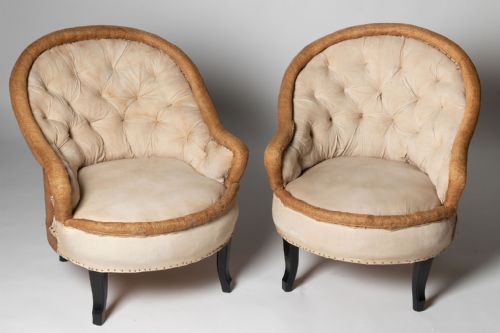
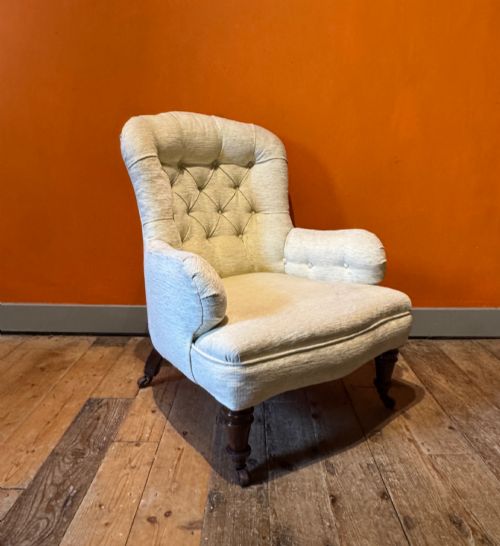
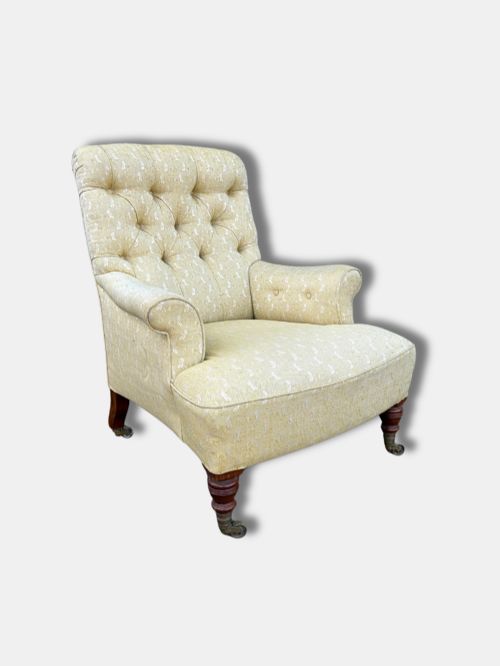
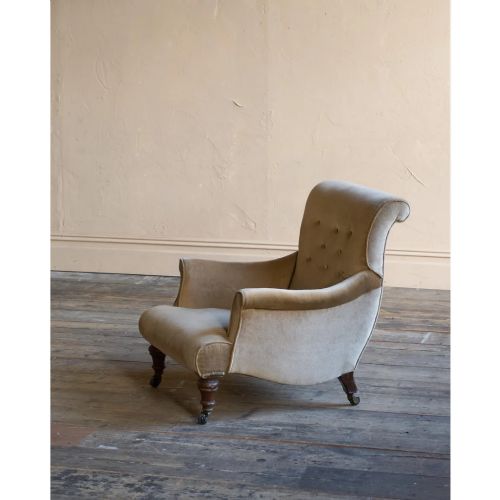
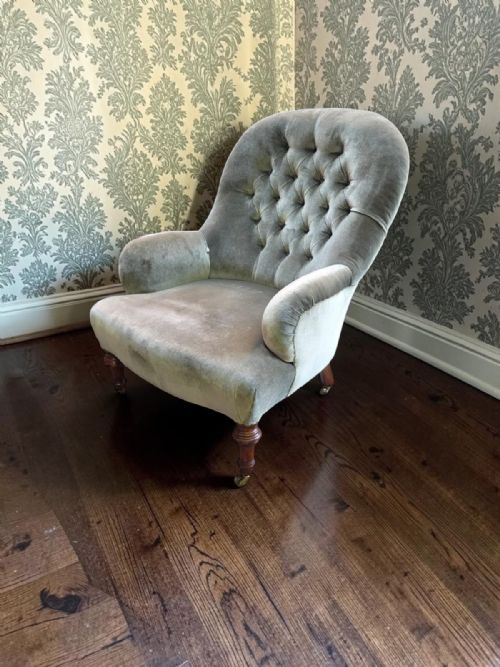
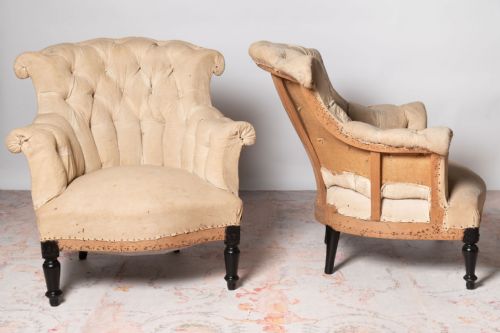
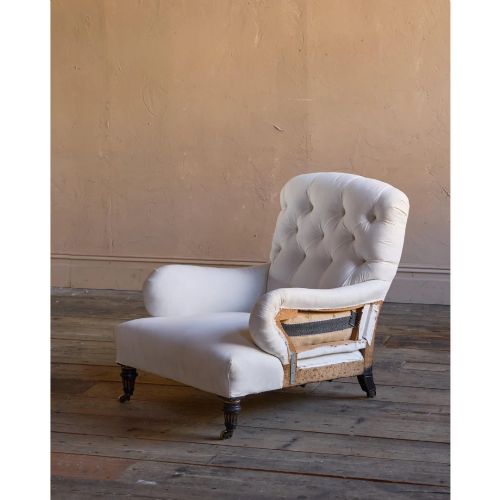
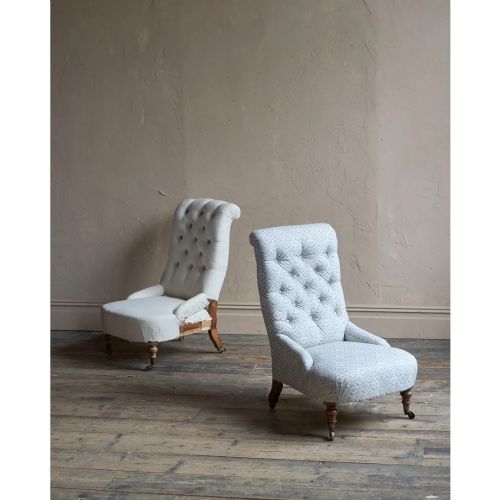
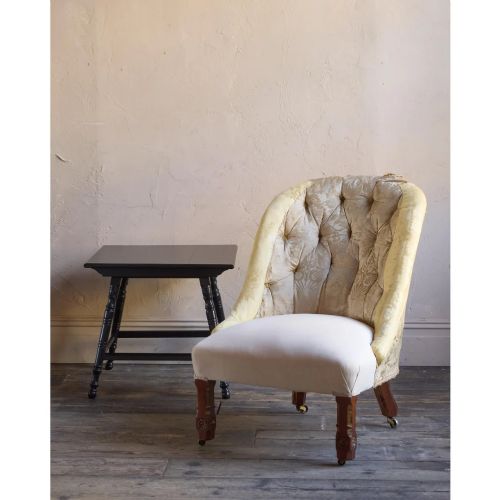
When you search for tufted low chairs, you encounter a selection of nineteenth-century seating designed for bedrooms, dressing rooms and low parlours. The most frequent forms on this page include slipper chairs, nursing chairs, bedroom chairs and button-back armchairs spanning the Victorian and Edwardian eras. These pieces sit closer to the floor than standard drawing room seating, often featuring compact frames meant for private domestic spaces.
Makers and workshops from England and France shaped these low forms across several decades, ranging from utilitarian oak corner chairs to elaborate French Napoleon III and aesthetic movement designs. You will find walnut, mahogany, rosewood and timber frames supporting deep upholstery, silk velvet, calico and leather. The structural variety extends from open armchairs to closed tub chairs and low back salon seats.
How they were made
The frames rely on dense hardwoods such as mahogany, walnut, oak and rosewood, carved or turned to support the low proportions. Ebonised, gilt and brass details appear on legs and mounts, anchoring the substantial upholstery above.
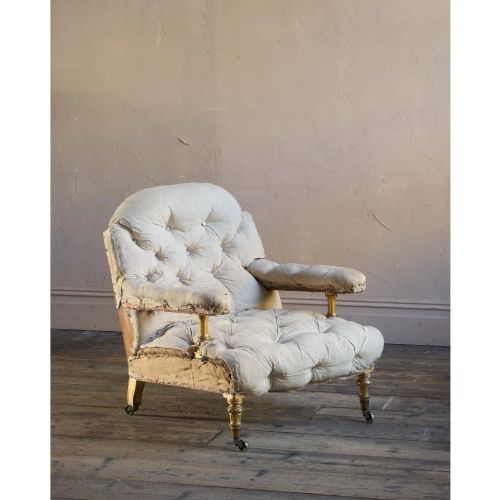
Upholstery defines tufted low chairs, utilising deep buttoning through fabrics like velvet, leather and calico. Webbing, springs and stuffing create the characteristic low, sprung seat and padded back.
Tufted Low Chairs Retail Price Guide 2026
Typical asking prices for tufted low chairs among the pieces listed under this phrase on Sellingantiques today, from the lower quarter to the upper quarter. They describe what is for sale here now, not the wider market.
Victorian and Edwardian periods dominate the inventory, accompanied by French nineteenth-century and aesthetic movement styles.
What varies in quality
The integrity of the underlying hardwood frame determines longevity, distinguishing robust timber structures from lighter framework. Finer pieces demonstrate precise joinery and stable, well-proportioned legs, whether mahogany, walnut, or ebonised timber.
The execution of the upholstery and buttoning sets apart finer examples, where pleating aligns evenly and materials like silk velvet or leather are handled with care. Stamp marks, attribution to known makers, and original castors elevate the standing of a piece.
Howard and Sons·Gillows
The Tufted Low Chairs Glossary
- Slipper chair
- A low-seated upholstered chair originally designed for bedrooms, allowing women to dress comfortably. These chairs lack arms and sit close to the floor.
- Nursing chair
- A low upholstered chair designed to give mothers support while nursing infants in the nineteenth century. They typically feature low seats and padded backs.
- Button back
- An upholstery technique where buttons are pulled deep into the padding to form a geometric pattern of tufts. This method secures the filling and creates distinct surface texture.
- Spoon back
- A padded chair back shaped like the bowl of a spoon, popular during the Victorian era. The wooden frame follows this concave curve closely.
- Ebonised
- Wood treated with a dark finish to imitate ebony. This technique appeared frequently on nineteenth-century chair legs and frames.
Tufted Low Chairs: Frequently Asked Questions
What rooms suit tufted low chairs?
These compact seats fit well in bedrooms, dressing rooms, and smaller studies where standard armchairs overwhelm the floor plan. Their low profile keeps sightlines open while providing comfortable seating.
They also serve as accent pieces in sitting rooms or alongside low fireplaces. Their nineteenth-century character adds texture to both traditional and modern interiors.
How do I identify a slipper chair?
Slipper chairs stand out by their lack of arms and very low seat height, designed originally for ease of dressing. They often feature deep buttoning and upholstered frames.
Most examples date from the Victorian period, resting on short legs with castors to allow easy movement across bedroom carpets.
Are these chairs comfortable for daily use?
The deep springing and padded backs offer surprisingly supportive lounging despite the low stature. Their dimensions cater to relaxed, reclined seating rather than upright desk work.
Upholstery condition varies across antique pieces, so checking the firmness of the seat webbing ensures proper support for regular sitting.
How do I date a Victorian button back chair?
Dating relies on frame timber, leg style, and upholstery construction methods. Mid-nineteenth-century pieces often use rosewood or walnut with serpentine frames and delicate carving.
Later Victorian and Edwardian examples shift toward simpler oak or mahogany frames, sometimes incorporating aesthetic movement or ebonised details.